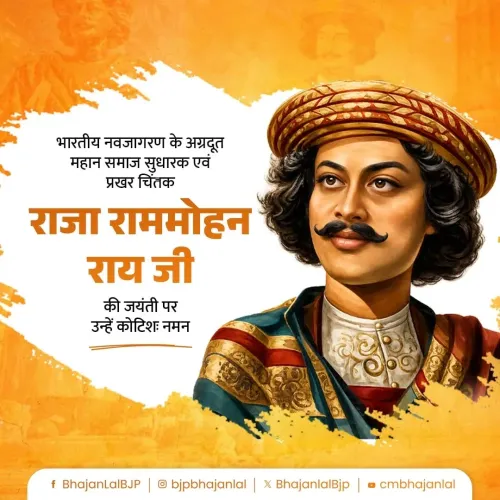
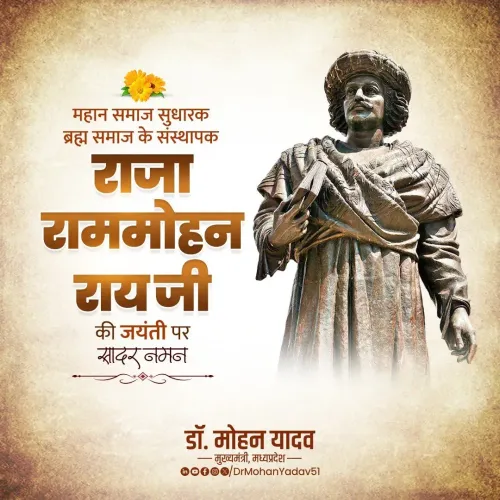
CM Fadnavis Pays Tribute to Raja Ram Mohan Roy on Birth Anniversary
Synopsis
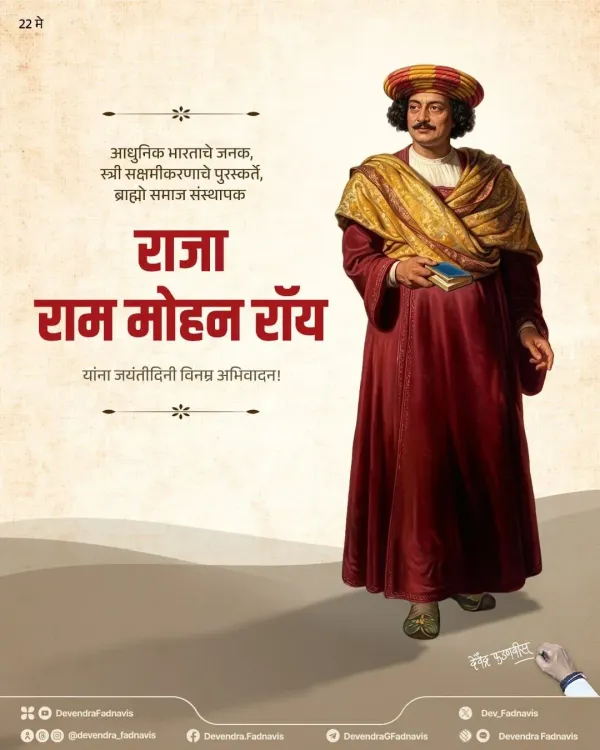
Maharashtra Chief Minister Devendra Fadnavis on 22 May 2026 paid tribute to Raja Ram Mohan Roy on his birth anniversary, honouring the Brahmo Samaj founder as the father of modern India and a champion of women's empowerment, in a bilingual English-Marathi post.
Key Takeaways
Maharashtra CM Devendra Fadnavis posted a tribute to Raja Ram Mohan Roy on 22 May 2026 , the reformer's birth anniversary.
Roy founded the Brahmo Samaj in 1828 , a movement promoting monotheism, rationalism and social equality.
His campaign against sati led directly to the Bengal Sati Regulation of 1829 , one of India's earliest social reform laws.
Fadnavis's message was bilingual — English and Marathi — describing Roy as 'आधुनिक भारताचे जनक' (father of modern India).
The tribute fits a broader pattern of Indian political leaders across parties marking Roy's birth anniversary to signal continuity with 19th-century reform movements.
Maharashtra's government regularly commemorates pan-Indian reformers as part of its cultural and educational outreach.
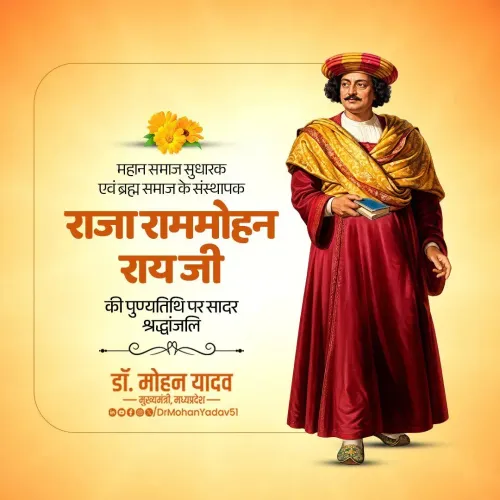
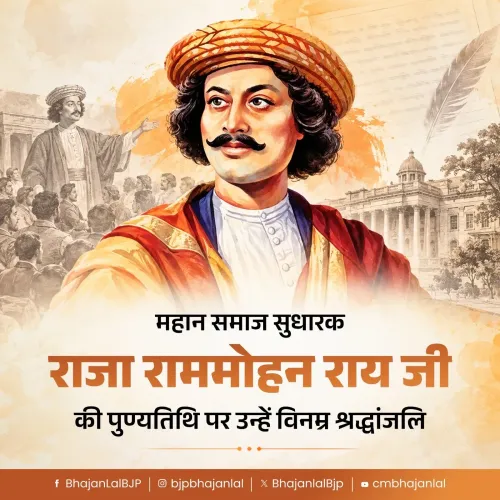
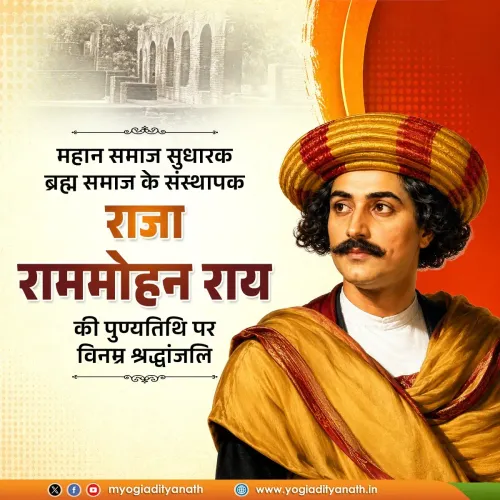
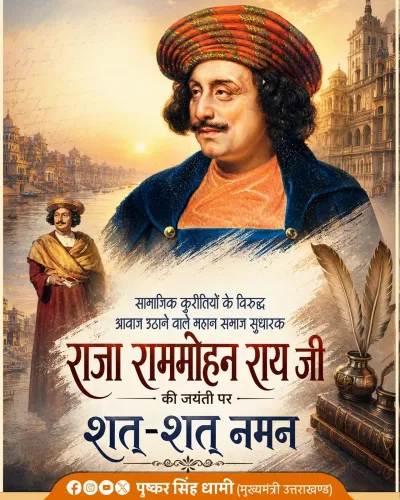
Maharashtra Chief Minister Devendra Fadnavis on Friday, 22 May 2026, paid tribute to Raja Ram Mohan Roy on the reformer's birth anniversary, hailing him as the visionary founder of Brahmo Samaj and a foundational figure of modern India. The Chief Minister posted his message in both English and Marathi, recognising Roy's campaigns for social justice, women's empowerment and progressive thought.
Context
Fadnavis described Roy as a 'आधुनिक भारताचे जनक' ('father of modern India') and a champion of women's empowerment, offering what he called a 'विनम्र अभिवादन' — a humble salute — on the occasion of the birth anniversary. The bilingual tribute, combining English and Marathi, reflects the Chief Minister's practice of connecting Maharashtra's governance narrative to pan-Indian reform traditions.
Roy's birth anniversary on 22 May is observed annually across India by political leaders, educational institutions and civil society organisations. In Maharashtra, which has its own rich tradition of 19th and 20th-century social reform, such commemorations carry particular resonance.
Policy Backdrop
Raja Ram Mohan Roy, born in May 1772 in Bengal, founded the Brahmo Samaj in 1828, a socio-religious reform movement that promoted monotheism, rationalism and social equality. His sustained campaign against the practice of sati directly led to the Bengal Sati Regulation of 1829 — one of the earliest legislative interventions in social custom under colonial rule.
Roy also campaigned vigorously against child marriage and caste rigidity while advocating for modern, English-medium education. His legacy shaped the broader 19th-century reform movement that influenced figures across Bengal, Maharashtra and beyond. Post-independence, the central government institutionalised annual commemorations of Roy's birth anniversary, recognising his role as a precursor to the Indian national movement.
Stakeholders and Impact
Roy's legacy remains directly relevant to ongoing policy debates around women's rights, educational reform and social equality in India. Women's rights advocates and social reform organisations regularly invoke his work as a historical anchor for contemporary campaigns. In Maharashtra, the state government has a pattern of marking anniversaries of pan-Indian reformers alongside regional icons such as Mahatma Jyotirao Phule and Dr B.R. Ambedkar.
Fadnavis's tribute, shared under the hashtags #RajaRamMohanRoy and #Maharashtra, signals the state government's intent to position itself within a continuum of progressive reform politics — a recurring theme in BJP-led Maharashtra's cultural outreach.
What's Next
Observers will watch whether the Maharashtra state education department issues circulars or curriculum updates featuring 19th-century reformers around this period, as well as any announcements of new memorials, lecture series or public programmes in Roy's name. Tributes of this kind from senior leaders often precede or accompany state-level academic and cultural events tied to reform anniversaries. The broader pattern of cross-party commemoration of Roy suggests his legacy will continue to serve as a shared reference point in Indian political discourse.
Point of View
The Chief Minister draws a line from 19th-century progressivism to contemporary governance rhetoric. The use of Marathi alongside English signals an effort to domesticate a pan-Indian figure within Maharashtra's own reform identity. Such commemorations are low-cost, high-signal gestures that serve both cultural outreach and soft political messaging simultaneously.
NationPress
6 Oct 2026
Frequently Asked Questions
Who was Raja Ram Mohan Roy and why is he remembered?
Raja Ram Mohan Roy was a Bengali social reformer born in May 1772 who founded the Brahmo Samaj in 1828 and campaigned against sati, child marriage and caste discrimination while advocating modern education and women's rights; he is widely regarded as the father of modern India.
When is Raja Ram Mohan Roy's birth anniversary?
Raja Ram Mohan Roy's birth anniversary is observed on 22 May each year, and it is marked by tributes from political leaders, educational institutions and civil society organisations across India.
What is Brahmo Samaj and who founded it?
Brahmo Samaj is a socio-religious reform movement founded by Raja Ram Mohan Roy in 1828 in Bengal; it promoted monotheism, rationalism and social equality and influenced 19th-century reform efforts across India.
Why did Devendra Fadnavis pay tribute to Raja Ram Mohan Roy?
Maharashtra Chief Minister Devendra Fadnavis paid tribute to mark Raja Ram Mohan Roy's birth anniversary on 22 May 2026, honouring his legacy as the founder of Brahmo Samaj and a pioneer of social justice and women's empowerment in India.
What law was passed because of Raja Ram Mohan Roy's campaigning?
Roy's sustained campaign against the practice of sati led to the Bengal Sati Regulation of 1829, one of the earliest colonial legislative interventions in Indian social custom.