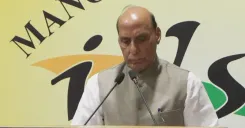
CM Mohan Yadav to transfer ₹1,834 cr to 1.25 cr Ladli Behnas
Synopsis
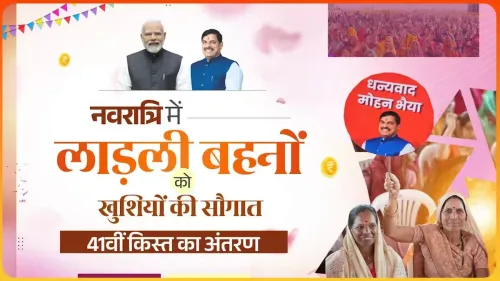
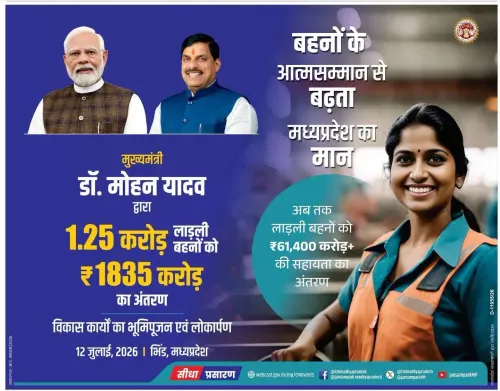
Chief Minister Dr. Mohan Yadav will transfer over ₹1,834 crore to 1.25 crore women beneficiaries of Ladli Behna Yojana on 14 October 2026 from Umaria, continuing Madhya Pradesh's flagship direct cash-transfer programme for women's financial empowerment.
Key Takeaways
₹1,834 crore to be transferred in a single disbursement cycle to 1.25 crore Ladli Behna Yojana beneficiaries on 14 October 2026 .
The transfer event is being held in Umaria , a tribal-majority district in eastern Madhya Pradesh, signalling outreach beyond urban centres.
Ladli Behna Yojana was launched in March 2023 under former CM Shivraj Singh Chouhan, initially offering ₹1,000 per month to women aged 21–60.
Mohan Yadav , in office since December 2023 , has maintained uninterrupted monthly disbursement cycles under the scheme.
The programme mirrors similar women-focused cash transfer schemes in Rajasthan and Chhattisgarh , reflecting a national trend in direct household welfare delivery.
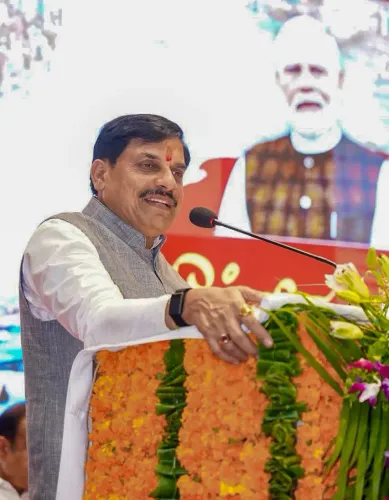
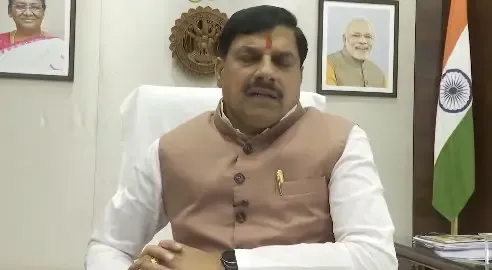
Over 1.25 crore women in Madhya Pradesh are set to receive a collective boost to their household finances today, as Chief Minister Dr. Mohan Yadav prepares to transfer more than ₹1,834 crore directly into their bank accounts under the state's flagship Ladli Behna Yojana — the single largest direct benefit transfer event in the scheme's recent cycle, held on 14 October 2026 from Umaria district in eastern Madhya Pradesh.
The Chief Minister's Office announced the transfer with the rallying call: 'Har behen aatmnirbhar, har parivar ko mazbooti' — 'Every sister self-reliant, strength to every family' — encapsulating the political and social ambition behind the scheme.
What Ladli Behna Yojana delivers — and who it reaches
Ladli Behna Yojana was launched in March 2023 by the then Chief Minister Shivraj Singh Chouhan, initially providing ₹1,000 per month per eligible woman aged 21 to 60 as a direct cash transfer to promote financial independence at the household level. The scheme quickly became one of the most politically visible welfare programmes in the state, credited with deepening the Bharatiya Janata Party's reach among rural women voters ahead of the 2023 Madhya Pradesh assembly elections.
Dr. Mohan Yadav, who succeeded Chouhan as Chief Minister in December 2023, has continued and sustained the programme through successive monthly disbursement cycles. Today's transfer — spread across 1.25 crore beneficiaries — underscores the scheme's scale and the state government's commitment to keeping the pipeline uninterrupted.
Umaria as the stage: a deliberate signal to eastern MP
The choice of Umaria as the venue for this disbursement event is notable. Located in eastern Madhya Pradesh, Umaria is a tribal-majority, relatively underserved district — far from the urban centres of Bhopal or Indore. Holding a flagship welfare event here sends a visible message about outreach beyond the state's economic heartland.
Direct benefit transfers staged in districts like Umaria also serve an administrative purpose: they allow the government to demonstrate real-time digital infrastructure — Jan Dhan accounts, Aadhaar linkage, and mobile banking penetration — functioning in areas where financial inclusion gains are still relatively recent.
MP's cash-transfer model in a national pattern
Madhya Pradesh's approach mirrors a broader national pattern: states from Rajasthan to Chhattisgarh have launched analogous women-focused direct transfer schemes, each competing to deepen household-level financial security while building political goodwill among women voters — now a decisive demographic in state elections. The sheer volume of ₹1,834 crore flowing in a single transfer cycle signals that Madhya Pradesh's programme has reached a scale where it functions less like a welfare scheme and more like a recurring income guarantee for over a tenth of the state's population.
With each monthly cycle, the state also accumulates data on financial inclusion outcomes — bank account usage, spend patterns, and coverage gaps — that feed into future policy calibration. Whether the benefit amount sees further upward revision remains the next inflection point to watch.
Point of View
A relatively rare exercise in political inheritance at the state level. Staging today's event in the tribal belt of Umaria, rather than a tier-one city, also reflects a deliberate geographic broadening of the scheme's visible footprint. The larger question for policymakers is whether cash transfers at this scale are being complemented by livelihood and skilling support — or whether the 'aatmnirbharta' framing remains aspirational.
NationPress
14 Oct 2026
Frequently Asked Questions
What is Ladli Behna Yojana in Madhya Pradesh?
Ladli Behna Yojana is a Madhya Pradesh government scheme launched in March 2023 that provides monthly direct cash transfers to eligible women aged 21 to 60 for financial empowerment. It was initiated under CM Shivraj Singh Chouhan and has been continued by CM Dr. Mohan Yadav.
How much money is being transferred under Ladli Behna Yojana in October 2026?
Chief Minister Dr. Mohan Yadav is transferring over ₹1,834 crore to more than 1.25 crore beneficiaries on 14 October 2026 as part of the scheme's latest disbursement cycle.
Who is eligible for Ladli Behna Yojana?
Women aged 21 to 60 who meet the scheme's eligibility criteria set by the Madhya Pradesh government are eligible. The scheme targets women across the state, with a focus on rural and economically weaker households.
Why is the Ladli Behna event being held in Umaria?
Umaria is a tribal-majority district in eastern Madhya Pradesh. Hosting the disbursement event there signals the government's focus on extending welfare delivery to underserved regions beyond the state's main urban centres.
Who is the current Chief Minister of Madhya Pradesh?
Dr. Mohan Yadav has been the Chief Minister of Madhya Pradesh since December 2023, when he succeeded Shivraj Singh Chouhan following the BJP's victory in the 2023 state assembly elections.