CM Yogi: Ayodhya Now Has Four-Lane Road, Rail & Airport Links
Synopsis
CM Yogi Adityanath announced that Ayodhya is now connected by four-lane roads on all sides, a strengthened railway double line, and the newly built Maharshi Valmiki International Airport, marking a major milestone in the city's infrastructure transformation.
Key Takeaways
CM Yogi Adityanath announced that Ayodhya is now connected on all sides by four-lane roads .
A railway double line has been added to strengthen Ayodhya's rail connectivity.
The Maharshi Valmiki International Airport has been constructed in Ayodhya, named after the sage Valmiki.
The infrastructure push follows the Ram Temple consecration in January 2024 and the 2019 Supreme Court verdict on Ram Janmabhoomi.
Road upgrades were executed under the central government's Bharatmala Pariyojana .
The development mirrors similar connectivity drives in Varanasi, Mathura, and Prayagraj under the Yogi government.
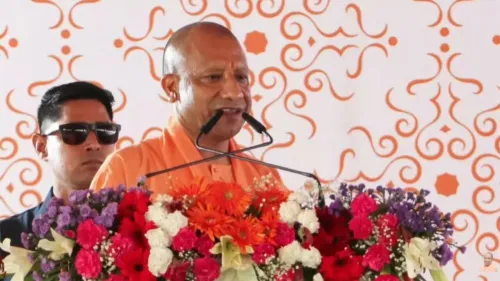
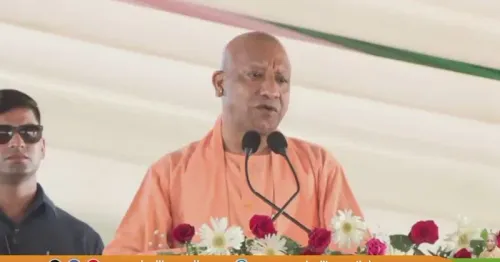
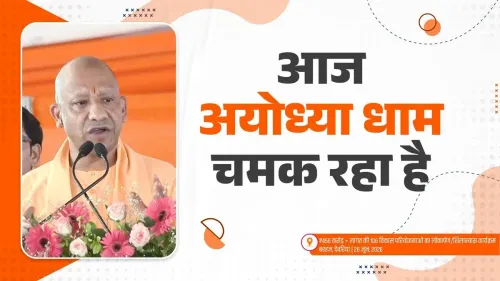
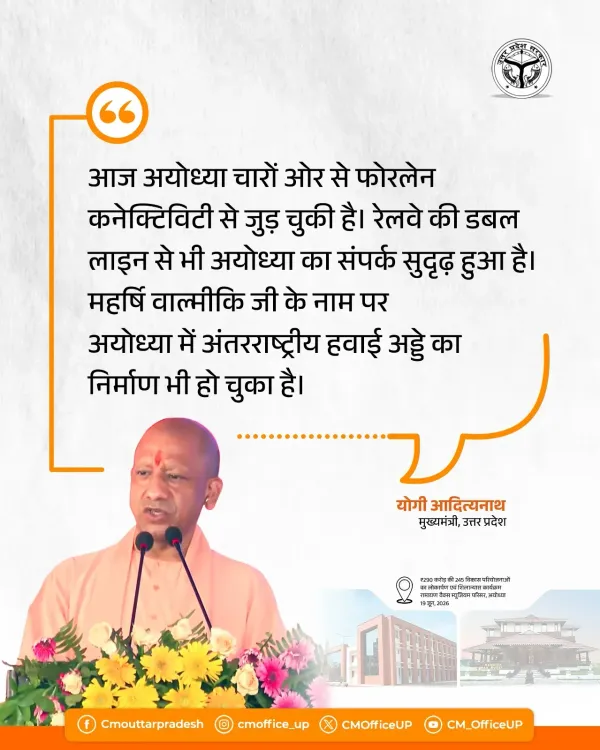
The Chief Minister's Office of Uttar Pradesh, quoting Chief Minister Yogi Adityanath, declared on Friday, 19 June 2026 that Ayodhya has been connected on all sides by four-lane roads, its railway network strengthened with a double line, and a new international airport — named after Maharshi Valmiki — built within the city.
In the post, CM Yogi stated: 'Aaj Ayodhya charon or se fourlane connectivity se jud chuki hai' ('Today, Ayodhya has been connected on all sides by four-lane connectivity'). He further noted that the railway double line has strengthened Ayodhya's connectivity, and that the Maharshi Valmiki International Airport has been constructed in the city.
Context
Ayodhya has been at the centre of a sweeping infrastructure push in Uttar Pradesh since the 2019 Supreme Court verdict on the Ram Janmabhoomi case, which cleared the path for the construction of the Ram Temple. The consecration of the Ram Temple in January 2024 dramatically accelerated pilgrim footfall projections and placed urgent pressure on the city's transport network to match demand. The four-lane road projects around Ayodhya were executed under the central government's Bharatmala Pariyojana, which prioritises the development of national highway corridors, including those serving major religious destinations. NH-27 and allied arterial roads were identified as key routes requiring upgrades to handle the anticipated surge in visitors.Policy Backdrop
The Yogi Adityanath government, in office since 2017, has consistently positioned religious tourism as a pillar of Uttar Pradesh's economic strategy. Varanasi, Mathura, and Prayagraj have all received comparable road, rail, and air upgrades under the same administration, establishing a pattern of corridor-based development around pilgrim cities. The Maharshi Valmiki International Airport in Ayodhya was developed to provide direct air access for domestic and international pilgrims, reducing dependence on the airports at Lucknow and Varanasi. The naming of the airport after the sage Valmiki, the author of the Ramayana, carries both cultural and political significance for the region. On the rail side, the doubling of railway lines connecting Ayodhya is part of a broader effort aligned with the Amrit Bharat Station redevelopment scheme, which targets the modernisation of stations along high-traffic pilgrim corridors across India.Stakeholders and Impact
The primary beneficiaries of these infrastructure upgrades are pilgrims, tourists, and local businesses in and around Ayodhya. Improved multi-modal connectivity — road, rail, and air — is expected to reduce travel time significantly and enable the city to absorb a far larger volume of visitors than its earlier infrastructure could support. Local traders, hospitality providers, and transport operators stand to gain directly from increased footfall. At the same time, the upgrades carry wider economic implications for eastern Uttar Pradesh, a region that has historically lagged in infrastructure investment compared to the state's western districts.What's Next
Attention will now turn to the operational performance of the Maharshi Valmiki International Airport — including the number of airlines and routes it attracts — and to the state tourism department's annual pilgrim footfall data, which will serve as the clearest measure of whether the infrastructure investment is translating into visitor growth. Further announcements on rail capacity expansion and highway maintenance along Ayodhya's approach roads are also anticipated as the state government continues to develop the city as a premier religious tourism destination.Point of View
With Ayodhya as its centrepiece. By highlighting three distinct transport modes in a single statement, the Chief Minister's Office signals that the city has crossed a threshold from a pilgrimage site with legacy constraints to a multi-modal destination. This fits a broader pattern under the current UP administration of using religious geography as both a development anchor and a political statement. The operationalisation and utilisation rates of the Maharshi Valmiki International Airport will be the real test of whether the infrastructure investment delivers the economic returns the government has projected.
NationPress
19 Sept 2026
Frequently Asked Questions
Is Ayodhya now connected by four-lane roads on all sides?
According to a statement by CM Yogi Adityanath posted by the Chief Minister's Office of Uttar Pradesh on 19 June 2026, Ayodhya has been connected on all sides by four-lane road connectivity.
What is the Maharshi Valmiki International Airport in Ayodhya?
The Maharshi Valmiki International Airport is a new international airport built in Ayodhya, named after the sage Valmiki who authored the Ramayana. It was developed to provide direct air access for pilgrims and tourists visiting the city.
Which central scheme funded the four-lane roads around Ayodhya?
The four-lane road upgrades around Ayodhya, including work on NH-27, were executed under the central government's Bharatmala Pariyojana, which prioritises national highway corridors serving major religious and economic destinations.
Why has Ayodhya received so much infrastructure investment in recent years?
Ayodhya's infrastructure push accelerated after the 2019 Supreme Court verdict on Ram Janmabhoomi and the consecration of the Ram Temple in January 2024, both of which significantly increased projected pilgrim and tourist footfall to the city.
What other cities in Uttar Pradesh have received similar connectivity upgrades?
Under the Yogi Adityanath government, Varanasi, Mathura, and Prayagraj have all received comparable road, rail, and air infrastructure upgrades as part of the state's religious tourism development strategy.