CM Yogi Highlights Kashi, Ayodhya Infrastructure Push
Synopsis
Chief Minister Yogi Adityanath says Kashi Vishwanath Dham now accommodates 20,000 pilgrims simultaneously under PM Modi's redevelopment push, and that Ayodhya's new Maharishi Valmiki International Airport marks a long-awaited connectivity leap for one of India's holiest cities.
Key Takeaways
Kashi Vishwanath Dham can now host 20,000 devotees simultaneously , according to CM Yogi Adityanath's statement on 26 October 2026.
The Kashi Vishwanath Corridor was inaugurated by Prime Minister Narendra Modi in December 2021 , opening up a congested temple precinct and adding managed visitor facilities.
Ayodhya now has an international airport named Maharishi Valmiki International Airport , ending years of wait for direct air connectivity to the holy city.
CM Yogi credited PM Modi's leadership for the transformation of both cities.
The investments reflect a sustained state-and-Centre policy of pairing temple precinct redevelopment with new transport infrastructure at major UP pilgrimage sites.
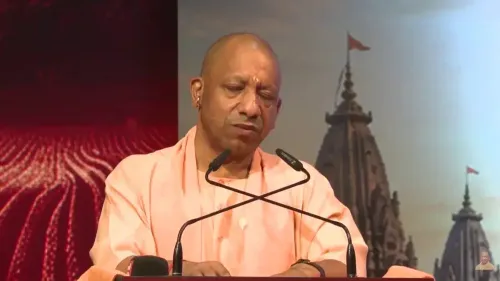
Two of Uttar Pradesh's most sacred cities are being reshaped in real time — and Chief Minister Yogi Adityanath wants the scale of that transformation to be impossible to miss. On Monday, 26 October 2026, the Chief Minister's Office of Uttar Pradesh posted a statement attributed directly to the Chief Minister, spotlighting twin infrastructure milestones at Varanasi and Ayodhya that he says define a 'new Kashi in a new form.'
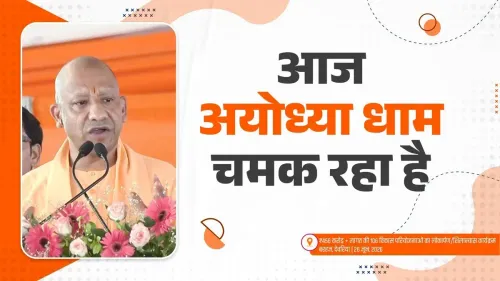
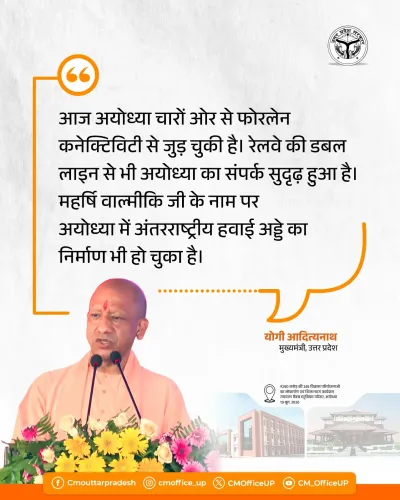
The statement reads: 'Aaj Shri Kashi Vishwanath Dham mein ek saath 20,000 shraddhalu suvidhaapoorvak darshan kar sakte hain' — 'Today, 20,000 devotees can comfortably take darshan at Shri Kashi Vishwanath Dham simultaneously.' CM Yogi credited Prime Minister Narendra Modi's leadership for the transformation, describing the ancient city as presenting itself to the world in an entirely new avatar. He then pivoted to Ayodhya, announcing that the long-awaited international airport there has been built and named after the ancient sage — the Maharishi Valmiki International Airport.
From narrow lanes to 20,000 pilgrims at once: the Kashi Vishwanath Corridor
The Kashi Vishwanath Corridor project, inaugurated by Prime Minister Modi in December 2021, was a wholesale reimagining of the precinct around one of Hinduism's most venerated shrines. Centuries of dense urban buildup had constricted access to the temple; the corridor project cleared surrounding structures, opened sightlines to the Ganga ghats, and built a network of plazas, rest areas, and amenity facilities that dramatically expanded the number of pilgrims the complex can absorb at any given moment. The claim of 20,000 simultaneous visitors is the figure the Chief Minister places at the centre of that story — a single number meant to convey how completely the experience has changed.
Varanasi is among the busiest pilgrimage destinations on earth. On peak festival days, footfall historically ran into the hundreds of thousands, with congestion creating safety risks and eroding the devotional experience. The corridor was explicitly designed to address that — creating managed, dignified access rather than the crush of narrow alleys that previously defined the approach to the sanctum.
Ayodhya gets its international gateway — named for Valmiki
If Kashi represents the redevelopment chapter, Ayodhya represents the connectivity chapter. The city at the centre of India's most politically and spiritually charged real-estate story now has an international airport — a piece of infrastructure that, for decades, existed only in plans. The Maharishi Valmiki International Airport, Ayodhya is named after the poet-sage credited with composing the Ramayana, tying the airport's identity directly to the city's theological significance.
Ayodhya has been at the heart of an unprecedented infrastructure sprint by both the Uttar Pradesh government and the Centre. New road links, station redevelopments, hotel zones, and the airport together form a pilgrim-economy ecosystem meant to service the millions drawn to the city — numbers that surged further following the Ram Mandir consecration. An international airport removes a critical bottleneck: devotees from abroad and from distant Indian metros can now fly directly into the city rather than travelling hours overland from Lucknow.
A template for pilgrimage infrastructure — and what comes next
Kashi and Ayodhya are the two most visible nodes in a broader state policy of upgrading major Hindu religious circuits in Uttar Pradesh. The pattern is consistent: temple precinct redevelopment paired with transport connectivity, all anchored in the branding of 'New UP.' CM Yogi's statement is as much a political inventory as it is a progress update — a listing of deliverables for an electorate for whom these sites carry enormous emotional weight.
The airport's operational ramp-up — passenger traffic figures, international route launches — and any further expansion announcements at the Dham will be the next concrete markers of whether the infrastructure is matching the promise. The pilgrims are already arriving. The question is how smoothly the new systems absorb them.
Point of View
Showcasing two of the most emotionally resonant infrastructure wins in the BJP's UP narrative. The pairing of Kashi and Ayodhya is deliberate — both cities are central to the party's civilisational-revival brand, and delivering tangible upgrades at each gives the government a concrete answer to 'what has changed.' The airport naming after Maharishi Valmiki also signals an effort to weave Dalit and OBC cultural icons into the same developmental story, broadening its appeal beyond the core upper-caste Hindu base. Operationally, the real test remains passenger throughput at the Ayodhya airport and sustained crowd management at the Dham — because infrastructure announcements in India's pilgrimage economy are only as durable as the daily visitor experience they create.
NationPress
26 Oct 2026
Frequently Asked Questions
How many pilgrims can visit Kashi Vishwanath Dham at once now?
According to CM Yogi Adityanath's statement on 26 October 2026, 20,000 devotees can now take darshan at Kashi Vishwanath Dham simultaneously, a capacity made possible by the Kashi Vishwanath Corridor redevelopment project.
What is the name of the new airport in Ayodhya?
The new international airport in Ayodhya is named Maharishi Valmiki International Airport , honouring the ancient sage credited with composing the Ramayana.
When was the Kashi Vishwanath Corridor inaugurated?
The Kashi Vishwanath Corridor was inaugurated by Prime Minister Narendra Modi in December 2021 , redeveloping the temple precinct in Varanasi to modernise access and expand pilgrim facilities.
Why was an international airport built in Ayodhya?
The Maharishi Valmiki International Airport was constructed to provide direct air connectivity to Ayodhya, a major Hindu pilgrimage city whose visitor numbers surged following the Ram Mandir consecration, reducing the need for long overland journeys from larger cities.
What infrastructure projects has CM Yogi completed at religious sites in UP?
CM Yogi Adityanath 's government, in partnership with the Centre, has driven redevelopment of the Kashi Vishwanath Dham in Varanasi and overseen construction of the Maharishi Valmiki International Airport in Ayodhya, alongside broader upgrades to roads, stations, and tourist facilities across major pilgrimage circuits in Uttar Pradesh.