CM Yogi Champions Data-Driven Governance for UP

Synopsis
Chief Minister Yogi Adityanath declared on November 16, 2026, that precise and reliable data is the bedrock of effective planning and outcome-driven governance in Uttar Pradesh, signalling a continued push for digital accountability across the state's 75 districts.
Key Takeaways
CM Yogi Adityanath stated on November 16, 2026 that accurate data directly improves government planning and scheme outcomes.
The statement frames 'data-based governance' as the foundational philosophy of the Uttar Pradesh administration.
UP has integrated real-time digital monitoring tools for welfare scheme delivery since 2017 .
The directive implicitly holds 75 district-level administrations accountable for data integrity in scheme implementation.
Observers will watch for follow-up announcements on new dashboards or training mandates for district officials.
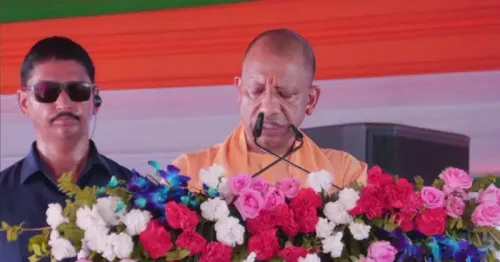
Accurate data is not just a bureaucratic tool — it is the foundation of effective government. On Monday, November 16, 2026, the Chief Minister's Office of Uttar Pradesh shared a sharp directive from Chief Minister Yogi Adityanath: reliable data is the prerequisite for sharper planning and measurable outcomes across state schemes.
The post quoted the Chief Minister directly: 'यदि आपके पास सटीक और विश्वसनीय डेटा है, तो आपकी प्लानिंग भी बेहतर होगी और योजनाओं का आउटपुट कैलकुलेटेड होगा। डेटा बेस्ड गवर्नेंस का मार्ग यहीं से प्रशस्त होता है।' — which translates as: 'If you have precise and reliable data, your planning will improve and the output of schemes will be calculated. This is where the path to data-based governance is paved.'
Yogi's nine-year push for measurable governance
Since March 2017, the Yogi Adityanath administration has steadily moved Uttar Pradesh — India's most populous state — toward digital monitoring of welfare delivery. Real-time dashboards, scheme-tracking portals, and district-level performance reviews have become recurring instruments of governance. The Chief Minister's statement lands as an institutional philosophy, not just a passing remark.
The logic is simple and powerful. India runs hundreds of central and state schemes simultaneously, each with its own beneficiary lists, fund flows, and delivery targets. Without granular, verified data at the ground level, money leaks, duplication persists, and the wrong households receive benefits. Data-based governance is the corrective. It is also increasingly the expectation — from NITI Aayog frameworks to Union Ministry guidelines, outcome-linked spending is becoming the national norm.
District officials in the crosshairs of data accountability
The practical implication points directly at Uttar Pradesh's 75 districts and the thousands of officials who administer schemes at block and village level. When a Chief Minister publicly frames data integrity as the gateway to better governance, the signal is unmistakable: administrators who submit inaccurate or inflated figures are not just committing a paperwork error — they are breaking the entire planning chain upstream.
Watchers of UP administration will be tracking whether this statement precedes a concrete rollout — new data dashboards, mandatory training modules for district planners, or stricter audit protocols tied to scheme disbursals. The statement has the texture of a policy commitment waiting for an operational announcement.
In a state of over 240 million people, the difference between guesswork and evidence-based targeting is not marginal — it is the difference between a scheme that transforms a district and one that simply consumes a budget line. CM Yogi just said the quiet part out loud.
Point of View
UP's Chief Minister is publicly raising the cost of data manipulation at the district level. If a concrete operational directive follows, this could tighten beneficiary targeting in a state whose sheer scale makes data quality a fiscal and political variable of national consequence. The statement also positions CM Yogi as a leader who governs by measurement, a contrast he implicitly draws with predecessor administrations criticised for opaque welfare delivery.
NationPress
16 Nov 2026
Frequently Asked Questions
What did CM Yogi Adityanath say about data and governance?
CM Yogi stated that if the government has precise and reliable data, planning improves and the output of schemes becomes calculated — framing data integrity as the foundation of data-based governance in Uttar Pradesh.
What is data-based governance in Uttar Pradesh?
Data-based governance in UP refers to using real-time digital data — from beneficiary lists to fund-flow tracking — to plan, monitor, and evaluate government schemes, reducing leakage and improving targeting across the state's 75 districts.
How has the Yogi government used data in governance since 2017?
Since March 2017, the Yogi Adityanath administration has introduced digital monitoring platforms, real-time dashboards, and performance review systems to track welfare scheme delivery at the district level across Uttar Pradesh.
Why does data quality matter for UP government schemes?
UP is India's most populous state with over 240 million people. Without accurate data, scheme funds can be misdirected, duplicate beneficiaries go undetected, and planning targets become meaningless — accurate data is the starting point for effective delivery.
What could follow from CM Yogi's data governance statement?
Policy watchers are looking for a possible follow-up announcement such as new district-level data dashboards, mandatory training modules for officials, or stricter audit protocols linked to scheme disbursals in Uttar Pradesh.