CM Yogi backs ECI's Special Intensive Revision of voter rolls
Synopsis
Uttar Pradesh Chief Minister Yogi Adityanath has publicly backed the Election Commission of India's Special Intensive Revision (SIR) exercise, calling for removal of deceased, duplicate, and relocated voter entries and urging all youth who have turned 18 to enrol immediately.
Key Takeaways
CM Yogi Adityanath backed the ECI's Special Intensive Revision (SIR) of electoral rolls on October 5, 2026 .
He called for identification and removal of entries for deceased voters, permanently relocated persons, and duplicate registrations .
He framed a clean voter list as essential to India's security, unity, and integrity — not just electoral hygiene.
The CM made a direct appeal to every Indian who has completed 18 years of age to register on the voter list without delay.
Uttar Pradesh has approximately 15 crore registered voters , making its roll accuracy a major factor in national electoral credibility.
The post urged citizens to become active participants — sabhagi — in building a 'pure, empowered and transparent' voter list.
India's voter lists are getting a hard look — and Uttar Pradesh Chief Minister Yogi Adityanath wants every eligible citizen paying attention. On Monday, October 5, 2026, the CM took to X to publicly back the Election Commission of India's (ECI) Special Intensive Revision (SIR) exercise, calling it a vital step in strengthening the country's democratic heritage — and urging the removal of ineligible names from electoral rolls.
Posting in Hindi, CM Yogi framed the drive in sweeping terms: 'भारत युगों से लोकतांत्रिक मूल्यों का संरक्षक रहा है' — 'India has been the guardian of democratic values for ages.' From that foundation, he made a pointed argument: verifying and removing entries belonging to deceased persons, permanently relocated voters, and duplicate registrations is not mere housekeeping. It is, in his words, essential to India's 'security, unity and integrity.'What the SIR exercise actually involves
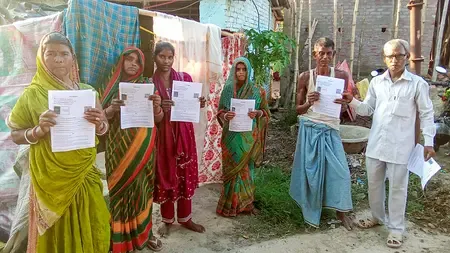
The Special Intensive Revision is a structured ECI process through which electoral rolls are audited at the booth level across constituencies. Field-level officials cross-check existing entries against death records, migration data, and duplication flags. The stated goal is a clean, current, and fraud-resistant voter list — one that reflects the actual electorate rather than an accumulated record padded by years of unverified additions.
CM Yogi specifically highlighted three categories of entries that must be weeded out: names of deceased voters, entries for those permanently relocated to another area, and duplicate registrations — cases where one person appears more than once on the rolls. Vigilant voters, he said, should actively help identify ineligible names and report them for removal 'as per the rules.'
A direct call to first-time voters
The CM's appeal was not only about deletion — it had a clear addition agenda too. He specifically addressed young Indians crossing the age threshold: every person who has completed 18 years of age must ensure their name is enrolled in the voter list. The message was a direct pitch for expanding the franchise even as the rolls are being cleaned up.
The dual thrust — prune the ineligible, enrol the eligible — is the essential logic of any credible SIR cycle. A bloated list depresses the real turnout percentage and creates openings for impersonation; a list that misses new adults is simply incomplete. CM Yogi's post, brief as it is, captures both imperatives in one appeal.
As India's most populous state — home to roughly 15 crore registered voters — Uttar Pradesh is a bellwether for any national electoral roll exercise. A clean UP list moves the national needle more than almost any other state. That is why a senior leader's public push for citizen participation in the SIR process carries weight well beyond a single post.
The kicker: roll revision only works when voters show up — to verify, to report, and to register. The Commission sets the process; citizens decide whether it lands.
Point of View
Preventing it from reading purely as a deletion drive. For a state of UP's size, leadership-level amplification of ECI exercises has historically correlated with higher booth-level compliance — which is precisely why such posts are rarely just social media filler.
NationPress
5 Oct 2026
Frequently Asked Questions
What is the ECI's Special Intensive Revision (SIR) of voter rolls?
The Special Intensive Revision is an Election Commission of India exercise in which electoral rolls are audited at the booth level to verify existing entries and remove names of deceased voters, those who have permanently relocated, and duplicate registrations, while also enrolling eligible new voters.
Why did CM Yogi Adityanath post about the voter list revision?
CM Yogi Adityanath posted on October 5, 2026, to publicly support the ECI's SIR exercise, urging citizens to help identify ineligible entries and calling on all youth who have turned 18 to register as voters.
How can I get my name added to the voter list in India?
Indian citizens who have completed 18 years of age can apply online through the Election Commission of India's Voter Helpline portal or visit their local Electoral Registration Officer to submit Form 6 for enrolment.
What types of voter entries does the SIR process remove?
The SIR process targets entries for deceased persons, voters who have permanently shifted to another location, and duplicate registrations where one individual appears more than once on the electoral rolls.
Why does voter roll cleanliness matter for national security?
Ineligible entries on electoral rolls can enable impersonation and inflated voter turnout figures; CM Yogi specifically argued that removing such entries is essential to India's security, unity, and integrity, reflecting a broader political framing of electoral integrity as a governance priority.