CM Yogi backs Harihar Mandir authority in Sambhal dispute
Synopsis
Uttar Pradesh Chief Minister Yogi Adityanath on 18 July 2026 declared that in Sambhal, only the orders of the Harihar Mandir will prevail, signalling state backing for the temple authority and intensifying focus on the district's long-standing religious site dispute.
Key Takeaways
CM Yogi Adityanath posted on 18 July 2026 that the authority of the Harihar Mandir will now be decisive in Sambhal .
The Hindi post used the phrase Turkai nahi chalegi , signalling the end of what he termed the adversary's dominance in the area.
Sambhal is a district in western Uttar Pradesh with a history of communal tension and competing religious site claims.
The statement aligns with the Yogi Adityanath government's broader pattern of publicly supporting Hindu temple committees in local disputes.
The post follows the precedent set by the 2019 Supreme Court Ayodhya verdict , which energised similar claims across Uttar Pradesh .
Analysts expect possible court-ordered surveys or administrative actions in Sambhal following this political signal from Lucknow .
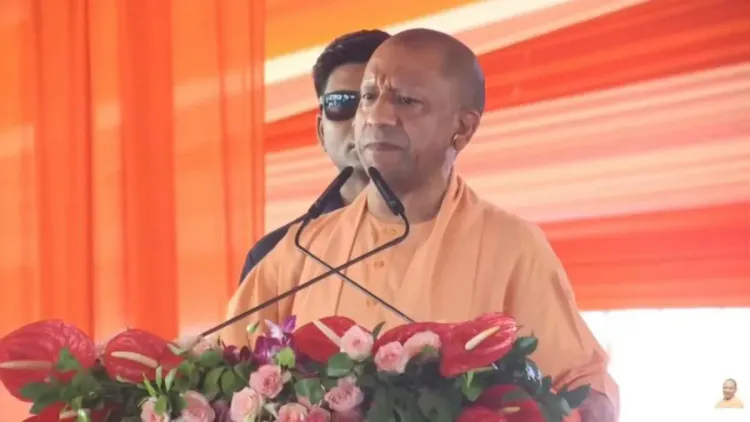
Uttar Pradesh Chief Minister Yogi Adityanath on Saturday, 18 July 2026, declared that in Sambhal, the directives of the Harihar Mandir will now prevail, signalling the state government's unambiguous alignment with the temple authority in the district's ongoing religious site dispute. The statement, posted on X, carried pointed language aimed at those who have historically contested the temple's primacy in the area.
Context
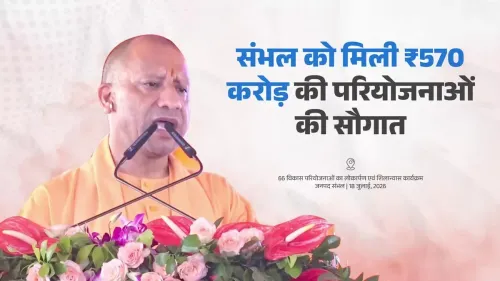
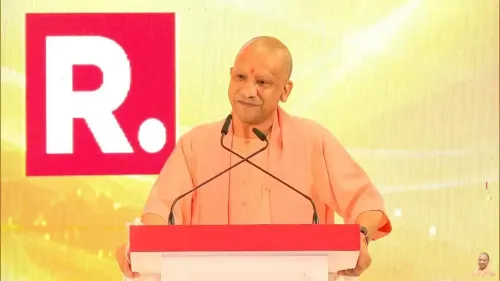
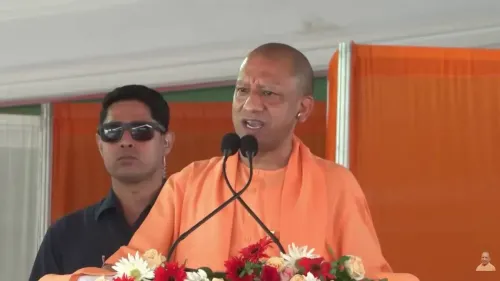
The Chief Minister's post, written in Hindi, reads: 'Ab 'Turk' ki 'Turkai' nahi chalegi... ab Sambhal mein wahi hoga, jo Harihar Mandir ka aadesh hoga...' — translated as: 'The arrogance of the adversary will no longer hold sway... now in Sambhal, only the order of the Harihar Mandir will prevail.' The use of the word Turkai (roughly meaning 'dominance' or 'high-handedness' in colloquial Hindi) is a rhetorical device underscoring the administration's posture. The post accompanied a video, the contents of which were not independently detailed in the post metadata.
Sambhal is a district in western Uttar Pradesh with a documented history of communal tensions and competing claims over religious structures. The district has remained sensitive following a series of incidents in recent years that drew statewide attention.
Policy Backdrop
The statement fits a consistent pattern in the Yogi Adityanath government's approach to disputes involving historical Hindu religious sites across Uttar Pradesh. Since the 2019 Supreme Court verdict on the Ayodhya Ram Janmabhoomi-Babri Masjid case — which cleared the path for construction of the Ram temple — similar claims over other sites have gained political and administrative visibility across the state.
The state government has, on multiple occasions, publicly backed temple committees and Hindu religious authorities in local disputes, often framing such support as a restoration of historical and cultural rights. Yogi Adityanath's dual role as Chief Minister and head of the Gorakhnath Math, a prominent Hindu religious institution in Gorakhpur, has consistently shaped the ideological character of his administration's public communications on such matters.
Stakeholders and Impact
The primary stakeholders in this development are the Harihar Mandir committee and its affiliated devotees, residents of Sambhal district, and local administrative and law-enforcement bodies who will be expected to act in accordance with the political direction signalled from Lucknow. For the temple committee, the Chief Minister's public endorsement represents significant institutional backing.
For Muslim residents and other communities in Sambhal who may hold competing claims or interests in the area, the statement raises questions about the impartiality of administrative processes going forward. Civil society observers and legal practitioners watching religious-site disputes in Uttar Pradesh are likely to scrutinise any subsequent administrative or judicial actions in the district closely.
What's Next
The Chief Minister's declaration is expected to intensify scrutiny of any pending court proceedings or survey orders related to religious structures in Sambhal. Analysts watching the Uttar Pradesh political landscape will note whether the state government follows the statement with concrete administrative directives, including possible support for court-ordered surveys of disputed sites in the district.
With assembly elections on the long-term horizon and the BJP's cultural-nationalist positioning remaining central to its electoral identity in Uttar Pradesh, such statements are likely to remain a recurring feature of the Chief Minister's public communication, particularly in districts with unresolved religious site disputes.
Point of View
Where the Chief Minister has used social media to frame religious site disputes in cultural-nationalist terms, often pre-empting administrative neutrality. The Sambhal statement is notable for its combative register, invoking the imagery of a historical adversary being subdued — language that will resonate with the BJP's core constituency while drawing criticism from opposition parties and minority community representatives. Situated in a broader arc of post-Ayodhya temple-politics in Uttar Pradesh, the post underscores how religious site disputes have become a durable axis of governance messaging for the state's ruling establishment.
NationPress
18 Jul 2026
Frequently Asked Questions
What did CM Yogi Adityanath say about Sambhal on 18 July 2026?
CM Yogi Adityanath posted on X that in Sambhal, only the orders of the Harihar Mandir will now prevail, using the phrase 'Turkai nahi chalegi' to signal that the temple's authority will be decisive in the district's religious site dispute.
What is the Harihar Mandir in Sambhal?
The Harihar Mandir is a Hindu temple in Sambhal district, western Uttar Pradesh, whose management and directives are at the centre of a local religious site dispute that has drawn the Chief Minister's public support.
Why is Sambhal a sensitive district in Uttar Pradesh?
Sambhal has a documented history of communal tensions and competing claims over religious structures, making it one of the districts in western Uttar Pradesh that has repeatedly drawn state and national attention in recent years.
How does this statement connect to the Ayodhya verdict?
The 2019 Supreme Court verdict on the Ayodhya Ram Janmabhoomi-Babri Masjid site paved the way for the Ram temple and encouraged similar claims over historical religious structures across Uttar Pradesh, providing the political and legal backdrop for disputes like the one in Sambhal.
What action could follow CM Yogi's Sambhal statement?
Analysts expect the statement to accelerate scrutiny of pending court proceedings in Sambhal, and possible court-ordered surveys or state administrative directives in support of the Harihar Mandir's claims in the district.