CM Yogi Invokes Ram Mandir to Highlight Power of Vote
Synopsis
Uttar Pradesh Chief Minister Yogi Adityanath posted on X on 29 May 2026, arguing that a single vote erased 500 years of subjugation by enabling the Ram Mandir's construction at Ayodhya — a signature BJP voter-mobilisation message ahead of the 2027 state assembly elections.
Key Takeaways
Yogi Adityanath posted on X on 29 May 2026 linking electoral participation directly to the construction of the Ram Mandir at Ayodhya .
The post states that 'your one vote' washed away 500 years of subjugation and made the temple possible.
The Ram Mandir was consecrated in January 2024 following a 2019 Supreme Court verdict resolving the Ram Janmabhoomi-Babri Masjid dispute.
BJP has governed Uttar Pradesh since 2017 and has consistently tied the temple issue to electoral messaging.
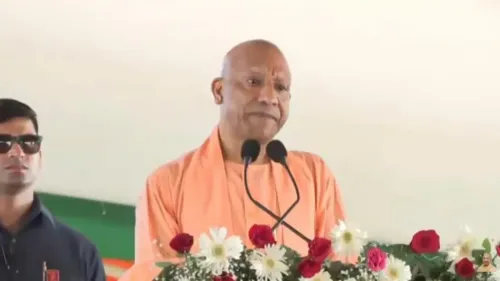
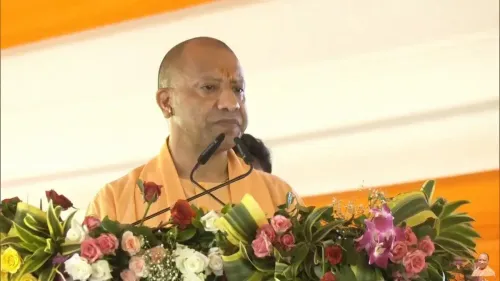
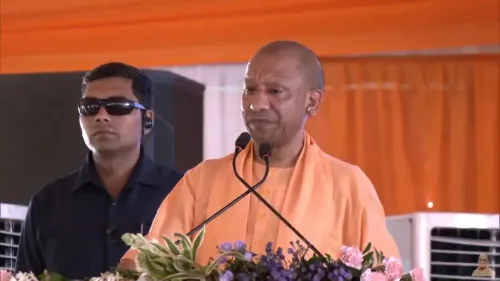
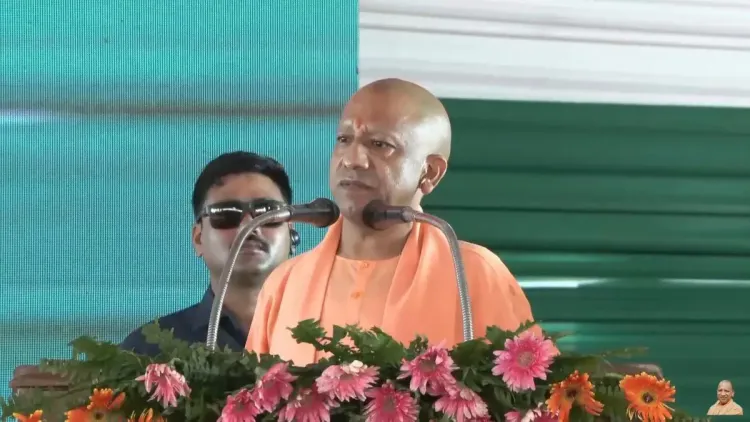
The post included a video, broadening its reach across the party's digital networks in the state.
The message is widely seen as early groundwork for BJP 's voter mobilisation ahead of the 2027 Uttar Pradesh assembly elections .
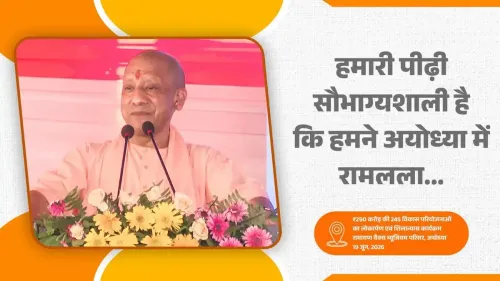
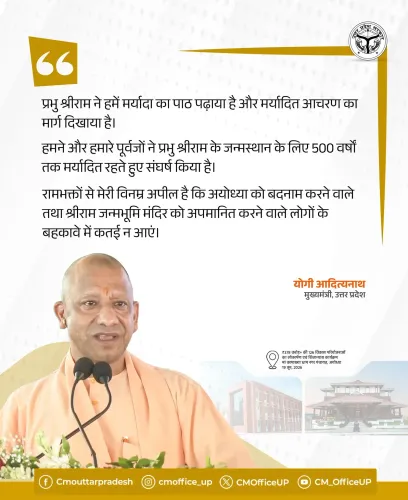
Uttar Pradesh Chief Minister Yogi Adityanath on Friday, 29 May 2026, invoked the construction of the Ram Mandir at Ayodhya to underline the transformative power of electoral participation, posting on X that a single vote had erased 500 years of subjugation and made the temple a reality. The message, shared with a video attachment, is aimed squarely at voter mobilisation and continues a long-running BJP narrative linking the temple's construction to the choices made at the ballot box.
Context
The post, written in Hindi, states: 'Aapka ek vote 500 varshon ki gulami ke kalank ko dhokar Shri Ayodhya Dham mein Ram Mandir ka nirman kar deta hai' — 'Your one vote washes away the stain of 500 years of slavery and builds the Ram Temple at Shri Ayodhya Dham.' Adityanath closes with the declaration: 'This is the power of the vote.' The framing is direct: electoral choice is presented as the proximate cause of a cultural and religious milestone that BJP has championed for decades.
The Ram Mandir at Ayodhya was consecrated in January 2024 following a 2019 Supreme Court of India verdict that resolved the long-running Ram Janmabhoomi-Babri Masjid dispute in favour of Hindu claimants, clearing the path for temple construction. The ceremony was attended by Prime Minister Narendra Modi and was widely regarded as a landmark moment for the BJP's core political constituency.
Policy Backdrop
The BJP has governed Uttar Pradesh since 2017, with Adityanath at its helm. Throughout that period, the party has consistently tied the Ram Temple issue to electoral messaging, arguing that voting for the BJP was a direct instrument through which Hindu cultural aspirations could be realised. The consecration in 2024 gave that argument a concrete, visible outcome to point to.
The '500 years' reference alludes to the widely cited period between the demolition of the original temple structure — attributed to the Mughal era — and the commencement of the new temple's construction. The figure has become a standard rhetorical anchor in BJP political communication on the Ayodhya issue, framing the temple's construction as the resolution of a civilisational wrong.
Stakeholders and Impact
The message is directed at Uttar Pradesh voters, particularly Hindu devotees for whom the Ram Mandir carries deep religious and emotional significance. By attributing the temple's construction to 'your one vote,' Adityanath personalises the stakes of electoral participation and reinforces the idea that individual voters are agents of large-scale cultural change.
The post also arrives with a video, amplifying its reach on social media. Such content typically circulates widely in the party's digital ecosystem, reaching rural and semi-urban voters across the state who may engage more readily with visual and audio formats than with text-based communication.
What's Next
With the 2027 Uttar Pradesh assembly elections on the horizon, messaging of this kind is likely to intensify. Analysts will watch whether subsequent posts and campaign events further develop the temple-to-vote linkage or expand it to other BJP-associated milestones. Any announcements related to Ayodhya's infrastructure development or temple-precinct expansion could also be woven into this broader electoral narrative in the months ahead.
Point of View
Emotionally resonant outcome. The '500 years' framing is not incidental; it situates the BJP's governance within a civilisational timeline, making any vote against the party feel like a step backward rather than a routine political choice. With the 2027 Uttar Pradesh assembly elections approaching, this kind of messaging serves a dual function: it consolidates the existing Hindu consolidation vote while signalling to undecided voters that the stakes of their ballot extend beyond policy to identity and heritage. The use of a video alongside the text suggests a deliberate push into vernacular digital spaces where emotional resonance travels faster than policy argument.
NationPress
19 Sept 2026
Frequently Asked Questions
What did CM Yogi Adityanath say about the Ram Mandir and voting?
CM Yogi Adityanath posted on X on 29 May 2026 saying that 'your one vote' erased 500 years of subjugation and enabled the construction of the Ram Mandir at Ayodhya, calling it the power of the vote.
When was the Ram Mandir at Ayodhya consecrated?
The Ram Mandir at Ayodhya was consecrated in January 2024, following a 2019 Supreme Court verdict that resolved the Ram Janmabhoomi-Babri Masjid dispute in favour of Hindu claimants.
Why does BJP link the Ram Mandir to elections?
BJP has consistently argued that its electoral victories enabled the legal and political conditions for the Ram Mandir's construction, framing a vote for the party as a vote for Hindu cultural aspirations.
What does '500 years of slavery' mean in Yogi Adityanath's post?
The '500 years' reference alludes to the period between the demolition of the original temple structure during the Mughal era and the construction of the new Ram Mandir, a framing BJP uses to present the temple as the resolution of a long-standing civilisational wrong.
Is Yogi Adityanath campaigning for the 2027 UP elections?
While no formal campaign has been announced, messaging that ties completed milestones like the Ram Mandir to voter participation is widely read as early groundwork ahead of the 2027 Uttar Pradesh assembly elections.