CM Yogi Claims 65 Lakh Houses, 3 Cr Toilets in 9.5 Years
Synopsis
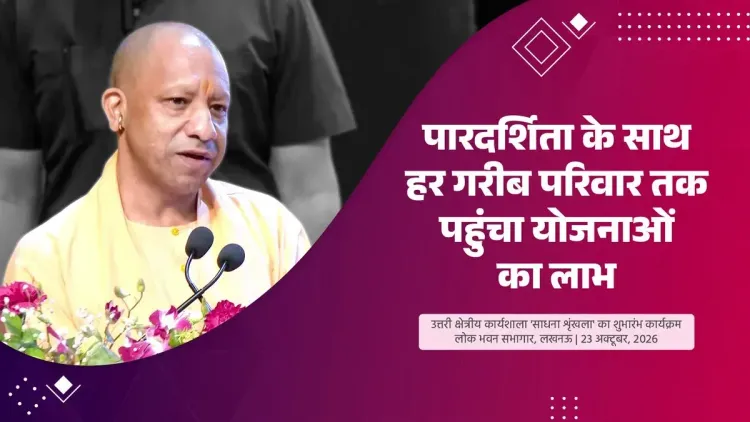
The Chief Minister's Office of Uttar Pradesh, quoting CM Yogi Adityanath, says the state has delivered housing to 65 lakh families, built over 3 crore toilets, and enrolled more than 15 crore people in PMGKAY over nine and a half years.
Key Takeaways
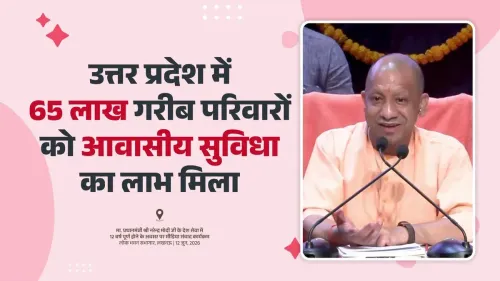
65 lakh poor families in Uttar Pradesh have been provided housing over the past nine and a half years , according to CM Yogi Adityanath.
Over 3 crore households received toilets under the Swachh Bharat Mission during this period.
More than 15 crore people in the state are currently benefiting from the Pradhan Mantri Garib Kalyan Anna Yojana (PMGKAY) .
The claims span three central flagship schemes: PMAY (housing, launched 2015), Swachh Bharat Mission (sanitation, 2014), and PMGKAY (food security, 2020).
Uttar Pradesh, India's most populous state, is a key delivery ground for all three programmes.
Independent verification of completion rates and beneficiary data from official progress reports will be crucial to substantiating these figures.
In nine and a half years, the Uttar Pradesh government says it has moved millions of families from deprivation toward basic dignity — and Chief Minister Yogi Adityanath has laid out the numbers to make that case.
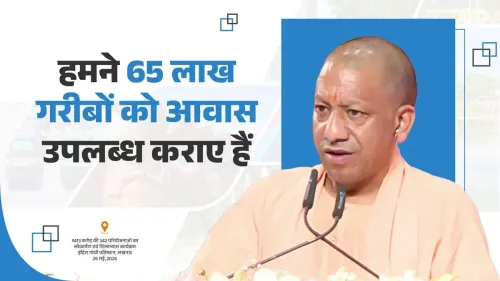
Posting through the Chief Minister's Office of Uttar Pradesh on Friday, October 23, 2026, the CMO quoted Yogi Adityanath directly: 'विगत साढ़े नौ वर्षों में हमने 65 लाख गरीब परिवारों को आवास उपलब्ध कराए हैं' — 'In the past nine and a half years, we have provided housing to 65 lakh poor families.' The statement also cited over 3 crore household toilets constructed and more than 15 crore people benefiting from the Pradhan Mantri Garib Kalyan Anna Yojana (PMGKAY).
Three Pillars: Shelter, Sanitation, Food Security
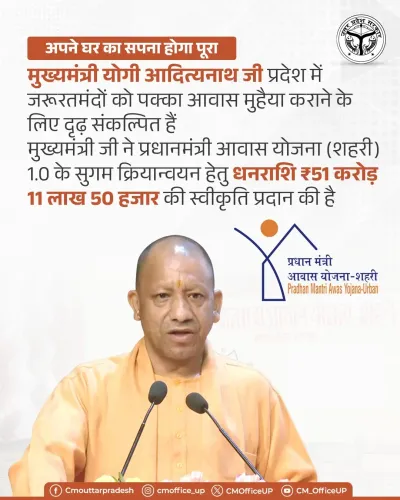
The figures map onto three central government flagship programmes that Uttar Pradesh has been implementing since the BJP came to power in the state in March 2017. The Pradhan Mantri Awas Yojana (PMAY), launched nationally in 2015, targets pucca housing for economically weaker sections. The Swachh Bharat Mission, initiated in 2014, drove a nationwide push to end open defecation through household toilet construction. And PMGKAY — originally a pandemic-era emergency food lifeline introduced in March 2020 — was extended as a permanent food security measure, providing free grain to eligible poor households.
Uttar Pradesh, with a population of roughly 24 crore, is India's most populous state and therefore among the largest theatres for any welfare rollout at scale. The state government has regularly cited cumulative physical targets under all three schemes as evidence of governance delivery.
Why These Numbers Land as a Political Statement
The timing and framing are deliberate. Consolidating three major welfare programmes into a single communication signals an intent to project a comprehensive anti-poverty record — houses built, open defecation reduced, hunger addressed. Each scheme carries a direct, tangible benefit that reaches the household level, making them politically potent and verifiable on the ground. The 'nine and a half years' reference aligns with the BJP's tenure both at the Centre since 2014 and in Uttar Pradesh since 2017.
The state has consistently placed itself at the forefront of PMAY and Swachh Bharat delivery in official communications. With PMGKAY now a permanent fixture of India's food security architecture, the 15 crore beneficiary figure for UP alone would represent one of the largest food subsidy pipelines in any single Indian state.
What the Progress Reports Will Tell
The next official PMAY rural and urban targets for Uttar Pradesh — and any central decision on the scope or funding of PMGKAY — will be the real test of whether these numbers hold up to independent audit. Housing completion rates, toilet functionality, and actual grain offtake data are the metrics that turn claimed achievements into verified outcomes. Those reports are the numbers to watch.
Point of View
Bundling housing, sanitation and food security into a single narrative of governance delivery — a communication strategy the BJP has honed into an electoral asset. Consolidating PMAY, Swachh Bharat and PMGKAY outcomes under a nine-and-a-half-year arc is an implicit claim of continuity between the Centre's 2014 mandate and the state's 2017 tenure. For a state as large as Uttar Pradesh, these numbers — if borne out by independent audit — would represent one of the most consequential social delivery exercises in post-independence India. The real political weight of these figures will be tested against official progress reports and ground-level verification, not official announcements alone.
NationPress
23 Oct 2026
Frequently Asked Questions
How many houses has the UP government provided to poor families?
According to the Chief Minister's Office of Uttar Pradesh, 65 lakh poor families have been provided housing over the past nine and a half years, primarily under the Pradhan Mantri Awas Yojana.
What is PMGKAY and how many people benefit from it in UP?
PMGKAY (Pradhan Mantri Garib Kalyan Anna Yojana) is a central government scheme providing free food grains to eligible poor households. The UP government claims more than 15 crore people in the state are currently benefiting from it.
How many toilets were built under Swachh Bharat Mission in Uttar Pradesh?
CM Yogi Adityanath has stated that over 3 crore household toilets were constructed in Uttar Pradesh under the Swachh Bharat Mission in the last nine and a half years.
When was PMGKAY launched and is it still active?
PMGKAY was launched in March 2020 as an emergency food relief measure during the pandemic and was later extended as a permanent food security scheme for eligible poor households across India.
What is Pradhan Mantri Awas Yojana (PMAY)?
Pradhan Mantri Awas Yojana (PMAY) is a central government housing scheme launched in 2015 to provide pucca (permanent) houses to economically weaker sections and low-income groups across India.