CM Yogi credits PM Modi with fulfilling Sardar Patel's vision
Synopsis
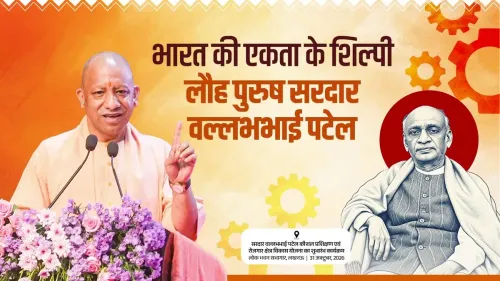
On Sardar Patel's birth anniversary, 31 October 2026, Uttar Pradesh Chief Minister Yogi Adityanath declared India 'united, supreme, and secure,' crediting Prime Minister Modi with fulfilling the Iron Man's vision of national integration.
Key Takeaways
National Unity Day falls on 31 October , the birth anniversary of Sardar Vallabhbhai Patel , India's first Deputy Prime Minister.
CM Yogi Adityanath credited PM Narendra Modi with realising Patel's dream of a unified, sovereign, and secure India.
The National Unity Day observance was instituted by the Modi government in 2014 .
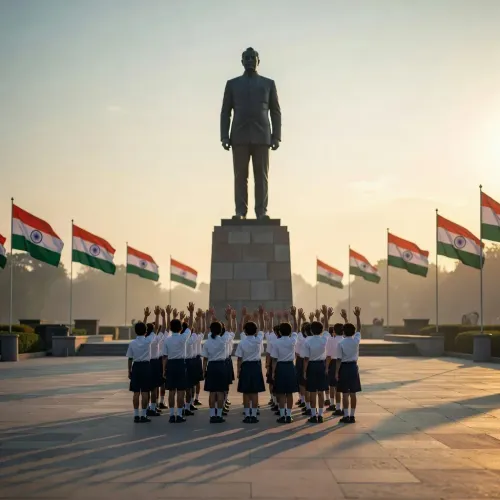
The Statue of Unity , at 182 metres the world's tallest statue, was dedicated to Patel by PM Modi in 2018 in Gujarat .
Patel integrated over 500 princely states into independent India after 1947 , earning the title Loh Purush .
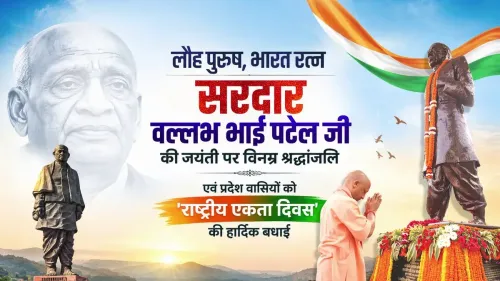
On National Unity Day, 31 October 2026 — the birth anniversary of Sardar Vallabhbhai Patel — the Chief Minister's Office of Uttar Pradesh posted a tribute that did more than honour the Iron Man of India. It made a pointed political statement: that Prime Minister Narendra Modi is the living fulfilment of Patel's unfinished dream.
Chief Minister Yogi Adityanath declared, 'Bharat aaj ek hai, shreshtha hai aur surakshit bhi hai' — 'India today is united, supreme, and secure' — and credited Modi directly with making it so. The 'Iron Man' title, of course, belongs to Patel. The claim that someone else has now realised his dream is a deliberate and consequential framing.
Why Patel's legacy is the BJP's most powerful symbol
Sardar Vallabhbhai Patel, India's first Deputy Prime Minister and Home Minister, achieved what few thought possible: the integration of over 500 princely states into a single sovereign republic after 1947. The sheer scale of that diplomatic and at times military effort earned him the title 'Loh Purush' — the Iron Man. For decades, his stature in public memory was overshadowed. The BJP has systematically worked to change that.
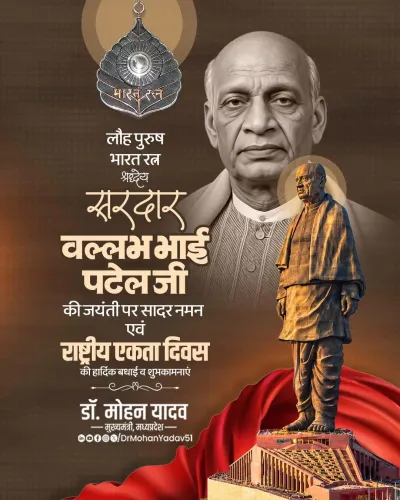
The turning point was 2014, when the Modi government instituted National Unity Day — Rashtriya Ekta Diwas — to mark Patel's birthday on 31 October every year. Then in 2018, the government unveiled the Statue of Unity in Gujarat, at 182 metres the tallest statue in the world, dedicated entirely to Patel. These were not just commemorations; they were acts of political reclamation.
The continuity argument CM Yogi is making
Yogi Adityanath's statement slots neatly into a well-worn but effective rhetorical arc: Patel unified the map, and Modi unifies the idea. It draws a straight line from 1947 to the present, positioning the current central government as the natural heir to Patel's project — one of national integration, internal security, and sovereign confidence.
The phrase 'united, supreme, and secure' is precise. Each word does political work. 'United' invokes integration. 'Supreme' gestures at India's rising global standing. 'Secure' points to internal order. Together they form a compact ideological brief, delivered on the one day of the year when Patel's legacy commands undivided national attention.
On National Unity Day, every year, this argument gets another airing — and every year, it lands in front of the widest possible audience. That is precisely the point.
Point of View
The statement reinforces a continuity narrative that is both historical and electoral. It links the 1947 unification of princely states to present-day governance achievements, giving the ruling dispensation a founding-era legitimacy that transcends routine policy messaging. The ritual repetition of this framing each 31 October suggests it remains one of the BJP's most resonant and tested ideological anchors.
NationPress
31 Oct 2026
Frequently Asked Questions
What is National Unity Day and when is it observed?
National Unity Day ( Rashtriya Ekta Diwas ) is observed every year on 31 October , the birth anniversary of Sardar Vallabhbhai Patel . It was instituted by the Modi government in 2014 to honour Patel's role in integrating India.
Why is Sardar Vallabhbhai Patel called the Iron Man of India?
Sardar Vallabhbhai Patel earned the title Loh Purush (Iron Man) for integrating over 500 princely states into the Indian Union after independence in 1947 , a feat of extraordinary diplomatic and strategic resolve.
What did CM Yogi Adityanath say about PM Modi on National Unity Day 2026?
CM Yogi Adityanath stated that India today is 'united, supreme, and secure,' and credited PM Narendra Modi with fulfilling Sardar Patel's dream of a strong, integrated nation.
What is the Statue of Unity and who built it?
The Statue of Unity in Gujarat is the world's tallest statue at 182 metres , dedicated to Sardar Vallabhbhai Patel . It was inaugurated by PM Narendra Modi in 2018 .
Why does the BJP frequently invoke Sardar Patel's legacy?
The BJP has systematically elevated Sardar Patel's legacy to position itself as the continuer of his national-integration project, framing current governance achievements within the historical arc of India's post-independence unification.