CM Yogi Highlights Prayagraj's Shivalik Park as Waste-to-Wealth Model
Synopsis
The Chief Minister's Office of Uttar Pradesh has highlighted Prayagraj's Shivalik Park — built from nearly 400 tonnes of repurposed waste — as a flagship waste-to-wealth model under CM Yogi Adityanath, positioning it as a tourist draw and a template for sustainable urban development across the state.
Key Takeaways
Shivalik Park in Prayagraj was built using approximately 400 tonnes of waste material creatively repurposed into public infrastructure and landscaping.
The park has become a major tourist attraction in Prayagraj, according to the Chief Minister's Office of Uttar Pradesh.
Chief Minister Yogi Adityanath cited the park as a 'remarkable and successful example' of the waste-to-wealth approach.
The project aligns with the Swachh Bharat Mission , the national solid waste management programme launched in 2014 .
Uttar Pradesh has a track record of integrated waste management and tourism projects at pilgrimage centres, including large-scale operations during the 2019 Kumbh Mela in Prayagraj.
The state government's spotlight on the park signals potential replication of the model in other high-footfall UP cities.
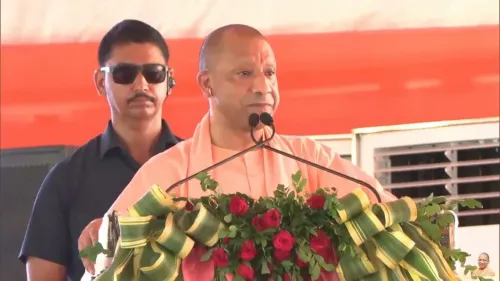
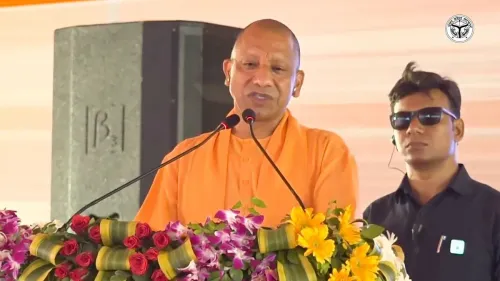
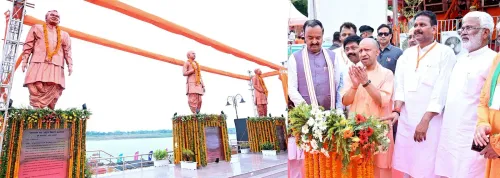
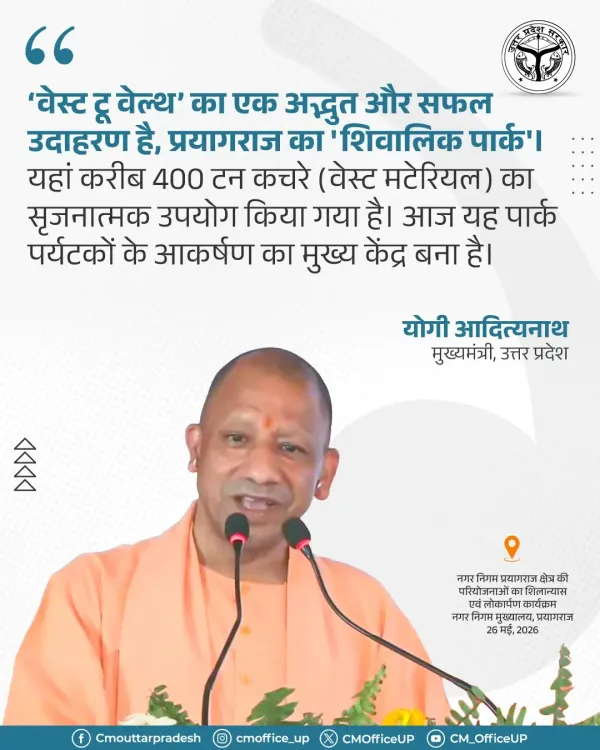
The Chief Minister's Office of Uttar Pradesh, citing Chief Minister Yogi Adityanath, on Tuesday, 26 May 2026, spotlighted Shivalik Park in Prayagraj as a standout example of the 'waste-to-wealth' approach, noting that nearly 400 tonnes of waste material was creatively repurposed to build the park, which has since emerged as a major tourist attraction.
The post, shared from the official CMO handle, quoted the Chief Minister describing the park as 'वेस्ट टू वेल्थ का एक अद्भुत और सफल उदाहरण' — 'a remarkable and successful example of waste to wealth' — underscoring the state government's emphasis on converting civic waste into public amenities.
Context
Shivalik Park in Prayagraj was developed by channelling approximately 400 tonnes of waste material into landscaping, infrastructure and public installations. The park represents a model where municipal solid waste, instead of being deposited in landfills, is processed and reimagined as usable civic space. Prayagraj, situated at the confluence of the Ganga and Yamuna rivers, is one of Uttar Pradesh's most visited pilgrimage and heritage cities, making such a facility particularly visible to a large and diverse footfall.Policy Backdrop
The park's development aligns with the Swachh Bharat Mission, the national programme launched in 2014 to promote scientific processing and recycling of municipal solid waste across Indian cities. Uttar Pradesh has been an active implementing state under the mission, with large-scale waste management and riverfront cleaning operations carried out in Prayagraj during the 2019 Kumbh Mela. The state has since pursued an integrated approach that pairs Swachh Bharat implementation with urban tourism development, particularly at pilgrimage centres that receive high visitor footfall and where waste generation spikes during religious gatherings.Stakeholders and Impact
Local residents gain a maintained public green space that would otherwise have been a waste dump or landfill site, while tourists visiting Prayagraj now have an additional attraction that doubles as an environmental showcase. Municipal bodies benefit from a replicable template that addresses landfill pressure without large-scale infrastructure investment. The project also carries a civic awareness dimension: a publicly accessible park built from waste serves as a visible, tangible argument for recycling and waste segregation at source. Chief Minister Yogi Adityanath, who has overseen urban development and cleanliness drives across Uttar Pradesh since taking office in 2017, has used the park as a communication vehicle to reinforce the state's environmental credentials.What's Next
The highlight of Shivalik Park signals that the Uttar Pradesh government may be laying the groundwork for replicating the waste-to-wealth model in other cities across the state. Other pilgrimage and high-footfall urban centres — which face similar solid waste challenges — are natural candidates for comparable projects. State environment department performance reports on recycling volumes and the progress of urban local bodies under Swachh Bharat Mission rankings will indicate how systematically this model is being scaled. If the Prayagraj template is formalised into a state policy framework, it could meaningfully reduce landfill dependency in Uttar Pradesh's major cities while simultaneously boosting local tourism infrastructure.Point of View
Positioning Uttar Pradesh as a state that converts environmental challenges into civic assets — a narrative that serves both the Swachh Bharat Mission's messaging goals and the state's push to grow pilgrimage tourism in Prayagraj. By quantifying the effort — nearly 400 tonnes of waste repurposed — the communication moves beyond ceremonial praise into a claims-based accountability frame. This fits a broader pattern under CM Yogi Adityanath of using urban development milestones in Prayagraj as proof points for the state's administrative capacity, especially ahead of major religious and political cycles. The real test will be whether the model is codified into a replicable state policy or remains a one-off showcase.
NationPress
19 Sept 2026
Frequently Asked Questions
What is Shivalik Park in Prayagraj?
Shivalik Park is a public park in Prayagraj, Uttar Pradesh, developed by repurposing approximately 400 tonnes of waste material into landscaping and civic infrastructure, making it a prominent example of the waste-to-wealth concept.
What is the waste-to-wealth concept highlighted by CM Yogi?
The waste-to-wealth concept involves creatively reusing municipal solid waste — rather than dumping it in landfills — to build usable public infrastructure such as parks, reducing environmental impact while creating civic amenities.
How does Shivalik Park relate to the Swachh Bharat Mission?
Shivalik Park's development aligns with the Swachh Bharat Mission, the national programme launched in 2014 to promote scientific processing and recycling of solid waste in Indian cities, under which Uttar Pradesh has been an active implementing state.
Why is Prayagraj significant for waste management initiatives?
Prayagraj is a major pilgrimage city at the confluence of the Ganga and Yamuna rivers that hosts large events like the Kumbh Mela, generating high volumes of waste and making effective solid waste management particularly important for the city.
Will other UP cities get similar waste-to-wealth parks?
The state government's highlighting of Shivalik Park as a model suggests potential replication in other Uttar Pradesh cities, though no formal announcement of specific new projects has been made as of the date of this post.