CM Yogi Flags Pre-2017 Land Grabs Against Valmiki Community in Rampur
Synopsis
Uttar Pradesh Chief Minister Yogi Adityanath alleged on 30 June 2026 that before 2017, poor residents and the Valmiki community in Rampur were forcibly stripped of their land. The remarks frame post-2017 BJP governance as a corrective for Dalit land rights violations.
Key Takeaways
CM Yogi Adityanath posted on 30 June 2026 alleging that before 2017 , the poor and the Valmiki community in Rampur were forcibly dispossessed of their land.
Rampur has historically been a Samajwadi Party stronghold and has seen high-profile land-encroachment cases come under scrutiny after 2017 .
The Valmiki community is a Scheduled Caste group whose land rights are legally protected but have faced enforcement gaps.
The Yogi government has framed post-2017 anti-encroachment drives as restoring rights to marginalised communities, including Dalits.
The remarks carry direct electoral significance, as the Valmiki community is a key vote bloc that the BJP is working to consolidate in Uttar Pradesh .
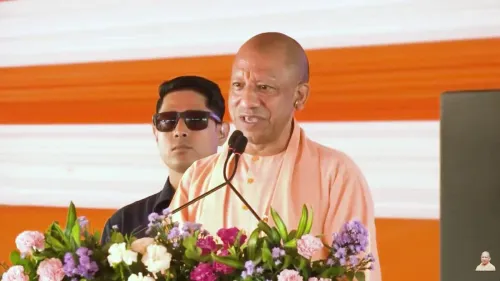
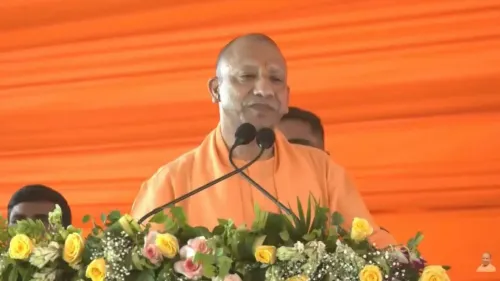
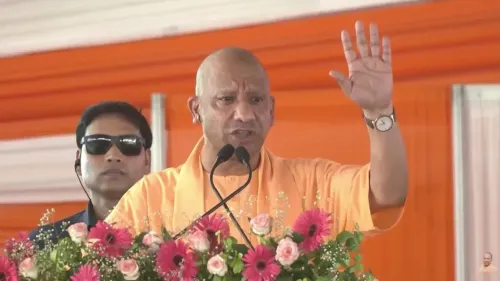
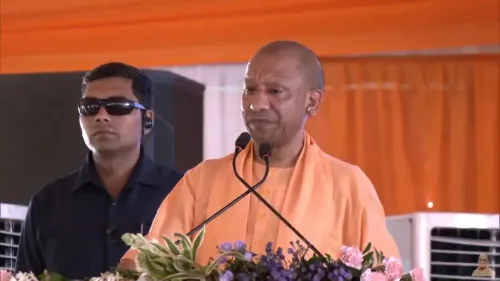
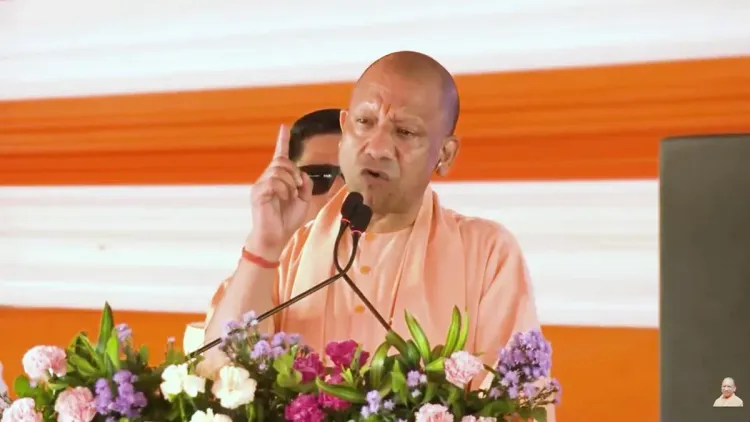
Uttar Pradesh Chief Minister Yogi Adityanath on Tuesday, 30 June 2026, alleged that before 2017, poor residents and members of the Valmiki community in Rampur were systematically dispossessed of their land, citing the district as an example of governance failures under the previous administration.
Context
In his post, CM Yogi stated — 'वर्ष 2017 के पहले रामपुर में गरीबों की जमीनों पर कब्जा होता था, वाल्मीकि समुदाय को जमीनों से जबरन वंचित कर दिया जाता था' — translating to: 'Before 2017, the lands of the poor were encroached upon in Rampur, and the Valmiki community was forcibly deprived of their land.' The remarks draw a sharp contrast between the pre-2017 political order in Uttar Pradesh and the governance record of the current BJP administration.
Rampur, a district in western Uttar Pradesh, has historically been associated with the Samajwadi Party and was a stronghold of former minister Azam Khan. The district has seen a series of land-encroachment and property-dispute cases that came under judicial and administrative scrutiny after 2017.
Policy Backdrop
The Valmiki community, classified as a Scheduled Caste group with deep roots in sanitation and traditional occupations, has long been among the most economically vulnerable communities in Uttar Pradesh. Land rights for Scheduled Castes are protected under the Uttar Pradesh Zamindari Abolition and Land Reforms Act and related statutes, but enforcement has historically been uneven.
Since 2017, the Yogi Adityanath government has undertaken anti-encroachment drives across the state, with Rampur emerging as a high-profile site of action following legal proceedings against political figures in the district. The administration has framed these actions as restoring rights to marginalised communities, including Dalits and the poor.
Stakeholders and Impact
The Valmiki community numbers in the lakhs across Uttar Pradesh and represents a significant vote bloc that both the BJP and opposition parties court actively. Any narrative that positions the current government as a protector of Valmiki land rights carries direct electoral resonance, particularly ahead of local body and state-level political cycles.
Residents and civil-society groups in Rampur have previously documented cases of land disputes involving marginalised households. The Chief Minister's remarks, backed by a video in the post, suggest an effort to highlight administrative correctives undertaken since 2017 as evidence of improved law-and-order and property-rights enforcement.
What's Next
The post is likely to intensify political debate over the governance record in Rampur and the broader question of land rights for Scheduled Caste communities in Uttar Pradesh. Opposition parties, particularly the Samajwadi Party, are expected to contest the framing and offer counter-narratives around the district's development trajectory.
With Uttar Pradesh remaining the most electorally consequential state in India, statements by CM Yogi that invoke Dalit land rights signal a sustained effort by the BJP to consolidate support among Scheduled Caste voters — a constituency that could prove decisive in upcoming electoral contests.
Point of View
The state that sends the largest bloc to Parliament. By naming the Valmiki community specifically — a group that occupies a distinct cultural and electoral space within the Dalit umbrella — the Chief Minister is reinforcing a governance-versus-lawlessness binary that the BJP has deployed consistently since 2017. The framing also serves to keep the political legacy of Rampur's former dominant figures under scrutiny. Whether the claims translate into measurable policy gains for Valmiki households will be the test that community leaders and civil society are likely to apply.
NationPress
30 Jun 2026
Frequently Asked Questions
What did CM Yogi say about Rampur and the Valmiki community?
CM Yogi Adityanath stated that before 2017, the lands of the poor were encroached upon in Rampur and the Valmiki community was forcibly deprived of their land, contrasting that period with governance under the current BJP administration.
Who are the Valmiki community in Uttar Pradesh?
The Valmiki community is a Scheduled Caste group in Uttar Pradesh, historically associated with sanitation work. They are among the most economically vulnerable communities and are protected under Scheduled Caste land-rights legislation.
Why is Rampur politically significant in Uttar Pradesh?
Rampur is a district in western Uttar Pradesh that has historically been a Samajwadi Party stronghold and was associated with former minister Azam Khan. It has been a high-profile site of land-encroachment cases and political controversy since 2017.
What action has the Yogi government taken on land encroachments in UP?
Since 2017, the Yogi Adityanath government has conducted anti-encroachment drives across Uttar Pradesh, with Rampur being a notable district where disputed land and property cases have been taken up following legal proceedings against political figures.
What is the electoral significance of the Valmiki community for BJP in UP?
The Valmiki community represents a significant Dalit vote bloc in Uttar Pradesh. Both the BJP and opposition parties actively court this community, making statements about Valmiki land rights politically consequential ahead of any electoral cycle.