CM Yogi Highlights UPSIFS as Forensic, Cyber Hub
Synopsis
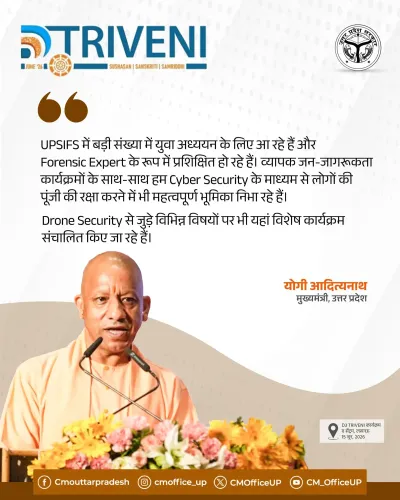
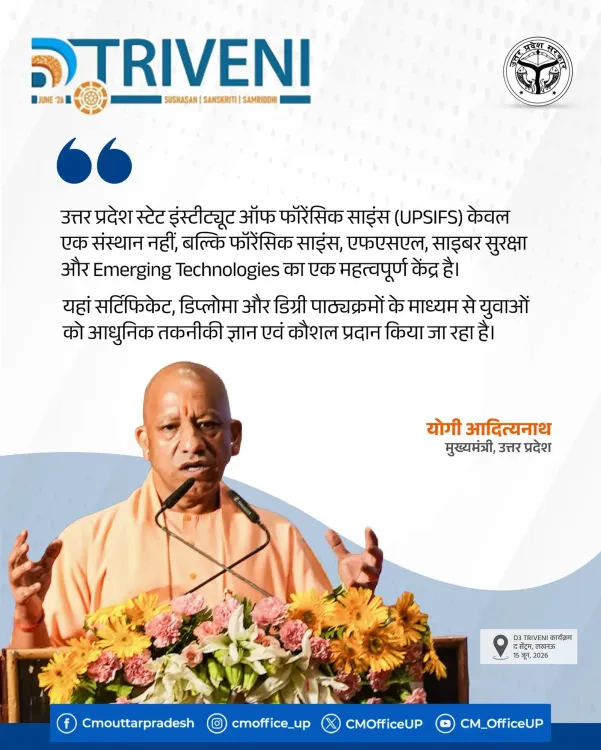
Chief Minister Yogi Adityanath, speaking at the TriveniUPconclave, called UPSIFS a critical hub for forensic science, FSL methods, cyber security, and emerging technologies, highlighting its certificate, diploma, and degree programmes for youth in Uttar Pradesh.
Key Takeaways
CM Yogi Adityanath described UPSIFS as far more than a conventional institution — calling it a hub for forensic science, FSL, cyber security, and emerging technologies.
The institute offers certificate, diploma, and degree programmes , providing multiple entry points for students and working professionals.
The remarks were made at the #TriveniUPconclave on 15 June 2026 , signalling a high-profile government endorsement of the institute.
The initiative aligns with the National Forensic Sciences University established by the Government of India in 2020 to build national forensic capacity.
Uttar Pradesh has been expanding its FSL network since 2017 as part of criminal justice modernisation under the Yogi administration.
State police, cyber cells, and law enforcement agencies are key institutional beneficiaries of a more technically trained forensic workforce.
The Chief Minister's Office of Uttar Pradesh shared remarks by Chief Minister Yogi Adityanath on Monday, 15 June 2026, describing the Uttar Pradesh State Institute of Forensic Science (UPSIFS) as a major centre for forensic science, cyber security, and emerging technologies — not merely an academic institution.
Context
Speaking at the #TriveniUPconclave, CM Yogi Adityanath stated that UPSIFS is 'केवल एक संस्थान नहीं' ('not merely an institution') but a critical hub spanning forensic science, FSL methodology, cyber security, and emerging technologies. The remarks position the institute as a flagship in Uttar Pradesh's broader push to modernise criminal justice and skill development simultaneously.
The Chief Minister noted that the institute is actively equipping youth with modern technical knowledge and skills through certificate, diploma, and degree programmes — a multi-tier academic structure designed to serve students at varying entry levels.
Policy Backdrop
The emphasis on forensic education in Uttar Pradesh follows a pattern set at the national level when the Government of India established the National Forensic Sciences University in 2020 to expand forensic education and research capacity across the country. State-level institutes such as UPSIFS are seen as complementary infrastructure that extends this capacity to regional law enforcement and investigative agencies.
Since 2017, the Yogi Adityanath administration has expanded the network of Forensic Science Laboratories (FSLs) in Uttar Pradesh as part of reforms aimed at modernising criminal investigation processes. The integration of cyber security and emerging technologies into the UPSIFS curriculum reflects a recognition that digital crime now demands specialised technical manpower alongside traditional forensic expertise.
Stakeholders and Impact
The primary beneficiaries of UPSIFS are students and youth seeking careers at the intersection of law, science, and technology. By offering structured programmes from certificate to degree level, the institute provides entry points for fresh graduates as well as working professionals in law enforcement seeking upskilling.
State police departments and cyber cells stand to gain a more technically trained workforce capable of handling complex forensic evidence and digital investigations. As cyber crime rates rise nationally, institutions that produce specialists in both forensic science and cyber security address a critical gap in Uttar Pradesh's investigative ecosystem.
What's Next
Analysts and education observers will watch for potential curriculum partnerships between UPSIFS and the National Forensic Sciences University, which could lend additional academic credibility and research depth to the state institute's programmes. Placement linkages with state FSLs and police cyber cells would be a natural next step to convert trained graduates into operational assets for law enforcement.
The TriveniUPconclave platform, at which these remarks were made, suggests the government is using high-visibility forums to signal its commitment to technology-driven governance — a messaging strategy likely to continue as Uttar Pradesh positions itself as a model state for forensic and cyber-security education in India.
Point of View
Not just an academic exercise. The statement connects to a broader arc in which the Uttar Pradesh government has used institutional announcements to signal law-and-order modernisation since 2017. By tying youth skill development to forensic science and emerging technologies in one breath, the administration is attempting to address two political imperatives — employment and public safety — simultaneously. The framing mirrors national-level rhetoric around specialised education but grounds it in state-specific infrastructure, giving the Yogi government a distinct identity in the competitive space of skill-development politics.
NationPress
16 Sept 2026
Frequently Asked Questions
What is UPSIFS and what courses does it offer?
UPSIFS stands for the Uttar Pradesh State Institute of Forensic Science. It offers certificate, diploma, and degree programmes in forensic science, FSL methods, cyber security, and emerging technologies, aimed at equipping youth with modern technical skills.
What did CM Yogi Adityanath say about UPSIFS at TriveniUPconclave?
CM Yogi Adityanath stated that UPSIFS is not merely an institution but a critical hub for forensic science, FSL, cyber security, and emerging technologies, and highlighted its role in providing modern technical knowledge to young people through structured academic programmes.
How does UPSIFS relate to the National Forensic Sciences University?
The National Forensic Sciences University was established by the Government of India in 2020 to build national forensic education capacity. UPSIFS functions as a state-level complement to this national institution, extending specialised forensic and cyber-security training within Uttar Pradesh.
Why is Uttar Pradesh investing in forensic science education?
The Uttar Pradesh government has been expanding its Forensic Science Laboratory network since 2017 to modernise criminal investigations. Institutions like UPSIFS are designed to produce technically trained professionals who can support law enforcement, cyber cells, and FSLs in handling complex cases.
What is the TriveniUPconclave where CM Yogi spoke about UPSIFS?
The TriveniUPconclave is a platform referenced in the Chief Minister's Office post on 15 June 2026, at which CM Yogi Adityanath made his remarks about UPSIFS. Further details about the conclave's scope and participants have not been confirmed in available records.