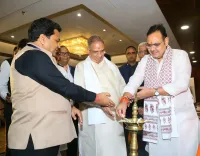
CM Yogi at TechSangam 2026: UP's cyber-forensic leap

Synopsis
CM Yogi Adityanath addressed TechSangam 2026 at UPSIFS Lucknow on 24 October 2026, spotlighting UP's expansion from 2 cyber police stations and 4 forensic labs in 2017 to district-level cyber units across all 75 districts, and linking forensic modernisation to higher conviction rates and youth employment.
Key Takeaways
CM Yogi Adityanath participated in TechSangam 2026 at UPSIFS, Lucknow on 24 October 2026 , focused on AI, cyber forensics, quantum technology and data protection.
Before 2017 , Uttar Pradesh had only 2 cyber police stations and 4 forensic laboratories for a population exceeding 240 million.
All 75 districts in UP now have dedicated cyber police stations, a dramatic scale-up since the Yogi government took office in March 2017 .
The state's conviction rate was below 30 percent before 2017; forensic and cyber infrastructure expansion has since pushed it upward.
Forensic laboratories are being extended to every administrative division of UP, with the rollout ongoing.
CM Yogi framed the initiative as both a law-enforcement and youth-employment drive, linking it to the national Atmanirbhar Bharat and Viksit Bharat goals.
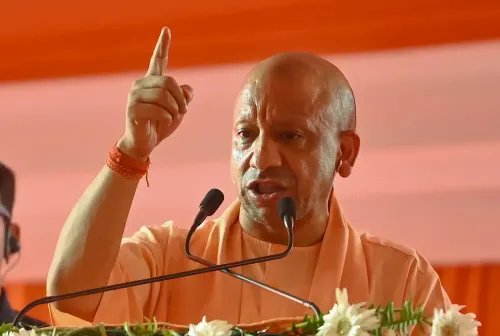
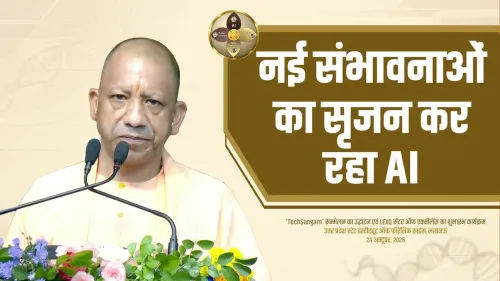
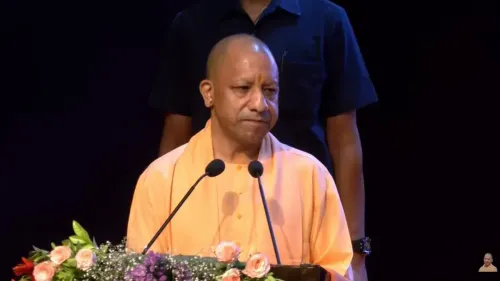
From two cyber police stations to 75 — one for every district in India's most populous state — Uttar Pradesh Chief Minister Yogi Adityanath arrived at Uttar Pradesh State Institute of Forensic Science (UPSIFS), Lucknow, on Saturday, 24 October 2026, to address TechSangam 2026, a high-stakes conference placing AI, cyber forensics, quantum technology and data protection at the centre of the state's law-and-order agenda.
What TechSangam 2026 is actually about
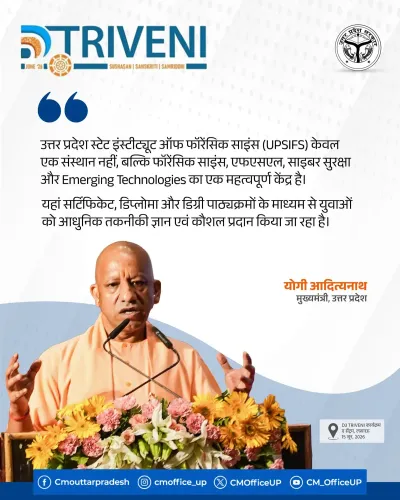
The event is not a routine tech summit. It brings together scientists, policymakers, legal experts and industry representatives from India and abroad onto a single platform at UPSIFS, Lucknow — the state's dedicated forensic science institution — to deliberate on cyber security, the evidentiary reliability of digital evidence, and the responsible deployment of emerging technologies in criminal justice. CM Yogi framed the gathering's ambition plainly: 'tकनीक की नई संभावनाओं को जनहित, न्याय और युवाओं के उज्ज्वल भविष्य से जोड़ना' — 'connecting the new possibilities of technology with public interest, justice and a bright future for youth.'
The four thematic pillars — artificial intelligence, cyber forensics, quantum technology and data protection — map directly onto gaps that investigators and prosecutors have long flagged: the inability to process digital evidence quickly, authenticate it reliably in court, and defend state systems against increasingly sophisticated attacks.
The 2017 baseline and what changed
The numbers CM Yogi cited draw a sharp before-and-after line. Before 2017, Uttar Pradesh — a state of more than 240 million people — had just 2 cyber police stations and 4 forensic laboratories. A conviction rate below 30 percent meant that thin scientific evidence routinely handed accused persons a legal escape route. The system was, by any measure, structurally under-equipped for modern crime.
Since the formation of the Yogi Adityanath government in March 2017, the state has built dedicated cyber police stations in all 75 districts. Forensic laboratories are now being extended to every administrative division — a rollout still in progress. The CM credited this expansion with raising the conviction rate, though a precise current figure was not stated in the post.
Youth, jobs and the forensic-science pipeline
Beyond law enforcement, CM Yogi positioned the forensic and cyber-security build-out as an employment and education story. Emerging fields in forensic science and cyber security, he argued, are generating new avenues for quality education, research and jobs for Uttar Pradesh's young population — one of the largest youth cohorts of any Indian state. UPSIFS itself sits at the intersection of that argument: a state institution designed to produce trained human capital for exactly these roles.
The framing connects local capacity-building to a national ambition — making India self-reliant in emerging technologies, a goal the CM explicitly linked to the Atmanirbhar Bharat and Viksit Bharat frameworks. Technology, in this telling, is not just a policing tool. It is a career ladder.
What comes next from Lucknow
The immediate deliverable to watch is the completion of divisional forensic laboratories across Uttar Pradesh — the next infrastructure milestone after the district-level cyber station rollout. Equally significant will be any policy or training frameworks that emerge from TechSangam 2026's cross-sector discussions, particularly around digital evidence standards and AI-assisted investigation protocols that courts can actually accept.
If the numbers hold and conviction rates continue to climb, Uttar Pradesh's forensic modernisation arc could become a template other large Indian states are pressed to replicate. The experiment is live — and the results are being watched.
Point of View
Broadening its appeal beyond UP's borders. The youth-employment angle adds a second political dividend, targeting a demographic that is both electorally decisive and acutely sensitive to job-market signals.
NationPress
24 Oct 2026
Frequently Asked Questions
What is TechSangam 2026?
TechSangam 2026 is a conference held at the Uttar Pradesh State Institute of Forensic Science (UPSIFS) in Lucknow on 24 October 2026, focused on AI, cyber forensics, quantum technology and data protection, bringing together scientists, policymakers, legal experts and industry representatives.
How many cyber police stations does Uttar Pradesh have now?
Uttar Pradesh now has cyber police stations in all 75 districts. Before 2017, the state had only 2 such stations.
What was UP's conviction rate before 2017?
According to CM Yogi Adityanath, Uttar Pradesh's conviction rate was below 30 percent before 2017, partly because limited forensic infrastructure meant scientific evidence was often unavailable in court.
How does UP's forensic expansion help youth employment?
The growth of forensic science and cyber security institutions like UPSIFS creates new avenues for quality education, research and jobs in these emerging fields for Uttar Pradesh's large youth population.