CM Yogi calls Ghaziabad Delhi's new growth engine
Synopsis
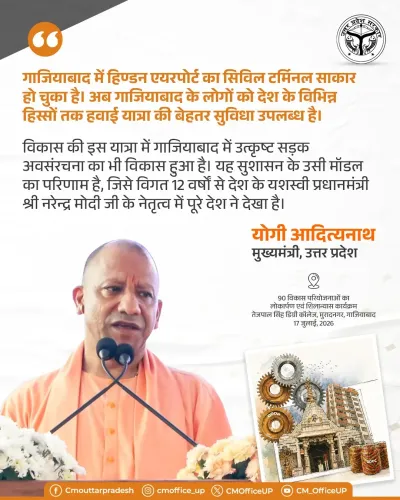
Uttar Pradesh Chief Minister Yogi Adityanath declared on 17 July 2026 that Ghaziabad is now functioning as Delhi's growth engine. The statement underscores the BJP-led state government's push to position western UP's industrial hub as the NCR's leading economic driver through connectivity and investment initiatives.
Key Takeaways
CM Yogi Adityanath publicly described Ghaziabad as Delhi's growth engine in a post on 17 July 2026 .
Ghaziabad has been designated a counter-magnet city to Delhi since the NCR Planning Board's 1980s regional plan.
The Delhi-Meerut RRTS corridor, passing through Ghaziabad , is a key connectivity project advanced under the current UP administration.
UP's 2017–18 industrial investment policy prioritised Ghaziabad and other western UP districts for manufacturing and logistics clusters.
Key stakeholders include NCR commuters , real estate developers, and manufacturing units in the Ghaziabad belt.
Operationalisation of remaining RRTS stations and new industrial land allotments in the next UP budget session are the immediate milestones to watch.
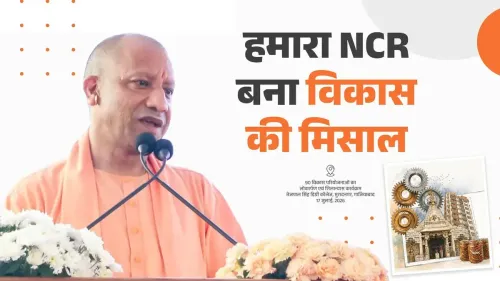
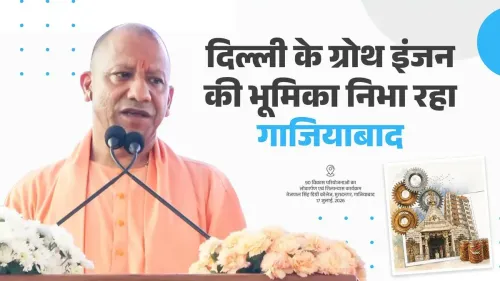
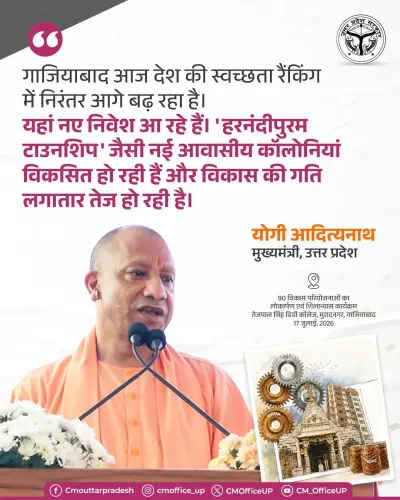
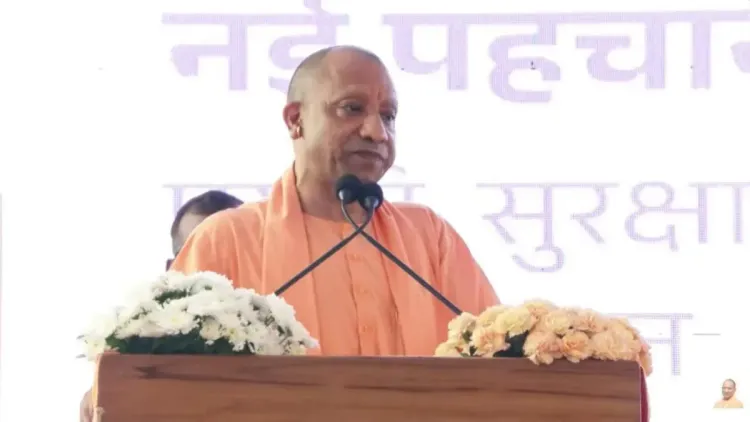
Uttar Pradesh Chief Minister Yogi Adityanath on Friday, 17 July 2026 declared that Ghaziabad has taken on the role of a growth engine for Delhi, signalling the state government's confidence in the western UP city's expanding economic footprint within the National Capital Region (NCR).
Context
Posting on X, CM Yogi wrote: 'Ab Dilli ke growth engine ka kaam Ghaziabad kar raha hai' — 'Now Ghaziabad is doing the work of Delhi's growth engine.' The statement positions Ghaziabad not merely as a satellite town but as an active driver of economic momentum for the broader NCR, a framing that marks a shift from the city's historically subordinate role in regional planning narratives.
Ghaziabad is an industrial city in western Uttar Pradesh that shares a border with Delhi and has long been classified as a priority development area under NCR Planning Board frameworks. Its proximity to the capital has made it a natural destination for manufacturing, logistics, and real estate investment spilling out of Delhi.
Policy Backdrop
The NCR Planning Board's regional plan from the 1980s had already identified Ghaziabad as a 'counter-magnet city' intended to absorb population and economic pressure from Delhi. Successive governments built on this designation, but the pace of execution accelerated after 2017 when the Yogi Adityanath government took office and made western UP districts a centrepiece of its industrial investment strategy.
The Delhi-Meerut Regional Rapid Transit System (RRTS) — a high-speed rail corridor passing through Ghaziabad — has been a flagship connectivity project advanced under the current administration. The RRTS is designed to compress commute times between Delhi, Ghaziabad, and Meerut, making the corridor more attractive for businesses and residents alike. UP's 2017–18 industrial investment policy and subsequent investor summits further prioritised the district for manufacturing and logistics clusters.
Stakeholders and Impact
NCR commuters, real estate developers, and manufacturing units operating in the Ghaziabad belt stand to benefit most directly from the policy attention the Chief Minister's statement reflects. Improved connectivity and state-backed industrial infrastructure have already drawn investment into the district's logistics and light-manufacturing sectors.
The broader pattern mirrors satellite-city strategies pursued in other Indian metropolitan regions, where state governments have used expressway and rapid-transit links to redistribute economic activity from congested cores to adjacent districts. For Ghaziabad, this dynamic is reinforced by land availability and lower operating costs compared with Delhi.
What's Next
Attention will now turn to the operationalisation of remaining RRTS stations along the Delhi-Meerut corridor and any new industrial land allotments that the Uttar Pradesh government may announce in the next budget session. CM Yogi's framing of Ghaziabad as Delhi's growth engine suggests the state is likely to double down on infrastructure and investment incentives in the district. If matched by on-ground delivery, the city could cement its position as the NCR's most consequential economic node outside the capital itself.
Point of View
Framing the BJP government's infrastructure push in western UP as a regional transformation story rather than routine development. By inverting the traditional Delhi-centric narrative — where satellite cities are passive recipients of overflow — the Chief Minister is staking a claim to a more assertive UP identity within the NCR framework. This fits a broader arc in which the Yogi administration has consistently used connectivity milestones, from expressways to the RRTS, to project governance credibility ahead of electoral cycles. The statement also puts pressure on the state machinery to deliver tangible outcomes, particularly on pending RRTS stations and industrial allotments, before the rhetoric can be tested by voters.
NationPress
16 Oct 2026
Frequently Asked Questions
Why did CM Yogi call Ghaziabad Delhi's growth engine?
CM Yogi Adityanath used the phrase to highlight Ghaziabad's growing role as an economic hub within the NCR, reflecting the UP government's investments in connectivity and industrial infrastructure in the city since 2017.
What is the Delhi-Meerut RRTS and how does it affect Ghaziabad?
The Delhi-Meerut Regional Rapid Transit System is a high-speed rail corridor passing through Ghaziabad that significantly reduces commute times between Delhi, Ghaziabad, and Meerut, boosting the city's appeal for businesses and residents.
What is Ghaziabad's role in the National Capital Region?
Ghaziabad is an industrial city in western Uttar Pradesh that borders Delhi and has been designated a counter-magnet city since the 1980s to absorb population and economic activity from the capital.
What infrastructure projects has the Yogi government launched in Ghaziabad?
The Yogi Adityanath government has prioritised Ghaziabad under its 2017–18 industrial investment policy, advanced the Delhi-Meerut RRTS corridor, and targeted the district for manufacturing and logistics cluster development through investor summits.
What should we watch for next regarding Ghaziabad's development?
Key milestones include the operationalisation of remaining RRTS stations on the Delhi-Meerut corridor and any new industrial land allotments the UP government announces in its next budget session.