CM Yogi: Gorakhpur Now Draws Jobs In, Not Sends Youth Out
Synopsis
Chief Minister Yogi Adityanath declared on November 1, 2026 that Gorakhpur has reversed its historic out-migration trend, with people now arriving from outside for work, crediting security, sanitation and development schemes for giving the city a new identity.
Key Takeaways
Chief Minister Yogi Adityanath stated that Gorakhpur has gone from a city that exported workers to one that attracts in-migrants seeking employment.
He credited security, sanitation, development and state government schemes for Gorakhpur's transformation.
The CM framed the shift as part of the larger ' Naya Bharat, Naya UP, Naya Gorakhpur ' narrative central to the BJP's political communication.
The Yogi government has governed since March 2017 , using Gorakhpur — Yogi's former five-time MP constituency — as the flagship exhibit of Purvanchal's turnaround.
The state hosted UP Investors Summits in 2018 and 2023 , targeting eastern districts including Gorakhpur for industrial investment.
Specific employment inflow figures for Gorakhpur remain to be verified through official state economic surveys.
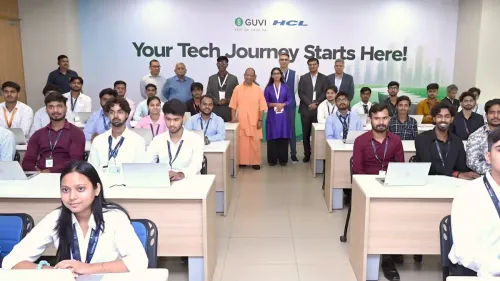
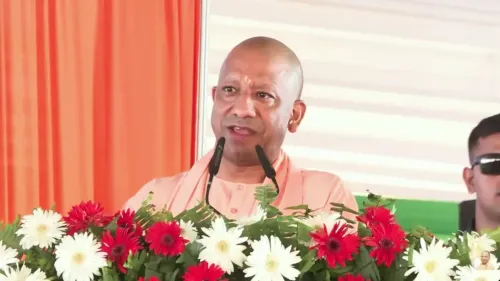
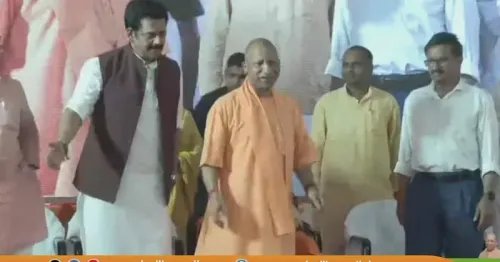
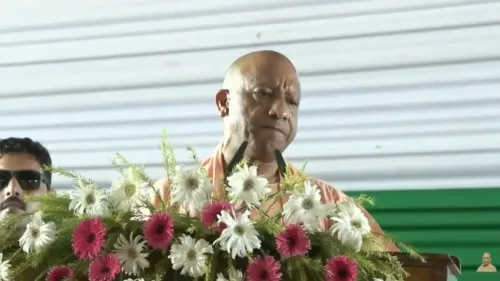
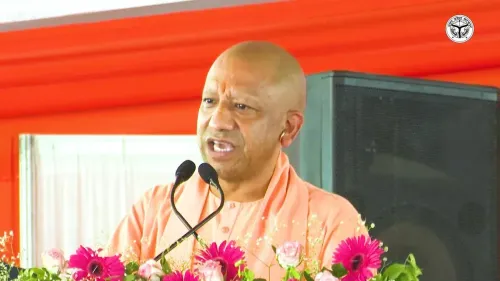
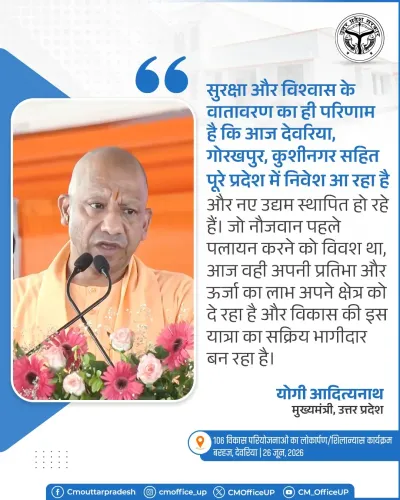
The migration story of Gorakhpur has flipped — and Chief Minister Yogi Adityanath wants every voter in Uttar Pradesh to know it. Addressing an audience on Sunday, November 1, 2026, the Chief Minister's Office of Uttar Pradesh shared remarks by CM Yogi declaring that a city once synonymous with out-migration has become a destination that draws people in for work.
The CM's statement, posted in Hindi, drew a sharp before-and-after contrast: 'Pehle Gorakhpur ke yuvaon ko naukri aur rozgaar ke liye bahar jaana padta tha, lekin aaj bahar se bhi log rozgaar ke liye Gorakhpur aa rahe hain' — 'Earlier, the youth of Gorakhpur had to leave for jobs and employment, but today people from outside are also coming to Gorakhpur for employment.' He credited security, sanitation, development and 'various schemes' for giving Gorakhpur a new identity, concluding with a phrase that has become something of a political signature: 'If there is a new Uttar Pradesh in the new India, then a new Gorakhpur is also ready.'
From Purvanchal's Out-Migration Capital to an Employment Hub
For decades, Gorakhpur and the broader Purvanchal belt were among the largest feeders of migrant labour to Delhi, Mumbai and the Gulf. Young men from the region filled construction sites and textile factories across the country. That structural reality — rooted in thin local industry, patchy law enforcement and inadequate urban infrastructure — shaped the region's politics and its sense of self.
Since the Yogi Adityanath government took office in March 2017, Gorakhpur has been positioned as the headline exhibit for Purvanchal's turnaround. Anti-encroachment drives, intensified policing and Swachh Bharat-linked sanitation campaigns changed the city's visible character. Yogi — himself a five-time MP from Gorakhpur before moving to the state's top executive office — has a personal stake in the city's story, and he has consistently used it as shorthand for the larger UP transformation narrative.
Investment Push and the Industrial Estate Bet
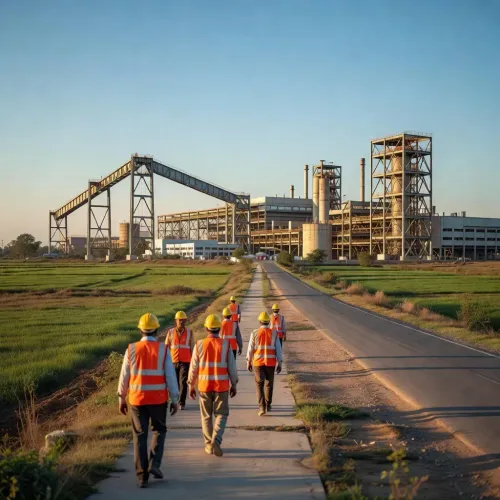
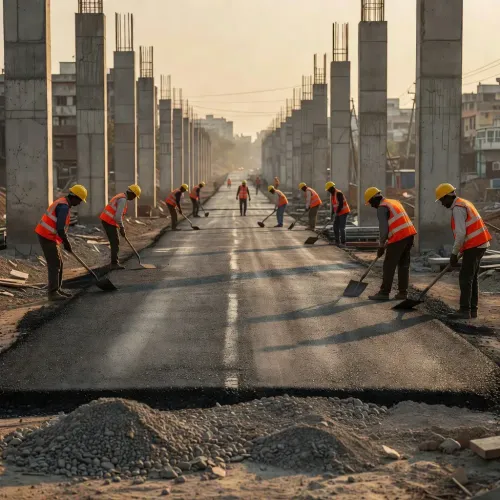
The rhetoric of reversal has been backed by deliberate policy architecture. The state hosted the Uttar Pradesh Investors Summit in 2018 and again in 2023, with eastern districts including Gorakhpur featuring prominently in pitch materials. New industrial estates and a push to anchor food-processing and manufacturing units closer to where eastern UP's workforce lives have been central to the government's argument that jobs no longer need to be found elsewhere.
The logic is straightforward: if industry comes to Purvanchal, migration pressures ease, local incomes rise, and the political dividend flows back to the party that delivered it. Whether the employment inflows match the official narrative at scale is a question the state's next economic survey will need to answer — specific, audited figures for Gorakhpur's net employment change since 2017 remain to be publicly verified.
The 'Naya Gorakhpur' Political Frame
CM Yogi's framing — 'Naya Bharat, Naya UP, Naya Gorakhpur' — is not incidental. It mirrors the 'New India' idiom that has structured BJP political communication nationally since 2014, and it anchors the state-level narrative to a larger civilisational arc. For Gorakhpur specifically, the phrase carries extra charge: the city is also the seat of the Gorakhnath Math, over which Yogi Adityanath presides as Mahant, lending the 'transformation' language a quasi-institutional resonance that extends beyond electoral politics.
The kicker is embedded in the data the government has yet to fully publish. A reversal of decades-old migration patterns would be one of the most consequential social shifts in eastern Uttar Pradesh's modern history. The claim is bold. The proof is what the next set of numbers must deliver.
Point of View
The model is replicable across Purvanchal and politically potent ahead of any electoral cycle. The challenge is substantiation: reversing decades of structural migration requires audited labour data, not just anecdote. The government's repeated invocation of this frame, without publishing granular employment inflow figures, leaves it vulnerable to opposition scrutiny — and makes the next UP economic survey a document of unusual political consequence.
NationPress
1 Nov 2026
Frequently Asked Questions
What did CM Yogi say about Gorakhpur employment in November 2026?
CM Yogi Adityanath stated that Gorakhpur has reversed its out-migration trend — people from outside are now coming to Gorakhpur for employment, whereas earlier local youth had to leave the city to find jobs.
Why is Gorakhpur important to CM Yogi Adityanath?
Gorakhpur is CM Yogi's former parliamentary constituency, where he served as a five-time MP, and he also serves as the Mahant of the Gorakhnath Math there. It is his political and spiritual home base and his flagship example of UP's transformation.
What schemes has the UP government launched for Gorakhpur's development?
The Yogi government has implemented anti-encroachment drives, policing reforms, Swachh Bharat sanitation campaigns and hosted Uttar Pradesh Investors Summits in 2018 and 2023, pitching eastern districts including Gorakhpur for industrial investment.
Has Gorakhpur's out-migration actually reversed?
The Yogi government asserts a reversal based on infrastructure and investment activity, but specific, audited employment inflow figures for Gorakhpur have not been publicly released; the claim awaits verification through official state economic surveys.
What is the 'Naya Gorakhpur' slogan about?
'Naya Gorakhpur' — meaning New Gorakhpur — is part of the BJP's political framing that links Gorakhpur's local development to the national 'New India' narrative, positioning improved security, cleanliness and economic activity as proof of governance delivery in Purvanchal.