CM Yogi Marks World Environment Day With Tree Pledge
Synopsis
On World Environment Day 2026, the Chief Minister's Office of Uttar Pradesh shared a message from CM Yogi Adityanath warning that humanity is paying for neglecting nature, and promoted the Ek Ped Maa Ke Naam tree-plantation campaign ahead of the monsoon planting season.
Key Takeaways
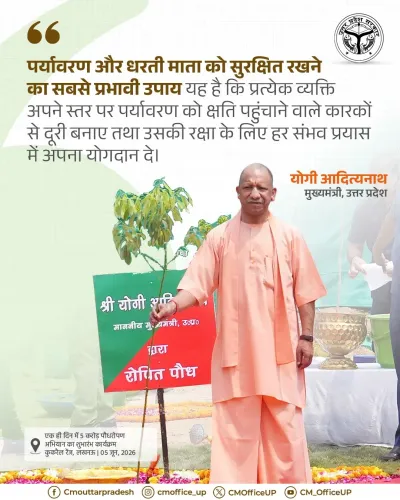
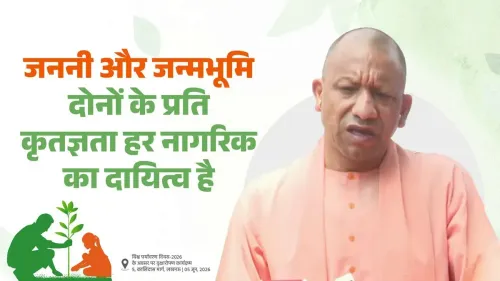
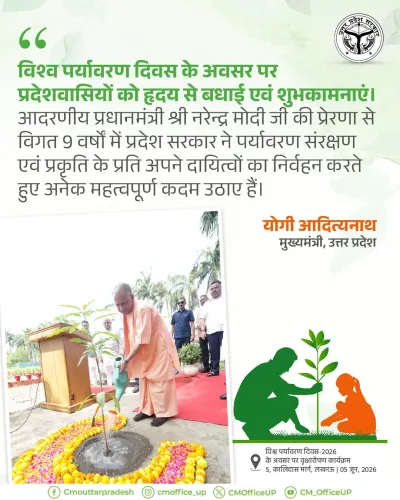
The Chief Minister's Office of Uttar Pradesh posted an environmental message attributed to CM Yogi Adityanath on World Environment Day, 5 June 2026 .
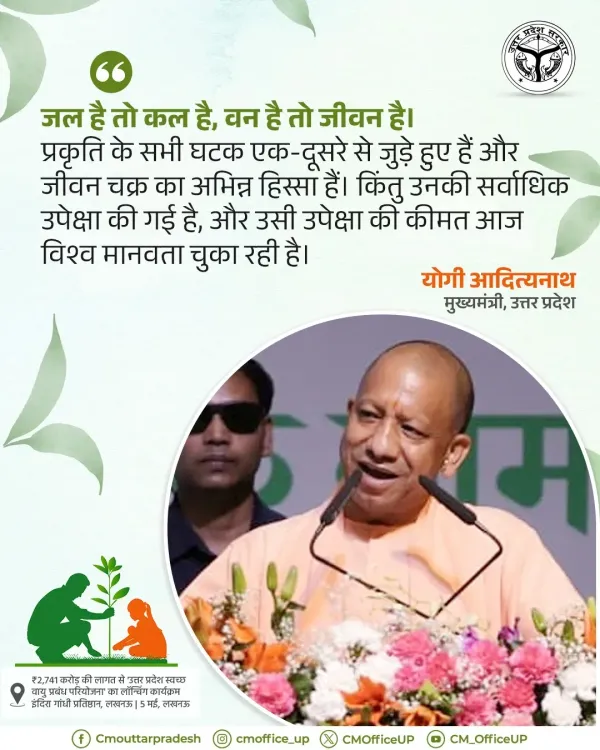
The message declares: 'If there is water, there is tomorrow; if there is forest, there is life,' framing water and forests as inseparable from the life cycle.
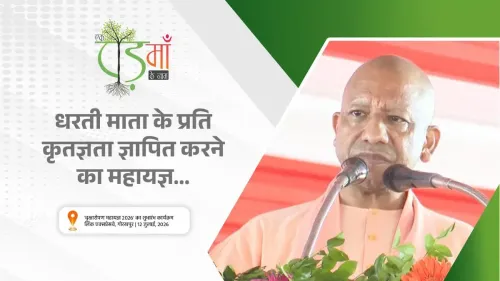
The post was tagged under #एक_पेड़_माँ_के_नाम (Ek Ped Maa Ke Naam), the state campaign urging citizens to plant a sapling in their mother's name.
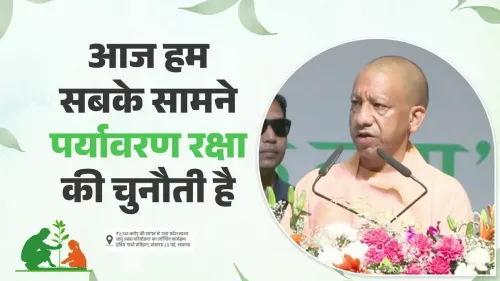
In 2019 , Uttar Pradesh planted over 22 crore trees in a single day, one of the country's largest recorded afforestation drives.
The June 2026 message aligns with the monsoon planting window, the most effective season for establishing saplings in the state.
The statement positions local afforestation action within a global climate context, warning that the world is already bearing the cost of environmental neglect.
The Chief Minister's Office of Uttar Pradesh, citing Chief Minister Yogi Adityanath, shared an environmental message on World Environment Day, 5 June 2026, calling water and forests the twin pillars of life and warning that humanity is now paying the price for neglecting nature.
Context
The post carries a two-line aphorism attributed to CM Yogi Adityanath: 'Jal hai toh kal hai, van hai toh jeevan hai' ['If there is water, there is tomorrow; if there is forest, there is life']. It goes on to state that all components of nature are interconnected and form an inseparable part of the life cycle, but have faced the greatest neglect — a neglect for which 'the world's humanity is paying the price today.' The message was posted under the hashtag #एक_पेड़_माँ_के_नाम (Ek Ped Maa Ke Naam — One Tree in Mother's Name), the state-promoted afforestation campaign that encourages citizens to dedicate a sapling to their mother.
Policy Backdrop
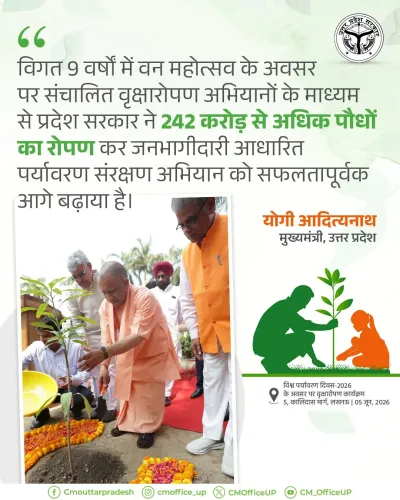
Uttar Pradesh has pursued large-scale afforestation as a flagship environmental priority. In 2019, the state organised a single-day plantation of over 22 crore trees, one of the largest recorded drives in the country. The Ek Ped Maa Ke Naam campaign builds on this lineage by attaching a cultural and emotional dimension to tree planting, a strategy that has been adopted across several Indian states to sustain voluntary participation. The framing of environmental action through familial idioms — dedicating a tree to one's mother — reflects a broader South Asian policy trend that seeks to embed conservation habits in everyday sentiment rather than purely regulatory mandates.
Uttar Pradesh, India's most populous state, faces acute pressures on both its water table and forest cover. River rejuvenation programmes and forest cover targets have run alongside plantation drives under the current administration, making the twin themes of water and forests — invoked directly in today's post — central to the state's environmental identity.
Stakeholders and Impact
The immediate audience for the campaign is Uttar Pradesh's vast rural and semi-urban population, which depends heavily on groundwater and forest produce. Conservation groups and civil-society organisations working on afforestation in the Gangetic plains are natural partners for scaling up sapling distribution. The June 2026 message coincides with the onset of the monsoon planting window, the most ecologically effective period for establishing new saplings in the state's agro-climatic zones.
By invoking a universalist warning — that the world is paying for nature's neglect — the statement also positions Uttar Pradesh's local campaign within the global climate conversation, aligning state action with India's broader commitments on forest cover and water security.
What's Next
Attention will turn to the scale of sapling distribution and survival rates during the 2026 monsoon planting season, which will serve as a practical measure of the campaign's reach. Any revised state forest-policy targets or updated afforestation figures are expected to surface in the next assembly session. The Ek Ped Maa Ke Naam drive's momentum will likely be tracked by conservation observers as a barometer of whether cultural framing can translate into durable green cover gains across Uttar Pradesh.
Point of View
Van hai toh jeevan hai' on World Environment Day, CM Yogi Adityanath's office is doing more than ceremonial messaging — it is reinforcing Uttar Pradesh's identity as a state that frames conservation through cultural and emotional registers. The Ek Ped Maa Ke Naam campaign is part of a deliberate strategy to make afforestation a participatory, bottom-up movement rather than a top-down mandate. The warning that 'world humanity is paying the price' for neglecting nature signals an attempt to anchor a state-level drive within the global climate discourse, lending it moral urgency. Ahead of the monsoon planting season, the real test will be whether this messaging translates into measurable survival rates for new saplings — the metric that separates symbolic drives from lasting green cover.
NationPress
20 Oct 2026
Frequently Asked Questions
What is the Ek Ped Maa Ke Naam campaign in Uttar Pradesh?
Ek Ped Maa Ke Naam ('One Tree in Mother's Name') is a tree-plantation campaign promoted by the Uttar Pradesh government that encourages citizens to plant and dedicate a sapling to their mother, linking afforestation with a cultural and emotional appeal.
What did CM Yogi Adityanath say on World Environment Day 2026?
CM Yogi Adityanath said, 'If there is water, there is tomorrow; if there is forest, there is life,' and warned that all components of nature are interconnected but have faced the greatest neglect — a neglect for which the world's humanity is now paying the price.
How many trees did Uttar Pradesh plant in its 2019 drive?
Uttar Pradesh planted over 22 crore trees in a single day in 2019, which stands as one of the largest single-day afforestation drives recorded in India.
Why is June a significant month for tree plantation in Uttar Pradesh?
June marks the onset of the monsoon season in Uttar Pradesh, making it the most ecologically effective window for planting saplings, as rainfall improves survival rates and reduces the need for manual irrigation.
What is the broader policy context of UP's afforestation campaigns?
Uttar Pradesh has sustained large-scale plantation drives alongside river rejuvenation and forest cover targets under the current administration. The state uses cultural themes — such as dedicating trees to mothers — to boost voluntary participation, mirroring a wider Indian trend of embedding conservation in everyday sentiment.