CM Yogi Greets UP on Shardiya Navratri, Day One
Synopsis
Uttar Pradesh Chief Minister Yogi Adityanath opened Shardiya Navratri 2026 with a Sanskrit shloka honouring Maa Shailputri, praying for peace, inner strength, and prosperity for all on the festival's first day.
Key Takeaways
CM Yogi Adityanath posted his Shardiya Navratri Day 1 greeting before dawn on 11 October 2026 .
He opened with a classical Sanskrit shloka dedicated to Maa Shailputri , the first of nine Navratri goddesses.
His blessing called for 'inner strength, patience, and positive energy' for all, and 'peace, harmony, and prosperity' for the world.
Maa Shailputri is identified with Parvati, daughter of the Himalayas, and symbolises grounded strength and stability.
Shardiya Navratri concludes with Vijayadashami (Dussehra), a major public festival across Uttar Pradesh .
As head of Gorakhnath Math , CM Yogi is among the few sitting chief ministers who routinely opens festival messages with Sanskrit verse.
As the first light of Shardiya Navratri 2026 broke across India on Sunday, 11 October, Uttar Pradesh Chief Minister Yogi Adityanath turned to Sanskrit verse to open the nine-night festival — invoking the goddess who, in Hindu tradition, stands at the very beginning of the divine feminine journey.
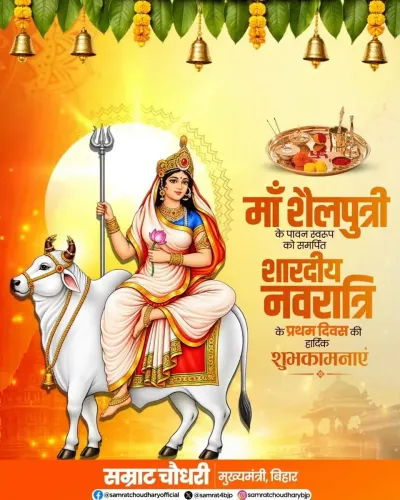
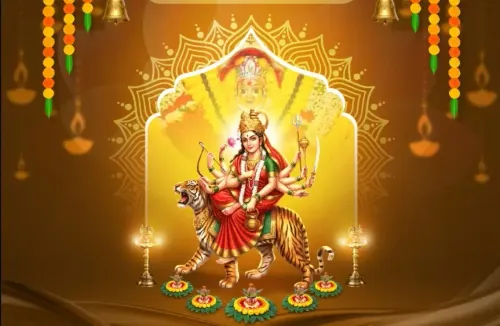
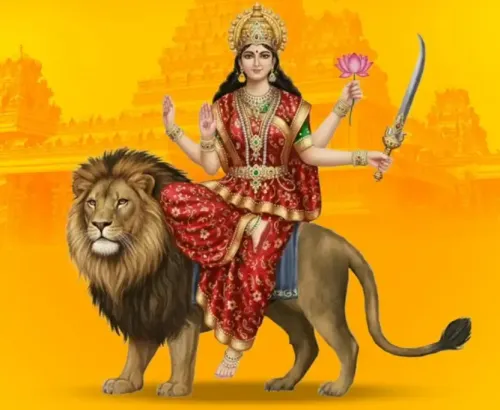
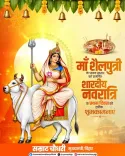
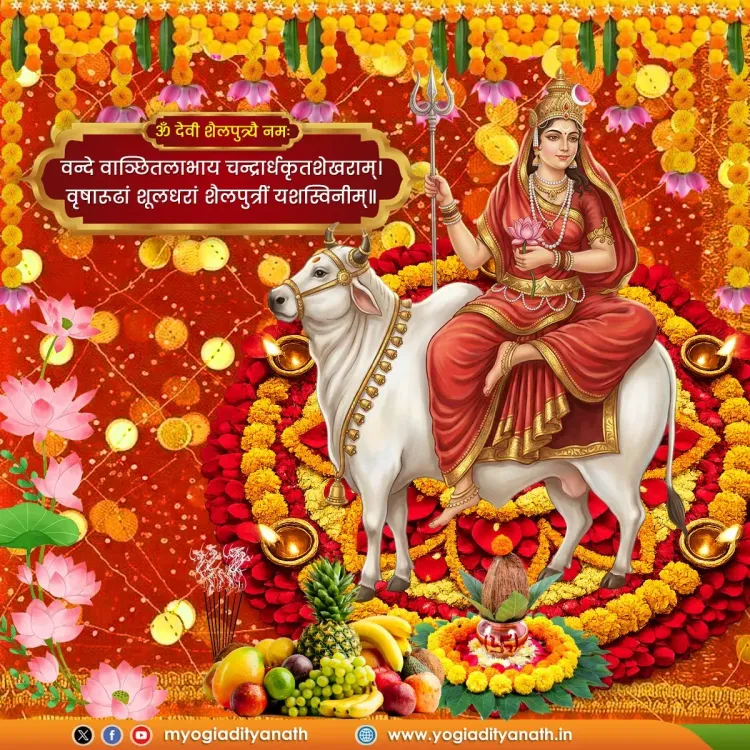
Posting before dawn, CM Yogi shared the classical shloka 'Vande vaanchhitalabhaya chandrardhakritashhekharam' — a salutation to Maa Shailputri, the first of Navratri's nine manifestations of Shakti, depicted riding a bull and bearing a trident, her crown adorned with the crescent moon. The verse is drawn from the Devi Mahatmya tradition and is recited by devotees on the opening day of both the Chaitra and Shardiya Navratri cycles.
What CM Yogi's Message Said
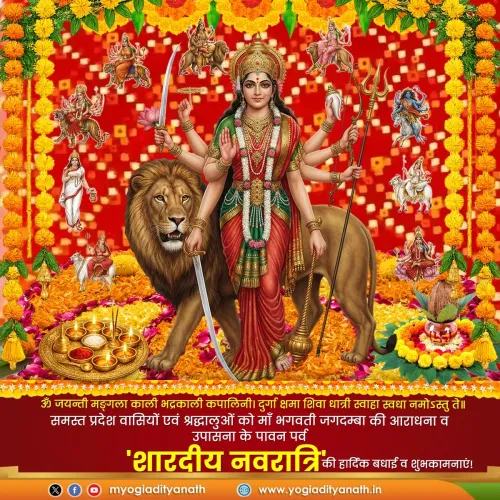
Translating his blessing, the Chief Minister wrote: 'On the first day of Shardiya Navratri — the sacred festival of the worship of Shakti — I bow at the feet of Aadishakti Maa Shailputri. May the boundless grace of the Mother fill every life with inner strength, patience, and positive energy; may peace, harmony, and prosperity spread across the entire world; and may every home be illuminated with happiness and auspiciousness.' He closed with 'Jai Maa Shailputri.'
Shailputri: The Goddess Who Opens the Nine Nights
Maa Shailputri — literally 'daughter of the mountain' — is identified with Parvati, daughter of Himavat, king of the Himalayas. She is worshipped on the first day of Navratri as the root form of Shakti, representing stability and grounded strength. The colour associated with her day is traditionally grey or white, symbolising the mountain from which she takes her name. Devotees fast, offer white flowers, and recite her shloka at dawn — the precise hour at which CM Yogi posted.
Shardiya Navratri, the autumnal edition of the festival, falls in the Hindu lunar month of Ashwin and culminates on Vijayadashami (Dussehra) — one of the most widely observed religious observances across Uttar Pradesh, a state where the festival carries deep cultural and administrative significance. Lucknow, Varanasi, Ayodhya, and Mathura all host large public celebrations during the nine days.
As head of the Gorakhnath Math in Gorakhpur — one of the most prominent Nath Sampraday monasteries in India — CM Yogi occupies a dual role: elected head of government and religious leader of an ancient tradition. His Navratri greetings consistently blend scriptural precision with a public benediction, a pattern that marks him as one of the few sitting chief ministers who routinely opens festival communications with Sanskrit verse.
Nine mornings, nine goddesses, nine chances for a state of 240 million people to pause and mark the sacred. The festival has only just begun.
Point of View
While the universal benediction for 'all homes' broadens the appeal beyond any single community. For the BJP in Uttar Pradesh, Navratri messaging is also political calendar management: the nine days leading to Dussehra are among the highest-engagement periods on social media in the state. The post reinforces CM Yogi's brand as a chief minister whose public identity is inseparable from his religious vocation.
NationPress
11 Oct 2026
Frequently Asked Questions
What is Shardiya Navratri and when does it fall in 2026?
Shardiya Navratri is the autumnal nine-night Hindu festival dedicated to the worship of Goddess Durga in her nine forms. In 2026 it began on 11 October and concludes on Vijayadashami (Dussehra).
Who is Maa Shailputri and why is she worshipped on Day 1 of Navratri?
Maa Shailputri — 'daughter of the mountain' — is identified with Parvati, daughter of Himavat. She is the first of nine Navratri goddesses and represents grounded strength and stability, making her the natural starting point of the nine-day worship cycle.
What did CM Yogi Adityanath post for Navratri 2026?
CM Yogi posted a Sanskrit shloka honouring Maa Shailputri along with a blessing praying for inner strength, patience, positive energy, peace, harmony, and prosperity for all people and every home.
What is the Gorakhnath Math and what is CM Yogi's connection to it?
The Gorakhnath Math in Gorakhpur is one of the most prominent monasteries of the Nath Sampraday tradition in India. CM Yogi Adityanath serves as its head (Mahant), making him both the elected Chief Minister of Uttar Pradesh and the religious leader of this ancient institution.
How significant is Navratri in Uttar Pradesh?
Navratri is among the most widely observed festivals in Uttar Pradesh, with major public celebrations in Lucknow, Varanasi, Ayodhya, and Mathura. The festival culminates in Dussehra, one of the state's largest public events.