CM Yogi hails Gayatri Pariwar's yagna-led social unity drive
Synopsis
Uttar Pradesh Chief Minister Yogi Adityanath publicly commended the Akhil Vishwa Gayatri Pariwar for using collective yagna ceremonies to unite all sections of society on a single platform, calling it a praiseworthy ideal of social harmony.
Key Takeaways
CM Yogi Adityanath praised the Akhil Vishwa Gayatri Pariwar on 4 October 2026 for its yagna-driven social-unity initiative.
The Chief Minister described the organisation's effort as an 'ideal example of social unity' ( samajik ekta ka adarsh udaharan ).
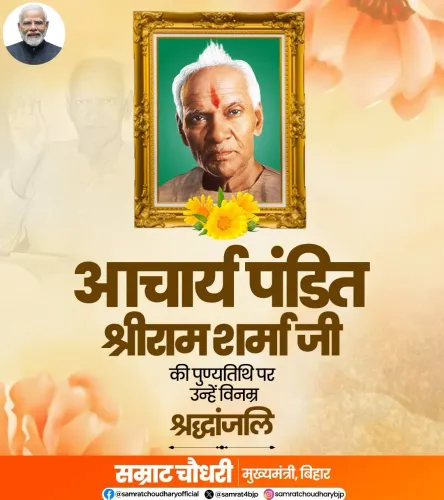
The Gayatri Pariwar was founded by Pandit Shriram Sharma Acharya and is headquartered at Shantikunj, Haridwar .
The organisation uses Vedic yagna rituals to bring together participants across caste and community lines.
CM Yogi's endorsement, as both Chief Minister of Uttar Pradesh and head of Gorakhnath Math , carries significant religious and political weight.
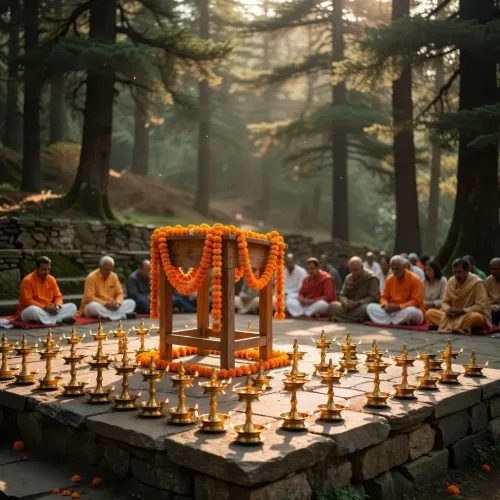
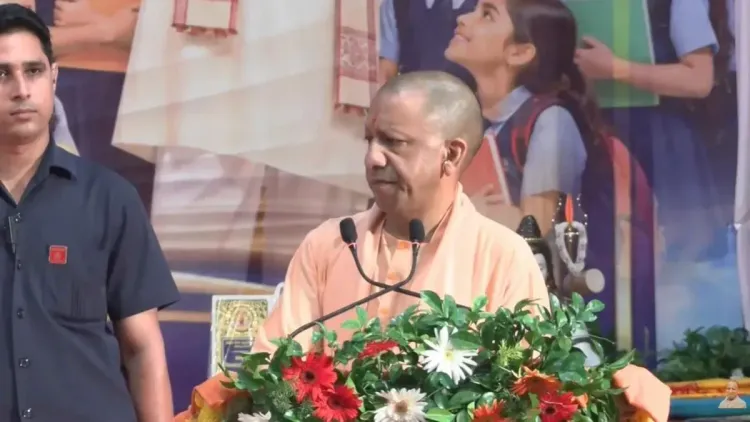
Bringing every section of society to a single altar — literally — is no small feat, and Uttar Pradesh Chief Minister Yogi Adityanath has publicly applauded the Akhil Vishwa Gayatri Pariwar for doing exactly that through the ancient tradition of collective yagnas on Sunday, 4 October 2026.
In his post, CM Yogi wrote: 'Akhil Vishwa Gayatri Pariwar ne yagyon ke madhyam se sarv samaj ko ek manch par, ek vedi par baithakar samajik ekta ka jo adarsh udaharan prastut kiya hai, vah atyant abhinandaniya hai' — meaning, 'The ideal example of social unity that the Akhil Vishwa Gayatri Pariwar has presented by seating the entire society on a single platform, at a single sacrificial altar through yagnas, is most commendable.'
What the Gayatri Pariwar stands for
The Akhil Vishwa Gayatri Pariwar, founded in the mid-twentieth century by spiritual luminary Pandit Shriram Sharma Acharya, operates from its headquarters at Shantikunj, Haridwar in Uttarakhand. The organisation is known for propagating Vedic values, the Gayatri mantra, and large-scale yagna ceremonies that cut across caste and community lines, bringing together participants from diverse social backgrounds under a shared spiritual endeavour.
Yagnas — Vedic fire rituals — have historically carried deep symbolic weight in Indian culture as acts of collective participation and communal harmony. The Gayatri Pariwar has consistently used them as vehicles for social messaging, including campaigns against untouchability and for gender equality in ritual participation.
Why CM Yogi's endorsement carries weight
As head of the Gorakhnath Math and Chief Minister of Uttar Pradesh — India's most populous state — Yogi Adityanath commands enormous religious and political authority. His commendation of an organisation whose outreach spans millions of households across India signals alignment between the state's cultural agenda and the Gayatri Pariwar's grassroots social-unity mission. Uttar Pradesh itself hosts a significant base of Gayatri Pariwar members and shakha centres.
The timing — a Sunday post amplified on social media — ensures the message reaches both devotees and a broader public audience simultaneously.
The 'one altar, all of society' idea
The phrase 'ek vedi par' — 'at one altar' — is deliberately inclusive language. In a country where ritual spaces have historically been contested along caste lines, the image of all sections sitting together at a single sacrificial fire carries pointed social significance. CM Yogi's choice to highlight this specific aspect of the Gayatri Pariwar's work underscores the broader political and cultural emphasis on samajik ekta, or social unity, a theme that resonates strongly in the UP governance narrative.
Whether the applause translates into tangible state support — land, grants, or event co-sponsorship — for upcoming Gayatri Pariwar programmes remains to be watched. But the Chief Minister's public endorsement, reaching millions of followers on one platform alone, is itself a form of institutional backing that the organisation will carry forward.
Point of View
Rather than competing, goals. By spotlighting the image of all castes seated at one sacrificial altar, Yogi signals that religious ritual can be a vehicle for inclusion — a framing that helps deflect critiques of exclusivity. The endorsement also deepens ties between the state's political establishment and a pan-India spiritual network with grassroots reach across crores of households, a constituency that is electorally and culturally consequential ahead of future assembly cycles.
NationPress
4 Oct 2026
Frequently Asked Questions
What is the Akhil Vishwa Gayatri Pariwar?
The Akhil Vishwa Gayatri Pariwar is a global spiritual organisation founded by Pandit Shriram Sharma Acharya, headquartered at Shantikunj in Haridwar, Uttarakhand. It promotes Vedic values, the Gayatri mantra, and collective yagna ceremonies aimed at social upliftment and unity.
Why did CM Yogi praise the Gayatri Pariwar?
CM Yogi Adityanath praised the organisation for bringing people from all sections of society together at a single platform through yagna rituals, calling it a commendable example of social unity.
What is a yagna and why does it matter for social unity?
A yagna is a Vedic fire ritual traditionally performed for collective well-being. The Gayatri Pariwar uses mass yagnas to bring together participants across caste and community lines, using the shared ritual space as a symbol of equality and togetherness.
What does 'ek vedi par' mean in CM Yogi's post?
'Ek vedi par' means 'at one altar' in Hindi. CM Yogi used this phrase to highlight how the Gayatri Pariwar seats all sections of society at a single sacrificial altar, symbolising social equality and unity.
Where is the Gayatri Pariwar's headquarters?
The Akhil Vishwa Gayatri Pariwar is headquartered at Shantikunj in Haridwar, Uttarakhand, India.