China property bust lays bare local government debt crisis: Report
Synopsis
China's property bust has done more than hurt homebuyers — it has quietly hollowed out the finances of local governments that once relied on land sales for nearly half their revenue. With debt servicing now consuming 18% of local income and provinces like Guizhou openly seeking Beijing's help, the cracks in China's growth model are no longer easy to paper over.
Key Takeaways
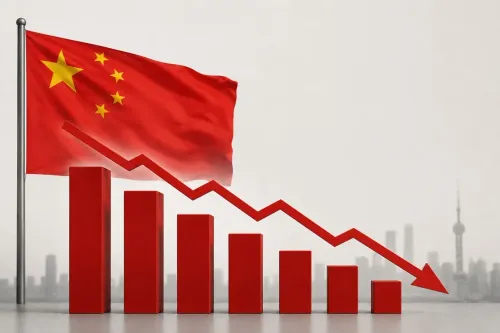
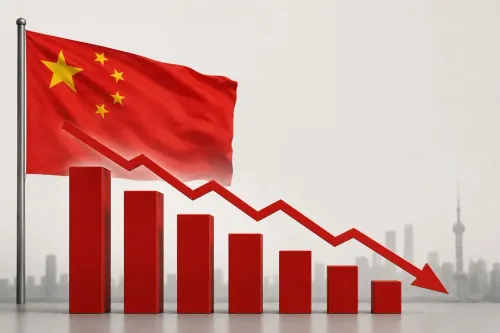
Land-related revenue for Chinese local governments fell from nearly half of consolidated revenue (around 10% of GDP ) in 2021 to roughly 25% of local revenue (under 5% of GDP ) by 2025 .
Debt servicing on official local government debt rose from 8% to 18% of local revenue between 2019 and 2023 .
Local government financing vehicles reportedly purchased large volumes of land themselves, artificially inflating boom-era land-sale revenue figures.
Heavily indebted provinces such as Guizhou have openly sought greater fiscal support from Beijing .
The fiscal strain is increasingly spilling over into delayed contractor payments, wage pressures, and reduced social spending, according to the East Asia Forum report.
China's prolonged property market downturn has exposed deep structural vulnerabilities in a local government financing model that depended heavily on land sales and off-budget borrowing, with the resulting fiscal strain increasingly weighing on businesses, workers, and overall economic growth, according to an East Asia Forum report. The findings underscore how a model that once powered China's infrastructure boom has become a systemic liability.
How Land Finance Fuelled a Decade of Growth
Following China's landmark 1994 tax-sharing reform, local governments were left responsible for a disproportionately large share of public services and development expenditure, even as their formal revenue-raising powers remained constrained. To bridge this gap, they turned to two mechanisms: selling land-use rights and borrowing through off-budget financing vehicles, routinely using land assets as collateral.
This model delivered real results for a period. It funded large-scale infrastructure, accelerated urbanisation, and reinforced China's investment-driven growth engine. It also incentivised local officials to compete aggressively for investment and economic expansion. However, the heavy dependence on land revenues left local finances acutely exposed to the property cycle.
The Scale of the Collapse in Land Revenue
At the height of China's housing market in 2021, broadly defined land-related revenue — encompassing land-sale proceeds and associated taxes — accounted for nearly half of local governments' consolidated revenue, equivalent to approximately 10 per cent of GDP. By 2025, that share had contracted sharply to around 25 per cent of local revenue, or less than 5 per cent of GDP.
Notably, the report cautions that actual land demand may have been weaker than these figures suggest. Local government financing vehicles themselves reportedly purchased large volumes of land during the boom years, effectively inflating reported land-sale revenues and masking the underlying weakness in organic demand.
Debt Servicing Burden Rises Sharply
The collapse in land-related income has since laid bare the scale of debt accumulated during the boom. Between 2019 and 2023, debt servicing on official local government debt — covering both principal and interest — climbed from around 8 per cent of local revenue (before central government transfers) to 18 per cent, according to the report.
The pressure is equally acute for off-budget borrowing. Much of this debt was extended against land collateral during the property boom, leaving financing vehicles increasingly exposed as land prices and transaction volumes weakened. In heavily indebted provinces such as Guizhou, local authorities have openly called for greater support from Beijing as their capacity to manage mounting obligations comes under strain.
Broader Economic Fallout
The fiscal squeeze is not confined to government balance sheets. Constrained local budgets translate into delayed payments to contractors, wage arrears for public sector workers, and curtailed spending on social services — all of which feed back into weaker domestic consumption. Critics argue that without a fundamental restructuring of intergovernmental fiscal arrangements, the debt overhang will continue to act as a drag on China's economic recovery. This comes amid broader concerns about deflationary pressures and sluggish private investment that have defined China's post-pandemic trajectory.
The trajectory of Beijing's response — whether through direct bailouts, debt swaps, or a longer-term overhaul of how local governments raise revenue — will be closely watched as a signal of the central government's appetite for structural reform.
Point of View
While incremental bailouts merely defer it. Neither path is politically comfortable, and the longer the decision is deferred, the greater the spillover onto households and businesses that ultimately bear the cost of constrained local services.
NationPress
4 Oct 2026
Frequently Asked Questions
Why are China's local governments in a financial crisis?
China's local governments built their finances around land sales and off-budget borrowing, which worked while property prices were rising. When the property market collapsed from its 2021 peak, land-related revenue fell from roughly 10% of GDP to under 5% of GDP by 2025, leaving governments unable to service debts accumulated during the boom.
What is a local government financing vehicle (LGFV) in China?
A local government financing vehicle is an off-budget entity set up by Chinese local governments to raise funds — typically by issuing bonds or taking loans — using land and other assets as collateral. During the property boom, LGFVs also bought land directly, which reportedly inflated official land-sale revenue figures and obscured the true state of demand.
How much has China's local government debt burden increased?
Debt servicing on official local government debt rose from around 8% of local revenue in 2019 to 18% by 2023, according to the East Asia Forum report. This does not include off-budget LGFV obligations, which are widely considered substantially larger.
Which Chinese province is most affected by the local government debt crisis?
Guizhou province is cited as one of the most heavily indebted, with local authorities there having openly sought greater support from the central government in Beijing as their ability to manage mounting obligations has come under pressure.
What happens next for China's local government finances?
Analysts are watching whether Beijing opts for direct bailouts, structured debt swaps, or a deeper reform of intergovernmental fiscal arrangements. Without a fundamental fix to the revenue-spending mismatch created by the 1994 tax-sharing reform, critics argue the debt overhang will continue to drag on China's economic recovery and domestic consumption.