CM Yogi Highlights Governance Style Shift in UP
Synopsis
Uttar Pradesh Chief Minister Yogi Adityanath on 7 July 2026 declared that while UP's system and people remain unchanged, a shift in governance style has delivered entitlements to the poor, employment to youth, and scheme benefits to farmers — a message aimed at consolidating the BJP's welfare delivery record ahead of the 2027 assembly elections.
Key Takeaways
CM Yogi Adityanath posted on 7 July 2026 that only the 'style of working' has changed in Uttar Pradesh , not the underlying system or people.
He asserted that every poor person has received their rightful entitlement under the current administration.
Unemployed youth and farmers ( annadata ) were cited as direct beneficiaries of the governance shift.
The BJP government in UP has since 2017 expanded direct benefit transfers and technology-enabled welfare targeting to reduce leakages.
The PM-KISAN scheme and other central programmes have been implemented at scale across Uttar Pradesh , India's most populous state.
The messaging is widely read as a pre-positioning move ahead of the 2027 Uttar Pradesh assembly elections .
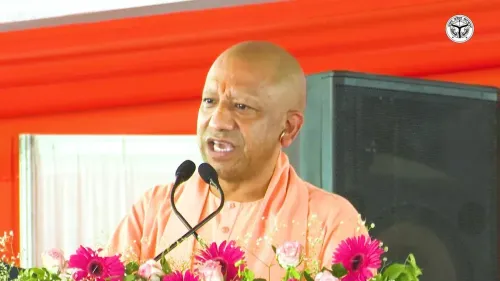
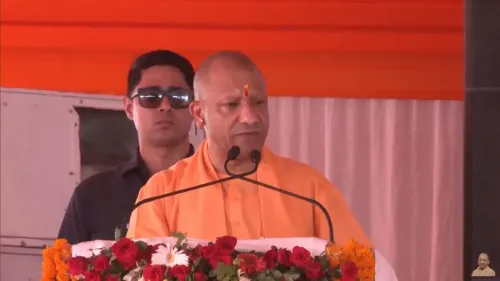
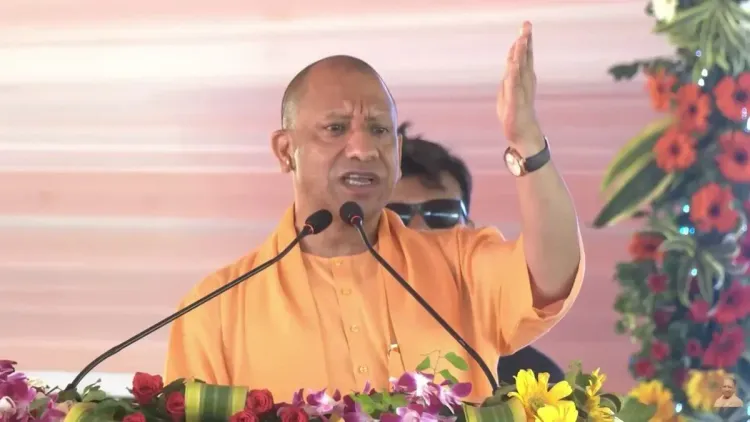
Uttar Pradesh Chief Minister Yogi Adityanath on Tuesday, 7 July 2026, posted a pointed governance message on X, asserting that while the state's systems and people remain the same, a fundamental change in the style of administration has ensured that welfare reaches every poor household, unemployed youth, and farmer.
Context
In his post, CM Yogi wrote: 'Tantra wahi, log wahi, rajya wahi, kewal kaarya karne ki style badli hai' ['The system is the same, the people are the same, the state is the same — only the style of working has changed']. He added that every poor person has received their rightful entitlement, youth have received employment, and farmers — whom he referred to as annadata (providers of food) — have benefited from government schemes.
The statement is a direct articulation of the BJP's governing philosophy in Uttar Pradesh since 2017: that the administrative machinery inherited from previous governments was not broken in structure, but was failing in delivery and intent.
Policy Backdrop
Yogi Adityanath first assumed office as Chief Minister of Uttar Pradesh in March 2017, pledging a visible shift from the governance patterns of earlier Samajwadi Party and Bahujan Samaj Party administrations. A central plank of that shift was the expansion of direct benefit transfers to reduce leakages in welfare delivery.
The PM-KISAN scheme, launched in 2019, provided direct income support to farmers and was rolled out extensively across Uttar Pradesh, one of India's most agrarian states. The state government simultaneously pushed technology-enabled targeting of beneficiaries across housing, food, and employment schemes to improve last-mile reach.
Uttar Pradesh is India's most populous state, and the scale of welfare administration here carries significant political and policy weight nationally. Gains or gaps in scheme delivery directly influence electoral outcomes in a state that sends the largest bloc of members to the Lok Sabha.
Stakeholders and Impact
The three groups named explicitly in the post — the poor, unemployed youth, and farmers — represent the core welfare constituencies that the UP government has targeted since 2017. For farmers, flagship central and state schemes have aimed at income support, crop insurance, and irrigation access.
For youth, the state has periodically organised large-scale recruitment drives and skill development programmes to address Uttar Pradesh's historically high youth unemployment. Poor households have been targeted through housing schemes such as Pradhan Mantri Awas Yojana and subsidised food distribution under the National Food Security Act.
The post carries an implicit contrast with the pre-2017 era, a recurring rhetorical device in BJP communications in the state, positioning current governance as more accountable and less patronage-driven than its predecessors.
What's Next
With the Uttar Pradesh assembly elections scheduled for 2027, governance messaging of this kind is expected to intensify. The release of state budget documents and verified beneficiary data for welfare schemes will be closely watched as the government seeks to substantiate its delivery claims with auditable figures.
The broader pattern of BJP-ruled states emphasising technology-driven benefit targeting as a contrast to earlier administrations is likely to remain a central campaign narrative, with UP serving as the flagship example given its size and political significance.
Point of View
He deflects any suggestion of institutional disruption while claiming full credit for improved delivery outcomes. The framing is calibrated for a pre-election cycle, positioning welfare reach as a measurable contrast to earlier regimes without requiring new policy announcements. It also signals that the 2027 UP election campaign will be fought substantially on the ground of scheme beneficiary satisfaction rather than new ideological terrain.
NationPress
7 Jul 2026
Frequently Asked Questions
What did CM Yogi Adityanath say in his 7 July 2026 post on X?
CM Yogi said that the system, people, and state of Uttar Pradesh remain the same but the style of working has changed, and that this change has ensured every poor person, unemployed youth, and farmer now receives their rightful government benefits.
What does 'tantra wahi, log wahi' mean in CM Yogi's post?
The Hindi phrase means 'the system is the same, the people are the same' — CM Yogi used it to argue that improved welfare delivery in UP is not the result of replacing institutions but of changing how those institutions function.
Which schemes has the UP government used to benefit farmers?
The central PM-KISAN income support scheme, launched in 2019, has been implemented extensively in Uttar Pradesh. State-level schemes covering crop insurance, irrigation, and direct transfers have also been used to reach the farming community.
How is CM Yogi's governance message connected to the 2027 UP elections?
With the Uttar Pradesh assembly elections due in 2027, the Chief Minister's emphasis on welfare delivery to the poor, youth, and farmers is seen as an early consolidation of the BJP's record in government, contrasting it implicitly with earlier SP and BSP administrations.
What is the significance of Uttar Pradesh in India's welfare policy?
Uttar Pradesh is India's most populous state, making it the largest testing ground for central and state welfare schemes. Effective delivery here has outsized national policy and political significance, and the state sends the largest single bloc of members to the Lok Sabha.