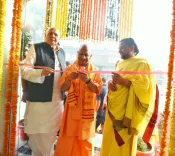
CM Yogi honours Ayodhya's Nishad, Dalit workers and citizens

Synopsis
Chief Minister Yogi Adityanath saluted Nishad and Dalit families, sanitation workers, councillors, and citizens for their role in shaping Ayodhya's beauty and grandeur, spotlighting the human labour behind UP's flagship pilgrimage city.
Key Takeaways
CM Yogi Adityanath publicly acknowledged Nishad and Dalit families , sanitation workers, councillors, and citizens for Ayodhya's beautification.
The statement was posted by the Chief Minister's Office of Uttar Pradesh on 8 November 2026 .
Ayodhya has undergone major state-funded redevelopment since 2017 , accelerating after the Ram Temple consecration.
Nishad (OBC) and Dalit communities are among the most historically marginalised groups in eastern Uttar Pradesh.
The recognition of sanitation workers alongside elected representatives is a notable framing choice in the CM's message.
The tribute aligns with the administration's broader pattern of combining religious-site development with community outreach to OBC and SC voters.
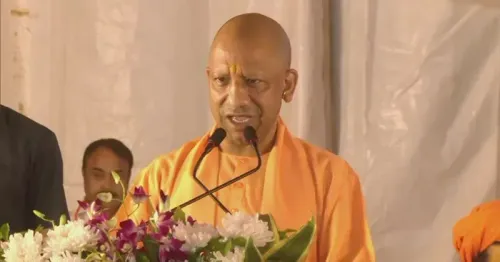
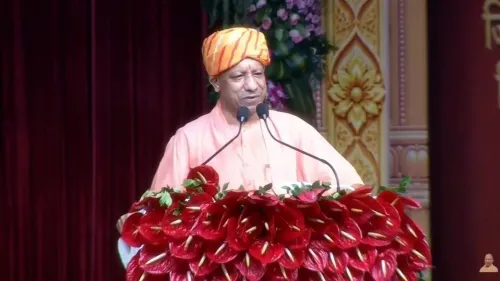
Behind every gleaming ghat and swept temple lane in Ayodhya stands an army of unsung hands — and on Sunday, 8 November 2026, the Chief Minister's Office of Uttar Pradesh made sure they were named. Chief Minister Yogi Adityanath offered his heartfelt salute to the Nishad and Dalit families, sanitation workers, councillors, public representatives, and ordinary citizens whose collective effort has shaped Ayodhya's beauty and grandeur.
The post, shared from the official CMO handle, quoted the Chief Minister directly: 'अयोध्या की सुंदरता और भव्यता में योगदान देने वाले निषाद एवं दलित परिवारों, सफाईकर्मियों, पार्षदों, जनप्रतिनिधियों एवं नागरिकों का मैं हृदय से अभिनंदन करता हूं।' ('I extend my heartfelt salutation to the Nishad and Dalit families, sanitation workers, councillors, public representatives, and citizens who have contributed to the beauty and grandeur of Ayodhya.')
Who CM Yogi named — and why it matters
The deliberate mention of Nishad (a riverine fishing community classified among Other Backward Classes) and Dalit families alongside elected councillors and civic workers is not incidental. It places two of eastern Uttar Pradesh's most historically marginalised communities at the centre of Ayodhya's transformation narrative. Sanitation workers — the men and women who keep pilgrimage sites clean through peak festival footfall — receive a rare, top-line acknowledgement rather than a footnote.
Since 2017, the Yogi Adityanath government has poured resources into Ayodhya's redevelopment: widened roads, riverfront beautification along the Saryu, upgraded civic infrastructure, and facilities to absorb the surge in pilgrims following the Ram Temple consecration. That physical transformation, however, runs on daily civic labour — and the administration has increasingly framed community maintenance drives as a point of collective pride.
Ayodhya as a model pilgrimage city — and local ownership
The state government has positioned Ayodhya as a benchmark pilgrimage destination, citing a dramatic rise in tourist arrivals since the temple's inauguration. Sustaining that standard requires year-round civic upkeep, and messages of appreciation to municipal workers and marginalised communities have become a recurring feature of the administration's outreach to OBC and Scheduled Caste voters in the region.
The timing — ahead of the winter festival season when Ayodhya's footfall peaks — signals that community engagement events or municipal recognition drives may follow. Clean ghats and welcoming lanes are, in effect, a governance deliverable, and crediting the people who produce them is both a cultural gesture and a political signal.
Ayodhya's story is no longer just about stone and mortar. It is increasingly told through the people who polish it every morning before the first pilgrim arrives.
Point of View
Ayodhya is simultaneously a religious flagship and an electoral proving ground in a region dense with OBC and Scheduled Caste voters. Framing the city's grandeur as a collective civic achievement — rather than purely a government project — softens the perception of top-down development and builds local ownership. Watch for whether this appreciation translates into formal municipal awards or community development announcements ahead of the winter festival season.
NationPress
8 Nov 2026
Frequently Asked Questions
Why did CM Yogi praise Nishad and Dalit families for Ayodhya?
Chief Minister Yogi Adityanath acknowledged the contribution of Nishad and Dalit families, along with sanitation workers and citizens, to the beauty and upkeep of Ayodhya, recognising the community labour behind the city's transformation into a major pilgrimage destination.
What development work has been done in Ayodhya under the Yogi government?
Since 2017, the Uttar Pradesh government has carried out extensive redevelopment in Ayodhya including road widening, Saryu riverfront beautification, infrastructure upgrades, and improved facilities for pilgrims, with momentum accelerating after the Ram Temple inauguration.
Who are the Nishad community in Uttar Pradesh?
The Nishad community is a riverine fishing community classified among Other Backward Classes (OBC) in Uttar Pradesh, with a significant presence in eastern parts of the state including areas around Ayodhya.
What is the significance of recognising sanitation workers in Ayodhya?
Sanitation workers maintain the cleanliness of Ayodhya's ghats and temple precincts, especially during high-footfall festival periods. Their public recognition by the Chief Minister elevates civic labour to the same level of acknowledgement as elected representatives.
What is Ayodhya's status as a pilgrimage city in 2026?
Ayodhya has been developed by the Uttar Pradesh government as a model pilgrimage destination, with tourist arrivals rising sharply after the Ram Temple consecration. The state government continues to invest in civic infrastructure and community engagement to sustain this status.