Shivraj Singh Chouhan's Diwali Message Blends Dharma, Poverty Data
Synopsis
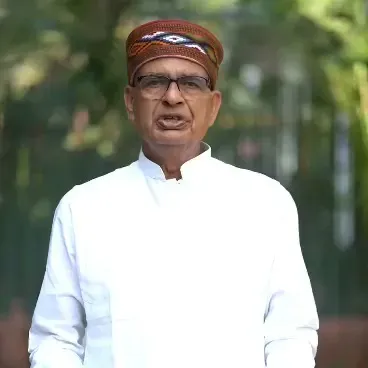
On Diwali 2026, Union Agriculture Minister Shivraj Singh Chouhan invoked Lord Ram's return to Ayodhya, cited World Bank data claiming 49.6 crore Indians exited poverty between 2011 and 2023-24, credited PM Modi, and urged citizens to go Vocal for Local.
Key Takeaways
Shivraj Singh Chouhan posted a detailed Diwali message on 8 November 2026 blending religious philosophy with government welfare data.
He framed Lord Ram's return to Ayodhya as a celebration of truth, dignity, and dharma — not merely a royal homecoming.
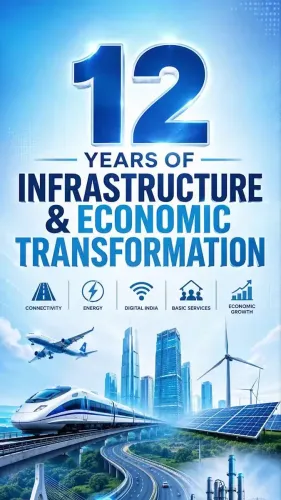
A World Bank report is cited claiming approximately 49.6 crore people exited poverty between 2011 and 2023–24 , with extreme poverty falling from 27.1 percent to 2.6 percent .
Chouhan credited Prime Minister Narendra Modi's leadership for the poverty reduction, citing employment growth and food-grain security.
He called on citizens to buy local products, invoking the Vocal for Local plank of the Atmanirbhar Bharat campaign.
The minister described Goddess Lakshmi as a deity of dharma and truth, attainable through righteous action — not merely material wealth.
Fifty crore lives lifted from poverty — that is the number Union Agriculture Minister Shivraj Singh Chouhan placed at the heart of his Diwali 2026 message, turning a festival greeting into a full-throated argument that India's lights burn brighter today than at any point in modern history.
Writing in Hindi on Sunday, 8 November 2026, Chouhan opened not with statistics but with scripture. He recalled Lord Ram's return to Ayodhya after fourteen years of exile — an event the people of Ayodhya celebrated, he said, not merely as the homecoming of their king, but as the triumph of truth, the restoration of dignity, and the return of dharma. 'Ramrajya ka arth kewal samridh rajya nahin' (Ram's rule means more than a prosperous kingdom), he wrote — it means a society where governance delivers justice, society holds harmony, and every individual commands respect.
Goddess Lakshmi and the Poor Farmer's Smile
Chouhan's theological framing was deliberate. He described Goddess Lakshmi — worshipped on Diwali night and said to have emerged from the churning of the ocean on this very day — as not merely the deity of material wealth, but of dharma and truth, attainable only through righteous deeds. Then he sharpened the idea into something concrete: Lakshmi's most beautiful form, he argued, is visible when prosperity reaches a poor household for the first time, when a farmer's face carries a smile of contentment, or when a woman holds the power of self-reliance in her own hands.
The World Bank Figure at the Centre of the Message
The minister then cited a World Bank report to anchor his cultural argument in hard data. Between 2011 and 2023–24, approximately 49.6 crore (nearly 500 million) people in India exited poverty, he said, with the extreme poverty rate falling from 27.1 percent to 2.6 percent. Chouhan attributed this transformation directly to the leadership of Prime Minister Narendra Modi, pointing to expanding employment and full food-grain storehouses as evidence of the trajectory. Note: NationPress has not independently verified the specific figures cited from the World Bank assessment.
Vocal for Local as a Diwali Pledge
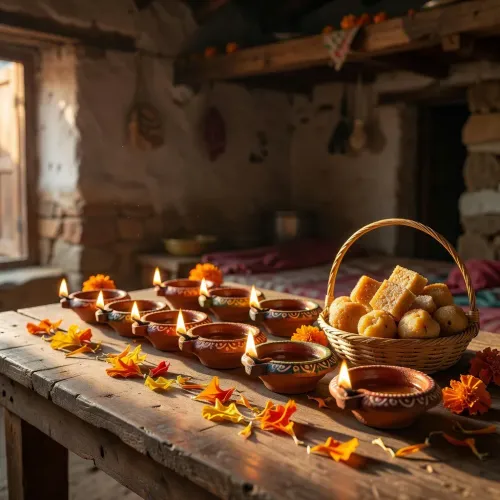
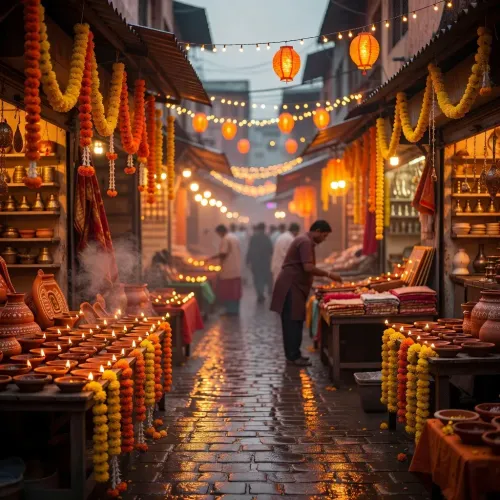
The minister closed with an economic call to action rooted in the Atmanirbhar Bharat campaign, first launched in May 2020. 'Buy local today. Adopt Vocal for Local,' he urged. He framed Diwali itself as a festival of labour and creation — the potter's lamp, the farmer's harvest, the artisan's craft — each element completing the celebration. The message was a neat loop: dharma at the top, grassroots livelihoods at the base, and government policy holding the two together.
It is a formula senior BJP ministers have refined across festival cycles — weaving religious symbolism with welfare metrics to present governance as a continuation of civilisational values. This Diwali, Chouhan deployed it with particular care, and the poverty numbers gave it unusual weight. Whether those numbers become a campaign talking point in the months ahead is the question that will outlast the festival.
Point of View
He converts a ceremonial moment into a government performance report delivered to hundreds of millions of people. The Ram-Ayodhya frame is not incidental — it ties the BJP's civilisational identity politics directly to its welfare governance narrative, an alignment the party has pursued consistently since 2014. The 'Vocal for Local' coda extends the message into economic nationalism, reinforcing the Atmanirbhar Bharat brand ahead of what could be an electorally active period. The critical question is whether the poverty figures, once independently scrutinised, hold — because the entire rhetorical architecture rests on that single number.
NationPress
8 Nov 2026
Frequently Asked Questions
What did Shivraj Singh Chouhan say in his Diwali 2026 message?
Chouhan extended Diwali greetings, reflected on the significance of Lord Ram's return to Ayodhya as a victory of truth and dharma, cited a World Bank figure claiming 49.6 crore Indians exited poverty between 2011 and 2023-24, credited PM Modi's leadership, and urged citizens to embrace Vocal for Local by buying Indian-made products.
What World Bank poverty data did Chouhan cite on Diwali?
Chouhan cited a World Bank report stating that approximately 49.6 crore people came out of poverty between 2011 and 2023-24, and that India's extreme poverty rate fell from 27.1 percent to 2.6 percent. NationPress has not independently verified these specific figures.
What is Vocal for Local and why did Chouhan mention it on Diwali?
Vocal for Local is a campaign under the Atmanirbhar Bharat (Self-Reliant India) initiative launched in May 2020, encouraging Indians to prefer domestically produced goods. Chouhan invoked it on Diwali by framing the festival as a celebration of Indian artisans, farmers, and potters, urging people to buy local goods during the festive season.
Why did Shivraj Singh Chouhan refer to Ayodhya in his Diwali message?
Diwali is traditionally celebrated to mark Lord Ram's return to Ayodhya after fourteen years of exile. Chouhan used the narrative to frame the festival as a celebration of the triumph of truth, justice, and dharma rather than merely a commercial or social occasion.
What is Shivraj Singh Chouhan's current role?
Shivraj Singh Chouhan is currently the Union Minister of Agriculture and Farmers Welfare and Rural Development in the Government of India. He is a senior BJP leader and served four terms as Chief Minister of Madhya Pradesh before joining the Union Cabinet.