CM Yogi pays floral tribute to Uda Devi Pasi in Mathura
Synopsis
Chief Minister Yogi Adityanath paid floral tribute to Uda Devi Pasi, the Dalit veerangana of the 1857 Rebellion, on her martyrdom anniversary in Mathura on November 16, 2026, as Uttar Pradesh formally honours her anti-colonial legacy.
Key Takeaways
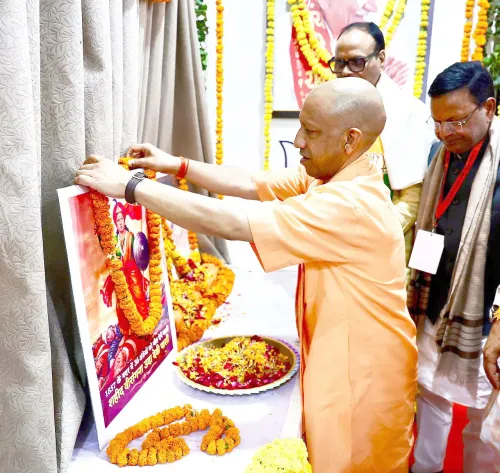
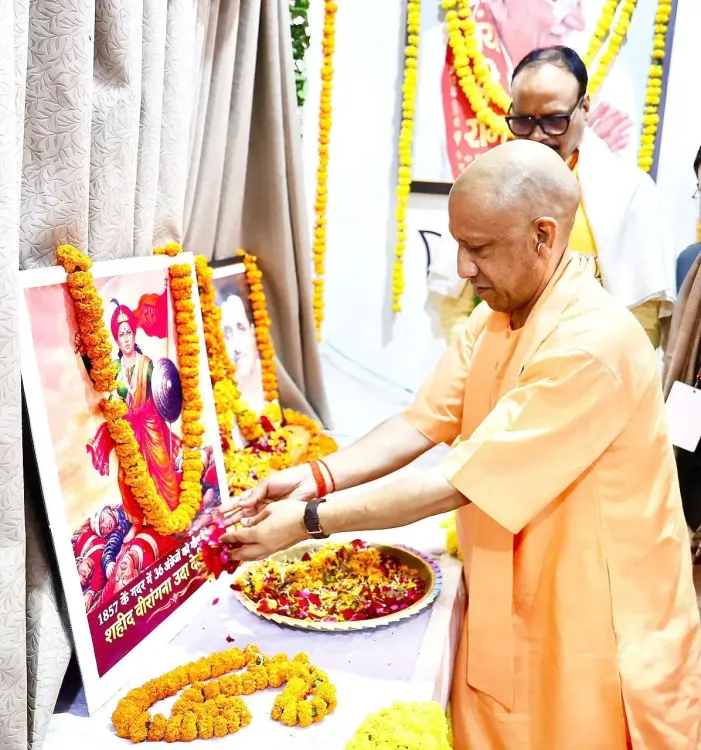
CM Yogi Adityanath offered a garland at the portrait of Uda Devi Pasi in Mathura on November 16, 2026 .
Uda Devi Pasi was a Dalit woman warrior from the Pasi community who was martyred fighting British forces during the 1857 Indian Rebellion .
The occasion was her annual balidan diwas — martyrdom anniversary.
The Chief Minister's gesture reflects a broader Uttar Pradesh government pattern of formally commemorating marginalised-caste participants in the 1857 uprising.
The tribute carries both historical and political significance, given the electoral weight of Dalit communities in Uttar Pradesh.
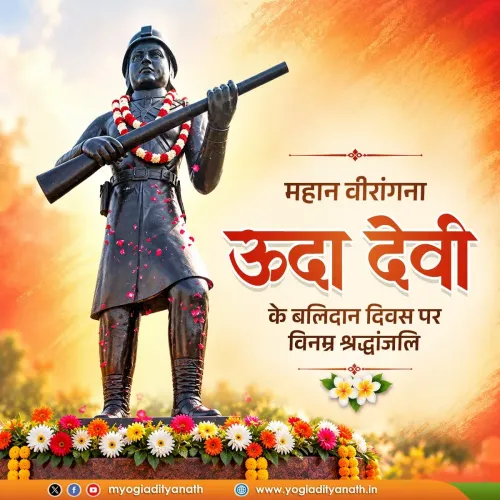
On her martyrdom anniversary, Chief Minister Yogi Adityanath travelled to Mathura on Monday, November 16, 2026, and offered a floral garland at the portrait of Uda Devi Pasi — the Dalit warrior-woman who gave her life fighting British forces during the 1857 Indian Rebellion. The Chief Minister's Office of Uttar Pradesh marked the occasion with a formal reverence that placed one of history's lesser-known freedom fighters back at the centre of public memory.
Who was Uda Devi Pasi — and why her story endures
Uda Devi Pasi belonged to the Pasi community, a Scheduled Caste group from Uttar Pradesh, and is remembered as a veerangana — a woman of valour — who took up arms against the British East India Company during the 1857 uprising. Accounts describe her as a sharpshooter who fought from a concealed position before being martyred, a story that has made her an enduring symbol of both anti-colonial resistance and Dalit courage. Her balidan diwas — martyrdom day — is observed annually by community groups and, increasingly, by the state government itself.
Mathura as the site of remembrance
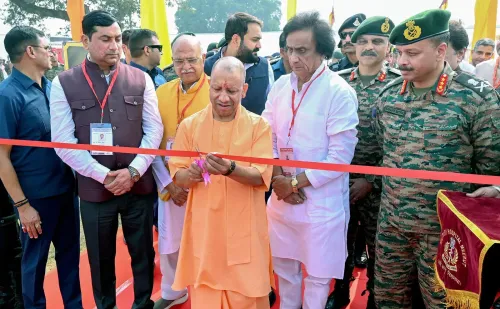
The tribute ceremony was held in Mathura, the historic city in western Uttar Pradesh. CM Yogi offered the garland — maalyarpaṇ — at her portrait and bowed in reverence, a gesture the official account described as shraddhapūrvak naman, or 'a respectful salutation.' The brief but symbolically weighted event was accompanied by photographs released through the Chief Minister's official social-media handle.
A pattern of reclaiming 1857's Dalit voices
Uttar Pradesh governments across political lines have periodically institutionalised public commemorations of 1857 participants from marginalised castes, weaving them into the state's official historical narrative. For the ruling administration, honoring figures like Uda Devi serves a dual purpose: affirming the contributions of communities long absent from mainstream history books, and signalling political inclusivity to the Pasi community and broader Dalit groups ahead of future civic cycles. The gesture lands in a state where Dalit voters constitute a significant electoral bloc.
Uda Devi Pasi's bravery predates formal independence by nearly a century, but her relevance — as proof that the freedom struggle was never the exclusive preserve of the elite — only grows sharper with time.
Point of View
CM Yogi Adityanath continues an effort to bring Dalit freedom fighters into Uttar Pradesh's official commemorative calendar — a space historically dominated by upper-caste nationalist icons. The move aligns with a wider national push to diversify the 1857 narrative and acknowledge subaltern contributions. For the ruling BJP in UP, it also represents a targeted outreach to the Pasi community at a time when consolidating Dalit sub-caste support is a live political calculus. Whether these ceremonial gestures translate into substantive policy outcomes for the community remains the more demanding question.
NationPress
16 Nov 2026
Frequently Asked Questions
Who was Uda Devi Pasi?
Uda Devi Pasi was a Dalit woman warrior from the Pasi community in Uttar Pradesh who fought and was martyred during the 1857 Indian Rebellion against British forces. She is celebrated as a veerangana — a woman of valour — and a symbol of Dalit resistance.
When is Uda Devi Pasi's martyrdom anniversary?
Uda Devi Pasi's martyrdom anniversary, known as balidan diwas , is observed on November 16 each year. In 2026, CM Yogi Adityanath marked the occasion with a tribute ceremony in Mathura.
Why did CM Yogi go to Mathura for the tribute?
The tribute event honouring Uda Devi Pasi on her martyrdom anniversary was held in Mathura , a historic city in western Uttar Pradesh, where CM Yogi offered a floral garland at her portrait on November 16, 2026.
What is the Pasi community?
The Pasi community is a Scheduled Caste group based primarily in Uttar Pradesh. Uda Devi Pasi is their most celebrated historical figure and a symbol of Dalit pride and anti-colonial courage.
Does the UP government regularly honour 1857 participants from Dalit communities?
Yes. Uttar Pradesh governments have periodically organised formal commemorations for 1857 revolt participants from marginalised castes, integrating them into the state's official historical narrative alongside more widely recognised freedom fighters.