CM Yogi pays tribute to 1857 martyr Uda Devi on her Balidan Diwas
Synopsis
On her Balidan Diwas, Uttar Pradesh Chief Minister Yogi Adityanath honoured 1857 martyr Uda Devi, a Pasi community warrior of Awadh who gave her life fighting British forces, calling her sacrifice an eternal inspiration for Indian womanhood.
Key Takeaways
UP Chief Minister Yogi Adityanath posted a tribute to Uda Devi on her martyrdom anniversary, 16 November 2026 .
Uda Devi was a warrior from the Pasi community in the Awadh region who fought British forces during the 1857 Indian Rebellion .
CM Adityanath described her as an immortal chapter in the history of Indian Nari Shakti (women's power).
The tribute reflects a broader pattern of Indian political leaders commemorating marginalised and women fighters from the 1857 revolt.
Uda Devi's Balidan Diwas is observed annually to honour her sacrifice for Indian independence.
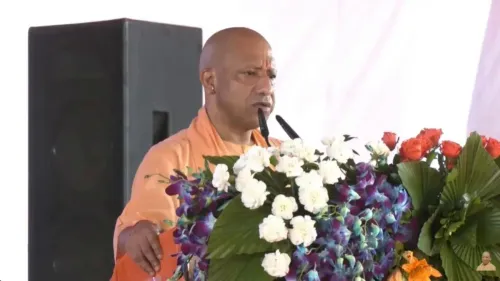
A warrior who climbed a tree to ambush British soldiers and fell fighting for her land — Uttar Pradesh Chief Minister Yogi Adityanath paused on Monday, 16 November 2026, to honour that woman: Uda Devi, the fearless fighter of the 1857 Indian Rebellion, on her martyrdom anniversary.
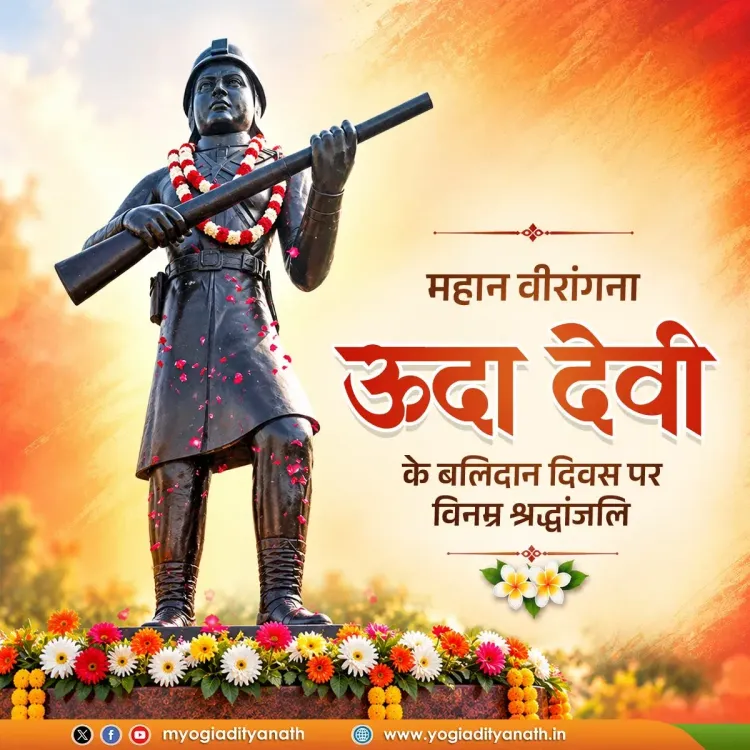
In a post on X, Chief Minister Adityanath offered his tribute in Hindi, writing: 'मातृभूमि की स्वतंत्रता के लिए प्राण न्योछावर करने वाली महान वीरांगना ऊदा देवी के बलिदान दिवस पर विनम्र श्रद्धांजलि।' — 'A humble salute on the martyrdom anniversary of the great warrior Uda Devi, who gave her life for the freedom of the motherland.' He added that her 'indomitable valour and supreme sacrifice' form an immortal chapter in the glorious history of Indian Nari Shakti (women's power), one that will continue to inspire generations in patriotism, courage, and self-respect.
Who was Uda Devi — the Pasi fighter of Awadh
Uda Devi belonged to the Pasi community, a marginalised caste of the Awadh region in present-day Uttar Pradesh. When the 1857 Indian Rebellion erupted — first in Meerut and then sweeping across northern India — she took up arms against the forces of the East India Company. According to historical accounts, she is remembered for taking a concealed position in a tree and engaging British troops before being shot down. Her story is one of individual defiance written in the margins of a broader uprising.
The 1857 revolt drew participation from across the social spectrum of Awadh — soldiers, farmers, aristocrats, and ordinary women. Uda Devi's place in that story carries a double significance: she was both a woman and a member of a community long overlooked in mainstream historical memory. Her martyrdom anniversary is observed each year as Balidan Diwas.
Why tributes like this carry political weight in UP
Indian political leaders have increasingly made public commemorations of 1857 revolt figures a regular feature of their calendars — particularly those from women and marginalised caste backgrounds whose contributions were long absent from textbooks. In Uttar Pradesh, with its dense concentration of Pasi and other OBC and Dalit communities, recognising such figures carries both historical and social resonance.
Chief Minister Adityanath's tribute fits a wider pattern of state governments lifting regional heroes into the national spotlight — a form of historical reclamation that doubles as a signal of inclusion to communities whose ancestors fought and died far from the pages of official history.
Uda Devi's story endures precisely because it refuses to be a footnote. Nearly 170 years after the rebellion, her name is still spoken — and that, as much as any monument, is the measure of a martyr's reach.
Point of View
Dalit, and OBC communities are politically significant — such public acknowledgements carry weight beyond ceremonial remembrance. It also signals the BJP's sustained effort to broaden the pantheon of national heroes beyond upper-caste narratives, targeting identity-based consolidation ahead of ongoing state political cycles. The framing of Uda Devi as a symbol of Nari Shakti aligns with the party's wider messaging around empowered Indian womanhood.
NationPress
16 Nov 2026
Frequently Asked Questions
When is Uda Devi's Balidan Diwas?
Uda Devi's Balidan Diwas (martyrdom anniversary) is observed on 16 November each year. In 2026, UP Chief Minister Yogi Adityanath marked the occasion with a tribute on X.
What community did Uda Devi belong to?
Uda Devi belonged to the Pasi community, a marginalised caste from the Awadh region in Uttar Pradesh. Her story is an important part of the history of Dalit and OBC participation in India's first war of independence in 1857.
Why did Yogi Adityanath pay tribute to Uda Devi?
UP Chief Minister Yogi Adityanath paid tribute to Uda Devi on her annual martyrdom anniversary, calling her sacrifice an immortal chapter in the history of Indian women's courage and an inspiration for future generations in patriotism and self-respect.
What was Uda Devi's role in the 1857 revolt?
Uda Devi actively participated in the 1857 Indian Rebellion in the Awadh region, fighting against British East India Company forces. Historical accounts describe her taking a concealed position to engage British troops before being martyred.