CM Yogi hosts Sadhana Shrinkhla 2026 third regional workshop
Synopsis
The Chief Minister's Office of Uttar Pradesh announced the third regional workshop of Sadhana Shrinkhla 2026, gathering officials from 8 states and 4 union territories to exchange governance best practices, with CM Yogi Adityanath emphasising mutual learning between UP and participating delegations.
Key Takeaways
8 states and 4 union territories are represented at the third regional workshop of Sadhana Shrinkhla 2026, held in Uttar Pradesh on October 23, 2026 .
The workshop is designed as a two-way exchange — UP officials learn from other states while visiting delegates study UP's governance practices.
CM Yogi Adityanath described the workshop as 'extremely important,' signalling high priority within the state's administrative calendar.
Sadhana Shrinkhla 2026 is a series of regional workshops focused on public administration capacity building across Indian states and union territories.
Uttar Pradesh positions itself as both a learner and a source of replicable administrative practices under the cooperative federalism framework.
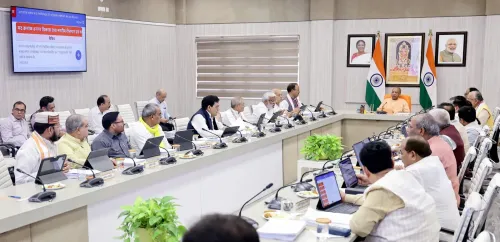
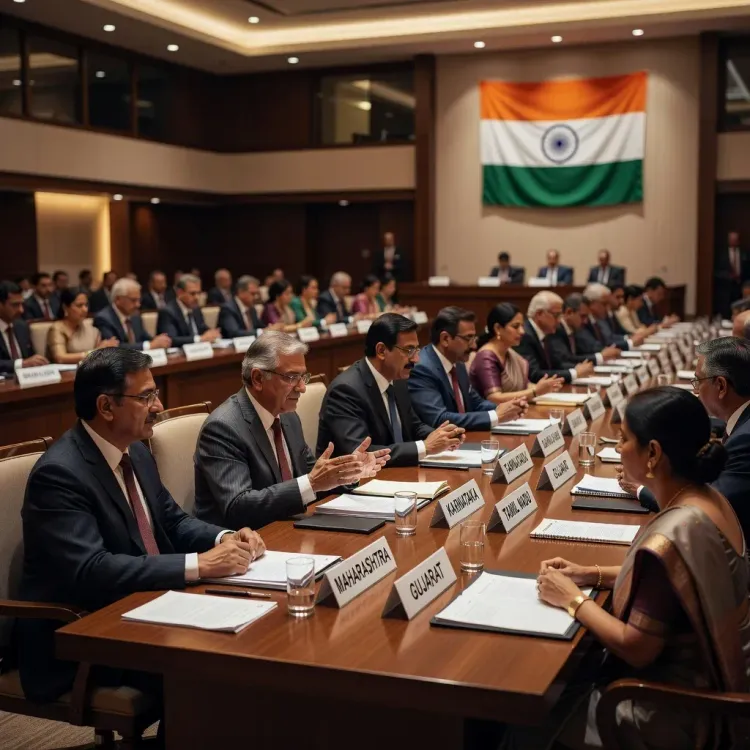
Twelve states and union territories converged in Uttar Pradesh on Friday, October 23, 2026, for the third regional workshop under the Sadhana Shrinkhla 2026 series — a structured forum designed to turn India's cooperative federalism from a constitutional ideal into a working reality. The Chief Minister's Office of Uttar Pradesh shared the occasion with remarks from Chief Minister Yogi Adityanath, underlining the platform's role as a two-way exchange, not a one-directional lecture.
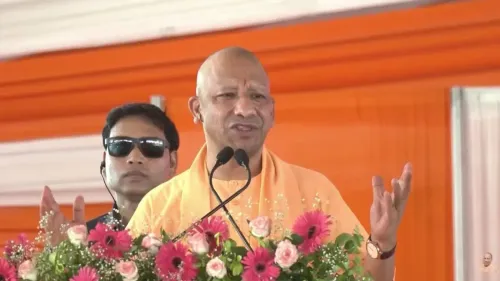
Quoting the Chief Minister directly: 'Sādhana Shrinkhla 2026 kī tīsrī kṣetrīya kāryaśālā hamāre lie atyant mahattvapoorn hai' — 'The third regional workshop of Sadhana Shrinkhla 2026 is extremely important for us.' Officers and representatives from 8 states and 4 union territories are participating, making this the broadest assembly in the series so far.
What Sadhana Shrinkhla 2026 is built to do
Sadhana Shrinkhla 2026 is a series of regional workshops convened to allow state and union territory officials to exchange best practices in public administration. The format is deliberately reciprocal: Uttar Pradesh officials gain exposure to governance models working well elsewhere, while visiting representatives study initiatives that have produced results inside India's most populous state. CM Yogi's framing was precise — 'anye rājyon ke acche anubhavon se sīkhne kā avasara' ('an opportunity to learn from the good experiences of other states') flowing in both directions across the table.
That two-way premise matters. Workshops of this kind can easily become showcase events for the host. Structuring them as mutual exchanges signals that Uttar Pradesh sees itself simultaneously as a learner and a contributor — a posture that tends to encourage more candid participation from arriving delegations.
UP's administrative reform record as a draw for delegates
Since 2017, the Yogi Adityanath administration has repeatedly highlighted improvements in law enforcement, land record digitisation, investor summits, and public-service delivery as markers of administrative turnaround in a state long associated with governance challenges. That claimed track record is now part of what the workshop places on the table for other states to examine and, selectively, replicate.
For the 8 states and 4 union territories sending delegations, the forum offers a shortcut: examining what scaled in a state of 240 million people provides a stress-tested data point that smaller jurisdictions can calibrate to their own contexts before committing resources to new programmes.
The proof of the series' value will lie in what gets picked up and implemented after the delegates return home — and whether the fourth regional workshop builds on concrete adoptions rather than fresh intentions.
Point of View
Reinforcing the state's claim to administrative credibility ahead of future political cycles. The two-way framing CM Yogi emphasises is also strategically important: it lowers the political cost for smaller states to attend, since they are not seen as coming to receive lessons from a BJP-governed state but to participate in a genuine exchange. Whether that reciprocity produces durable policy adoptions or remains a goodwill gesture will be the real measure of cooperative federalism in action.
NationPress
23 Oct 2026
Frequently Asked Questions
What is Sadhana Shrinkhla 2026?
Sadhana Shrinkhla 2026 is a series of regional workshops that bring together administrative officers and representatives from Indian states and union territories to share governance best practices and improve public administration.
How many states are participating in the third Sadhana Shrinkhla 2026 workshop?
The third regional workshop has participation from 8 states and 4 union territories , as confirmed by the Chief Minister's Office of Uttar Pradesh.
Where is the Sadhana Shrinkhla 2026 third workshop being held?
The third regional workshop is being hosted in Uttar Pradesh , with the event announced on October 23, 2026.
What is the purpose of the Sadhana Shrinkhla workshops?
The workshops aim to enable a mutual exchange of governance experiences — UP officials learn from other states' successes, while visiting delegates study administrative practices that have worked in Uttar Pradesh.
What did CM Yogi Adityanath say about the workshop?
CM Yogi Adityanath called the third regional workshop of Sadhana Shrinkhla 2026 'extremely important,' highlighting its role as a platform for learning from good experiences in other states while also showcasing UP's own administrative achievements.