CM Yogi: India's first Solar Expressway coming to Bundelkhand
Synopsis
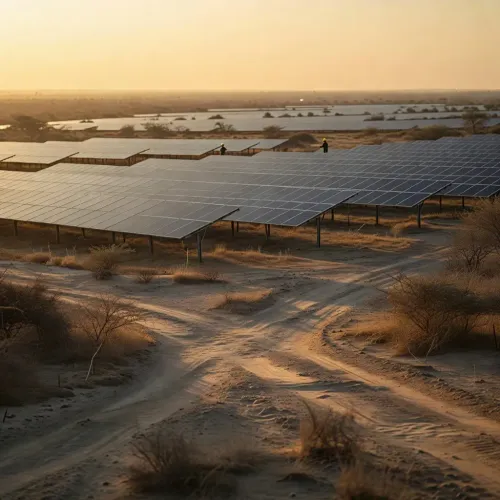
Uttar Pradesh Chief Minister Yogi Adityanath has announced that Bundelkhand will be home to India's first Solar Expressway — a road project that integrates solar power generation along its alignment, combining connectivity with clean energy for one of UP's most historically underserved regions.
Key Takeaways
CM Yogi Adityanath announced on 25 July 2026 that India's first Solar Expressway is being built in Bundelkhand , Uttar Pradesh.
The project will integrate solar panel infrastructure along an expressway alignment to generate renewable electricity alongside road connectivity.
Bundelkhand is a historically underserved, semi-arid region that has been a focus of central and state development schemes for over a decade.
The initiative aligns with Uttar Pradesh's Solar Energy Policy 2017 and India's national target of 500 GW of non-fossil fuel capacity by 2030 .
Key next steps include detailed project report approval, land acquisition, and potential central government funding linkage.
If executed, the project could serve as a replicable model for hybrid solar-road infrastructure across India.
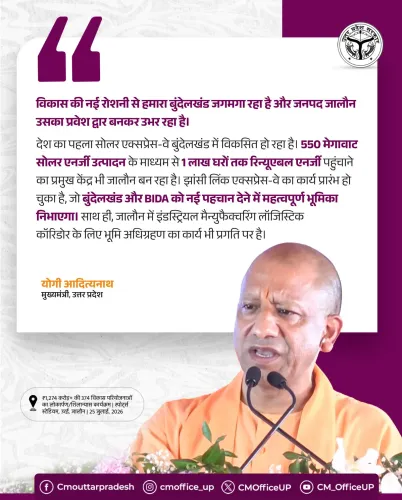
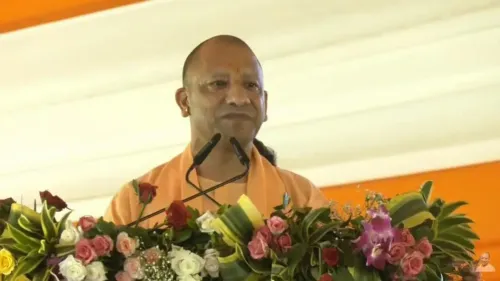
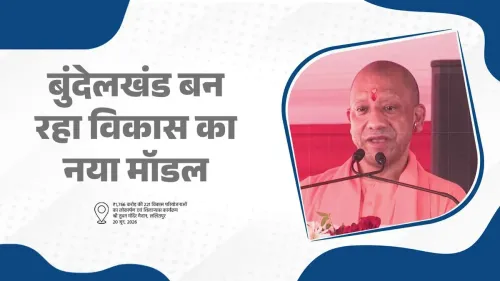
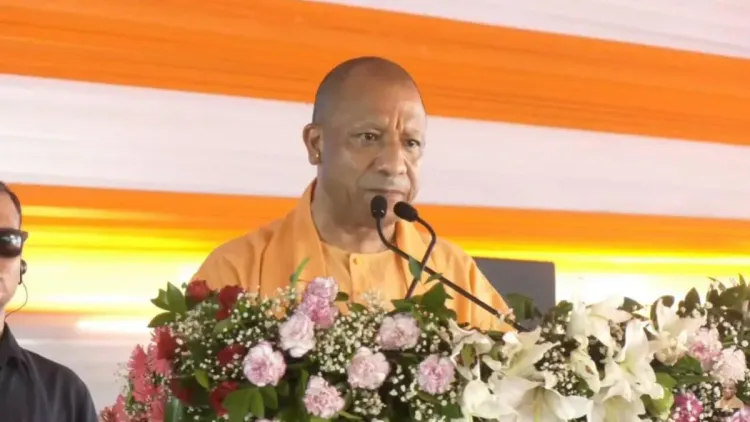
Uttar Pradesh Chief Minister Yogi Adityanath announced on Saturday, 25 July 2026 that Bundelkhand will host the country's first 'Solar Expressway' — a road infrastructure project integrating solar energy generation along its alignment — marking a significant push to bring renewable power and modern connectivity to one of the state's historically underserved regions.
In his post on X, the Chief Minister wrote: 'हमारे बुंदेलखंड में देश का पहला 'सोलर एक्सप्रेस-वे' बन रहा है...' ('India's first Solar Expressway is being built in our Bundelkhand'), framing the project as a milestone for the region and for the state's renewable energy ambitions.
Context
Bundelkhand is a semi-arid plateau region straddling Uttar Pradesh and Madhya Pradesh, long characterised by water scarcity, agrarian distress, and connectivity deficits. Over the past decade, successive central and state governments have directed multiple schemes — covering roads, canals, and solar parks — toward the region in an effort to bridge its developmental gap with more prosperous parts of the state.
The announcement positions the Solar Expressway as a dual-purpose infrastructure asset: a high-speed road corridor that simultaneously generates renewable electricity through panels installed along its length. If realised as described, it would be the first project of its kind in India.
Policy Backdrop
The project sits at the intersection of two long-running policy priorities. Uttar Pradesh's Solar Energy Policy 2017 set out a framework to attract investment in grid-connected solar infrastructure across the state. At the national level, the National Solar Mission, launched in 2010, has pushed states to scale up renewable capacity, with Uttar Pradesh emerging as one of the larger contributors to India's solar pipeline in recent years.
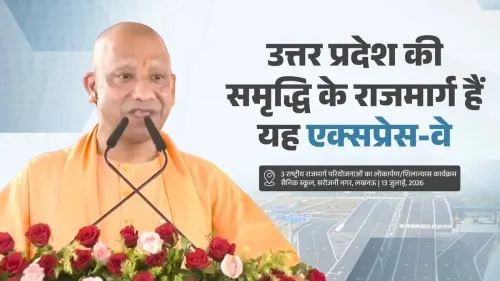
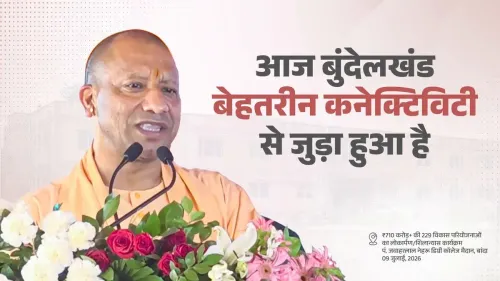
Expressway construction has been a signature infrastructure theme of the Yogi Adityanath government since 2017, with projects such as the Bundelkhand Expressway — a 296-kilometre corridor linking the region to the state's expressway network — already commissioned. Integrating solar generation into a new expressway corridor would extend that template into the clean-energy domain.
India's broader renewable targets — including a national goal of 500 GW of non-fossil fuel capacity by 2030 — provide the macro policy environment in which state-level innovations of this kind are being encouraged and funded.
Stakeholders and Impact
The most immediate beneficiaries would be Bundelkhand's residents, who have historically faced erratic power supply alongside poor road access. A solar expressway could, in principle, feed locally generated electricity into the grid while also cutting travel times and logistics costs for the region's agricultural and small-industry base.
Renewable energy developers and engineering, procurement, and construction firms would also have a direct stake, given the scale of investment that such a hybrid infrastructure project typically demands. State agencies responsible for land acquisition and project clearances will be key to the timeline.
What's Next
The critical milestones to watch include the approval of a detailed project report, the status of land acquisition along the proposed alignment, and any central funding linkage that may be announced at upcoming infrastructure summits or in the state budget. The 'first in India' designation will also draw scrutiny from technical and policy quarters, making transparent project disclosures important for the claim to hold.
If the Bundelkhand Solar Expressway moves from announcement to execution on schedule, it could serve as a replicable model for other highway corridors across India — embedding renewable generation directly into road infrastructure at scale.
Point of View
And if the project advances to construction, it would position Uttar Pradesh as a pioneer in hybrid infrastructure at a time when several states are competing for clean-energy investment. The 'first in India' framing, however, will require substantiation through project disclosures, since such claims attract technical and political scrutiny. The broader arc here is a BJP-governed state seeking to recast Bundelkhand's identity — from a symbol of neglect to a showcase of 21st-century infrastructure — ahead of electoral cycles.
NationPress
24 Oct 2026
Frequently Asked Questions
What is the Bundelkhand Solar Expressway?
The Bundelkhand Solar Expressway is a proposed infrastructure project in Uttar Pradesh that integrates solar power generation panels along a new expressway corridor, combining road connectivity with renewable energy production. Chief Minister Yogi Adityanath has described it as India's first such project.
Where exactly is the Solar Expressway being built?
The project is located in the Bundelkhand region, which spans parts of southern Uttar Pradesh and northern Madhya Pradesh. The precise alignment and district coverage have not yet been officially detailed in public disclosures.
What is the significance of Bundelkhand for this project?
Bundelkhand is a historically underdeveloped, semi-arid region that has faced chronic water scarcity, poor road connectivity, and erratic power supply. Selecting it for India's first Solar Expressway is intended to address both its infrastructure deficit and its clean-energy access gap simultaneously.
How does this project relate to India's solar energy goals?
The project aligns with India's National Solar Mission and the national target of achieving 500 GW of non-fossil fuel power capacity by 2030. Uttar Pradesh has its own Solar Energy Policy since 2017, and this expressway would represent a new model of embedding solar generation within road infrastructure.
What are the next steps for the Solar Expressway project?
Key milestones include approval of a detailed project report, completion of land acquisition along the corridor, and securing funding — potentially with central government support. Transparent project disclosures will be important to validate the 'first in India' claim.