CM Yogi Invokes Gandhi to Praise Modi's Kashi Vishwanath Dham
Synopsis
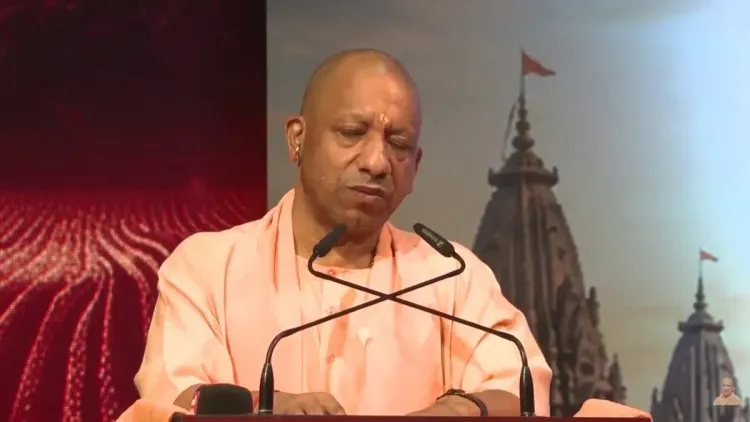
UP Chief Minister Yogi Adityanath posted that while many leaders claimed power in Mahatma Gandhi's name, PM Modi's leadership delivered the grand Kashi Vishwanath Dham — invoking Gandhi to frame the corridor project as a long-overdue fulfilment of India's founding promise.
Key Takeaways
CM Yogi Adityanath posted on X contrasting past governments' use of Mahatma Gandhi's name with their failure to act on his ideals.
He credited PM Narendra Modi with building the grand Kashi Vishwanath Dham in Varanasi .
The Kashi Vishwanath Corridor was inaugurated by PM Modi in December 2021 , linking the temple directly to the Ganga ghats .
Varanasi is PM Modi's parliamentary constituency, adding personal significance to the project.
The post reflects the BJP government's broader push to redevelop major religious sites as heritage and tourism infrastructure.
For decades, politicians invoked the name of the Father of the Nation to win power — yet the ancient city of Varanasi and its sacred heart, the Kashi Vishwanath temple, waited. Uttar Pradesh Chief Minister Yogi Adityanath has now drawn that contrast sharply, crediting Prime Minister Narendra Modi with turning a long-deferred vision into stone and steel.
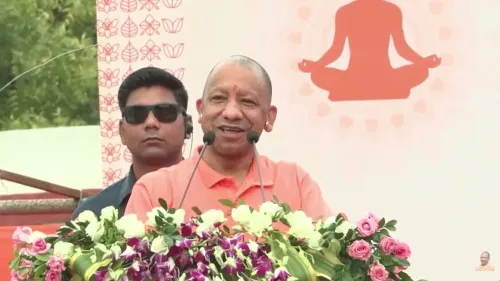
In a post on X, CM Yogi wrote that many had gained power in the name of 'Rashtrapit' (राष्ट्रपिता) Mahatma Gandhi, but none found the time to realise his dreams on the ground. The contrast he draws is pointed: those who inherited Gandhi's political legacy, he argues, did not translate it into tangible transformation for ordinary citizens and pilgrims.
What the Kashi Vishwanath Dham project actually built
The Kashi Vishwanath Corridor — inaugurated by Prime Minister Modi in December 2021 — is one of independent India's most ambitious religious infrastructure projects. The redevelopment cleared congested lanes around the 12th Jyotirlinga shrine, created a wide processional corridor linking the temple directly to the Ganga ghats, and added pilgrimage facilities, museums, and public spaces across a sprawling complex.
Varanasi is also the parliamentary constituency PM Modi has represented since 2014, lending the project both personal and political significance. For pilgrims who once navigated narrow, crowded alleys to reach the sanctum, the transformation is visceral and immediate.
Gandhi's name, Modi's legacy — the political subtext
CM Yogi's framing is a familiar but potent rhetorical move in contemporary Indian politics: measuring post-Independence governance not by electoral victories but by delivery on the ground. By anchoring the critique in Mahatma Gandhi's own ideals — self-reliance, uplift of the common person, connection to India's civilisational roots — he attempts to reframe the Kashi project as the fulfilment of a founding promise, not merely a BJP infrastructure milestone.
The broader pattern is clear: the central government has pursued similar corridor and restoration initiatives at major religious sites across the country, positioning heritage infrastructure as both cultural assertion and economic driver through religious tourism.
Seventy-five years after Independence, one of Hinduism's holiest cities finally has a temple complex that matches its spiritual weight. Whether that is Gandhi's dream realised or a different vision entirely is the argument CM Yogi just put on the table.
Point of View
The BJP attempts to occupy the moral high ground on cultural heritage. This is part of a consistent pattern in which the ruling dispensation redefines 'development' to include religious infrastructure alongside roads and power. The rhetorical move is sharp precisely because it is difficult for opponents to rebut without appearing to argue against Gandhi himself.
NationPress
11 Aug 2026
Frequently Asked Questions
What is the Kashi Vishwanath Dham project?
The Kashi Vishwanath Dham is a redeveloped temple complex in Varanasi inaugurated by PM Narendra Modi in December 2021 . It features a wide corridor connecting the ancient Kashi Vishwanath temple to the Ganga ghats , along with pilgrim facilities, museums, and public spaces.
Why did CM Yogi mention Mahatma Gandhi in his post?
CM Yogi Adityanath invoked Mahatma Gandhi to argue that past governments gained power in Gandhi's name but failed to act on his ideals, contrasting them with PM Modi's delivery of the Kashi Vishwanath Dham project.
When was the Kashi Vishwanath Corridor inaugurated?
The Kashi Vishwanath Corridor was inaugurated by Prime Minister Narendra Modi in December 2021 .
What is Varanasi's connection to PM Modi?
Varanasi is the parliamentary constituency that PM Narendra Modi has represented since 2014 , making the Kashi Vishwanath Dham project both politically and personally significant for him.
What is the broader significance of the Kashi Vishwanath Dham redevelopment?
The project is part of the central government's push to redevelop major religious sites across India, improving pilgrim access, amenities, and religious tourism infrastructure while positioning heritage sites as cultural and economic assets.