CM Yogi Invokes Sant Ravidas to Praise Modi's Food Security Push
Synopsis
UP Chief Minister Yogi Adityanath invoked a celebrated verse by fifteenth-century Bhakti saint Ravidas on 29 July 2026, crediting Prime Minister Narendra Modi with translating the saint's vision of universal food access and social equality into reality through central welfare schemes.
Key Takeaways
CM Yogi posted a verse by Sant Ravidas on 29 July 2026 , framing it as a vision fulfilled by PM Modi's governance.
The quoted couplet calls for a kingdom where all — high and low — receive food equally, a central ideal of the Ravidas philosophy.
The post implicitly references the Pradhan Mantri Garib Kalyan Anna Yojana , the free-foodgrain scheme running since 2020 .
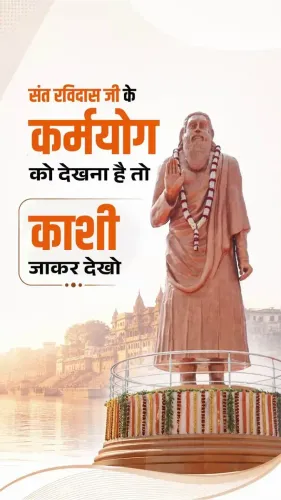
Sant Ravidas , born in Varanasi in the fifteenth century, is a revered Bhakti saint whose compositions are enshrined in the Guru Granth Sahib.
BJP governments in Uttar Pradesh have a consistent pattern of linking medieval Bhakti saints to contemporary welfare policy.
The framing targets Dalit communities in UP, for whom Ravidas is a defining spiritual and social figure.
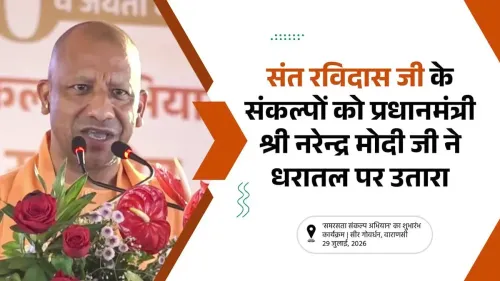
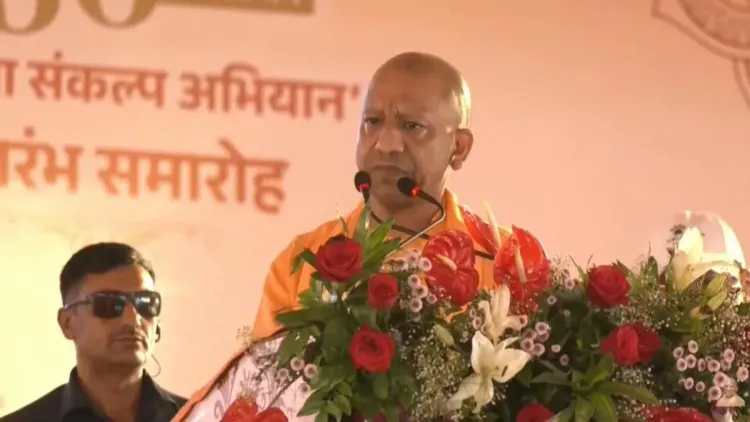
A fifteenth-century Bhakti saint's dream of a kingdom where no one goes hungry — and a twenty-first-century welfare programme that, Uttar Pradesh Chief Minister Yogi Adityanath argues, has finally made that dream real. On Wednesday, 29 July 2026, CM Yogi posted a verse by Sant Shiromani Ravidas Ji Maharaj on X, then credited Prime Minister Narendra Modi with translating those centuries-old ideals into ground-level action.
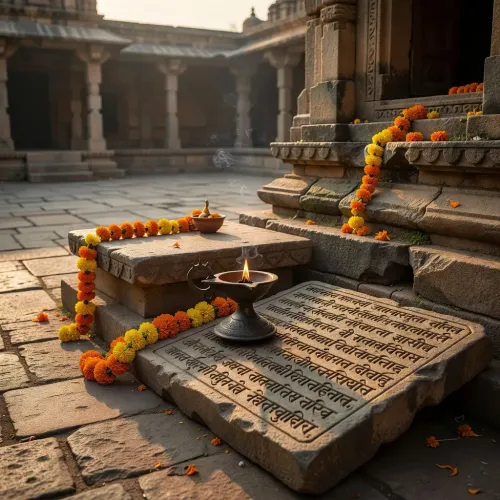
The verse CM Yogi quoted — 'Aisa chahun raj main, jahan mile saban ko ann. Chhot-bado sab sam base, Ravidas rahe prasann' — translates as: 'I desire such a kingdom where everyone receives food. Where the small and the great live as equals, and Ravidas remains content.' It is among the most cited couplets from the Ravidas canon, invoked across generations as a compact manifesto for social equality and food justice.
The Saint Behind the Verse
Sant Ravidas, born in Varanasi in the fifteenth century, was a central figure of the Bhakti movement whose compositions appear in the Guru Granth Sahib. His philosophy of radical equality — cutting across caste lines and centred on access to basic sustenance — has made him a touchstone for Dalit communities across Uttar Pradesh and beyond. Invoking his words is never merely literary; it is a political and social signal aimed squarely at communities that have historically faced exclusion.Modi's Welfare Record as the Fulfilment of an Ideal
CM Yogi's framing positions the Pradhan Mantri Garib Kalyan Anna Yojana (PMGKAY) — the central government's flagship free-foodgrain scheme launched in 2020 and extended repeatedly since — as the concrete answer to Ravidas's six-hundred-year-old aspiration. The scheme provides free foodgrains to priority households across India, covering hundreds of millions of beneficiaries. By threading a medieval saint's verse directly into a present-day welfare narrative, the post does something BJP communications have refined into a pattern: it roots contemporary policy in a moral and spiritual lineage that predates the party itself.A Recurring BJP Playbook in UP
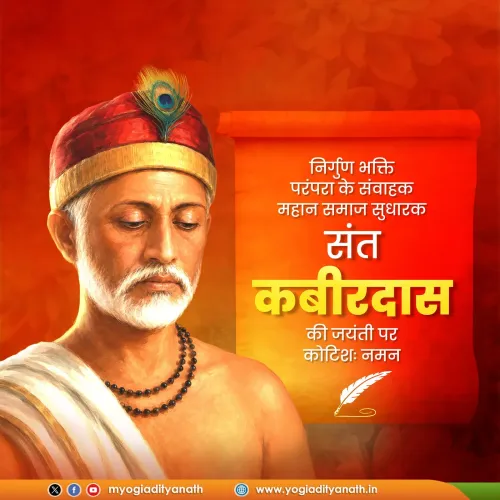
This is not an isolated gesture. BJP governments in Uttar Pradesh have consistently invoked Bhakti-era saints — Kabir, Tulsidas, and Ravidas chief among them — to frame welfare measures as the historical fulfilment of egalitarian spiritual ideals. The approach serves a dual purpose: it honours a saint revered intensely by Dalit communities, a politically significant constituency in UP, and it simultaneously elevates the party's welfare record into something that feels less like policy and more like destiny. The post carries no exclamation of a new scheme or event — it is a tribute, a framing, a moral argument compressed into a couplet and a credit line. But in UP's political grammar, that is often enough. When a Chief Minister quotes Ravidas to praise the Prime Minister, the audience knows exactly what is being said — and to whom. Six centuries after Ravidas wrote his vision of a hunger-free kingdom, the debate over whether that kingdom has arrived is very much alive.Point of View
The framing elevates PMGKAY from an administrative programme to a civilisational promise kept. In Uttar Pradesh, where Dalit voters are a decisive bloc and Ravidas commands deep loyalty, this is messaging with precise electoral coordinates. The broader arc is clear: as state elections cycle through, expect the Bhakti-to-welfare bridge to be walked again and again.
NationPress
30 Jul 2026
Frequently Asked Questions
Who is Sant Ravidas and why is he significant in UP politics?
Sant Ravidas was a fifteenth-century Bhakti saint born in Varanasi whose philosophy centred on social equality and universal access to food. He is deeply revered among Dalit communities in Uttar Pradesh, making references to him politically significant in the state.
What verse did CM Yogi quote in his post?
CM Yogi quoted the couplet 'Aisa chahun raj main, jahan mile saban ko ann. Chhot-bado sab sam base, Ravidas rahe prasann,' which translates as: 'I desire such a kingdom where everyone receives food, where the small and great live as equals, and Ravidas remains content.'
Which government scheme is CM Yogi's post linked to?
The post is broadly linked to the Pradhan Mantri Garib Kalyan Anna Yojana (PMGKAY), the central government's free-foodgrain scheme launched in 2020 and extended since, which BJP leaders credit as fulfilling food security goals for poor households.
Why does BJP invoke Bhakti saints like Ravidas in political messaging?
BJP governments in Uttar Pradesh routinely invoke Bhakti-era saints to frame welfare measures as the fulfilment of historical egalitarian ideals, connecting current policy to a spiritual lineage that resonates with Dalit and marginalised communities.
When did CM Yogi make this post about Sant Ravidas?
CM Yogi Adityanath posted the tribute on Wednesday, 29 July 2026, at 6:47 PM IST on his official X account.