CM Yogi Links PM Modi's Food Scheme to Sant Ravidas's Vision
Synopsis
Chief Minister Yogi Adityanath linked PM Modi's PM Garib Kalyan Anna Yojana to the egalitarian ideals of fifteenth-century Bhakti saint Ravidas, framing the free food grain scheme as the ground-level realisation of the saint's vision of a casteless, equal society.
Key Takeaways
CM Yogi Adityanath credited PM Narendra Modi with translating Sant Ravidas's vision of a discrimination-free society into policy through PMGKAY .
Sant Ravidas , a fifteenth-century Bhakti saint from Uttar Pradesh , is a revered figure in the Dalit-Bahujan tradition who preached against caste hierarchy.
PM Garib Kalyan Anna Yojana was launched in March 2020 to provide 5 kg free food grains per person per month to NFSA beneficiaries during COVID-19.
The scheme has been extended multiple times and is now one of India's largest food-security programmes by reach.
BJP leaders in UP routinely invoke Dalit-Bahujan saints to frame central welfare schemes as fulfilment of historical egalitarian ideals.
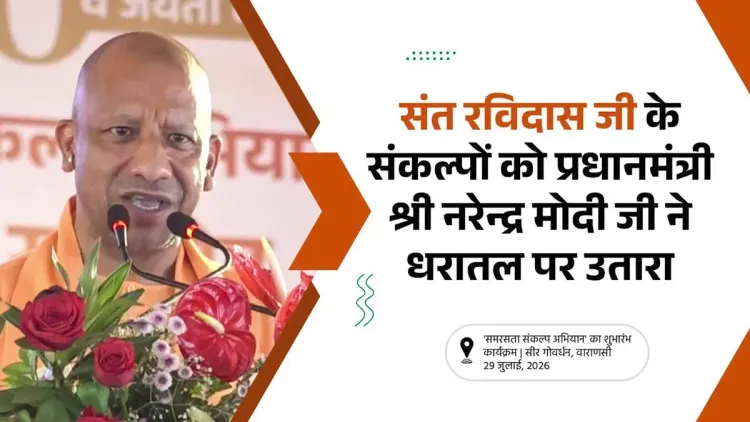
A fifteenth-century saint's call for a casteless, equal society — and a twenty-first-century welfare scheme feeding hundreds of millions. Chief Minister Yogi Adityanath drew that direct line on Wednesday, 29 July 2026, invoking the legacy of Sant Ravidas to frame the Pradhan Mantri Garib Kalyan Anna Yojana (PMGKAY) as the living fulfilment of an ancient egalitarian ideal.
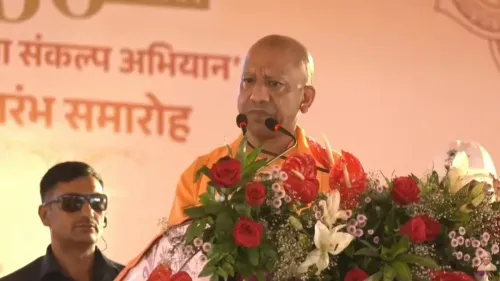
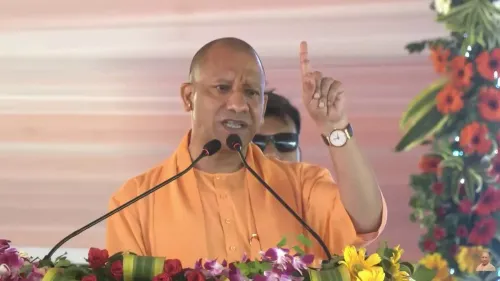
Speaking through the Chief Minister's Office of Uttar Pradesh, Yogi Adityanath said: 'Sadguru Ravidas Ji Maharaj stood for a society free from discrimination, free from caste divisions, and rooted in equality. Prime Minister Shri Narendra Modi has translated these very resolves of Sant Shiromani Ravidas Ji onto the ground through the PM Garib Kalyan Anna Yojana.'
Who Was Sant Ravidas — and Why Invoke Him Now
Sant Ravidas, the fifteenth-century Bhakti poet and philosopher born in what is today Uttar Pradesh, is among the most revered figures in the Dalit-Bahujan tradition. His verses preached a world stripped of caste hierarchy — a begampura, a city without sorrow or discrimination. Invoking him is never a neutral act in Indian politics: it is a direct address to communities that have historically faced social exclusion and remain central to electoral arithmetic in UP.PMGKAY: From Pandemic Relief to Permanent Fixture
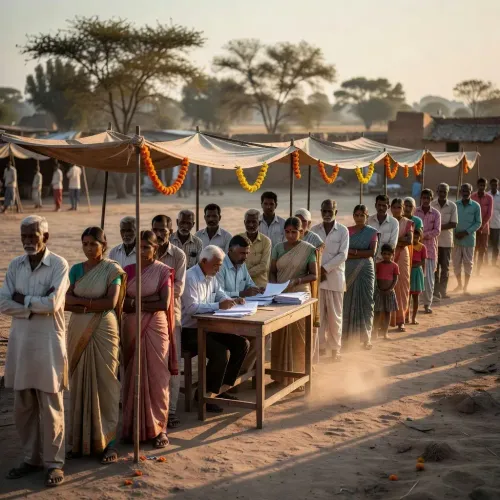
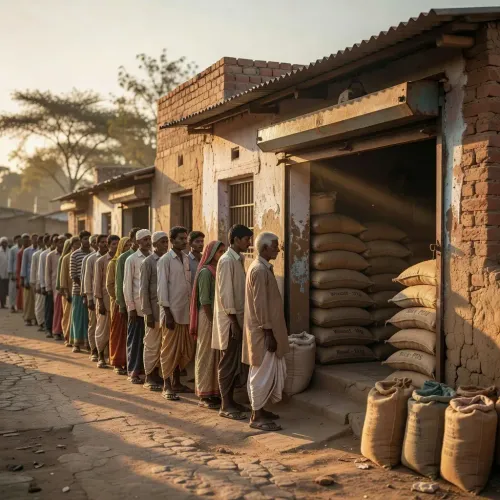
PM Garib Kalyan Anna Yojana was launched in March 2020 by Prime Minister Narendra Modi as an emergency COVID-19 measure, providing 5 kg of free food grains per person per month to beneficiaries covered under the National Food Security Act (NFSA). What began as a temporary lifeline has been extended repeatedly, becoming one of the largest food-security programmes in the world by reach. The scheme's scale — covering a significant share of India's population — gives it a weight that lends itself to exactly this kind of symbolic framing: welfare delivered not as charity, but as the state honouring a centuries-old moral debt.BJP's Recurring Playbook in UP
This is not the first time the ruling dispensation in Uttar Pradesh has woven Dalit-Bahujan saints into the narrative of central welfare schemes. CM Yogi Adityanath has consistently used anniversaries and occasions linked to figures like Ravidas, Kabir, and Ambedkar to position BJP governance as the political heir to their social vision. The move is deliberate and layered: it simultaneously honours a revered spiritual figure, signals inclusion to historically marginalised communities, and attaches ideological weight to what is otherwise a food-distribution programme. For communities that revere Ravidas — particularly across eastern and central Uttar Pradesh — hearing his name alongside a scheme that puts grain on the table is a message calibrated to resonate deeply. Whether the invocation holds up to scrutiny is a separate question. What is clear is that PMGKAY has become as much a political instrument as a welfare one — and on 29 July 2026, the Chief Minister's Office made sure the two were inseparable.Point of View
Where caste identity and welfare access intersect directly with electoral outcomes. By casting a food-security scheme as the fulfilment of a fifteenth-century saint's vision, the messaging elevates a government programme into a civilisational promise — a framing that is hard to contest on purely policy grounds. It also signals that PMGKAY, regardless of its administrative status, remains politically indispensable to the ruling party's social coalition in the state.
NationPress
28 Oct 2026
Frequently Asked Questions
What did CM Yogi Adityanath say about Sant Ravidas and PMGKAY?
CM Yogi Adityanath said that Sant Ravidas stood for a society free from discrimination and caste, and that PM Modi has realised those ideals on the ground through the PM Garib Kalyan Anna Yojana.
What is PM Garib Kalyan Anna Yojana?
PM Garib Kalyan Anna Yojana (PMGKAY) is a central government scheme launched in March 2020 that provides 5 kg of free food grains per person per month to beneficiaries under the National Food Security Act.
Who was Sant Ravidas?
Sant Ravidas was a fifteenth-century Bhakti saint and poet from Uttar Pradesh who advocated a casteless, egalitarian society free from discrimination. He is a revered figure in the Dalit-Bahujan tradition.
Why does BJP invoke Dalit saints like Ravidas in welfare messaging?
BJP leaders in states like Uttar Pradesh link Dalit-Bahujan saints to welfare schemes to frame government programmes as fulfilment of historical egalitarian ideals, while signalling inclusion to communities that revere those saints.
Is PMGKAY still active?
PMGKAY, which began as a COVID-19 emergency measure in 2020, has been extended multiple times and continues to be one of India's largest active food-security programmes.