CM Yogi Marks 12 Years of Modi's 'Sabka Saath' Governance
Synopsis
Chief Minister Yogi Adityanath invoked PM Modi's 12-year governance record on 30 September 2026, reaffirming that welfare schemes must reach every citizen regardless of caste, faith, region or language — the 'Sabka Saath, Sabka Vikas, Sabka Vishwas, Sabka Prayas' framework.
Key Takeaways
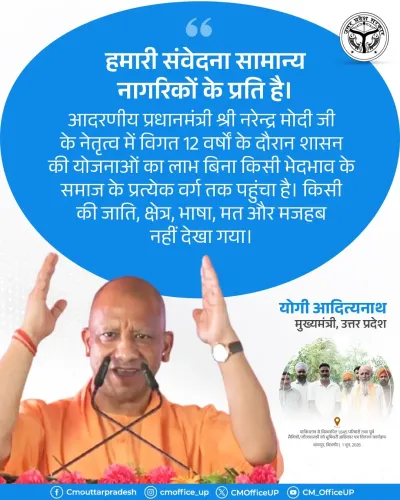
CM Yogi Adityanath stated that reaching the last person in society without discrimination is the 'first principle of good governance.' The statement credits 12 years of PM Narendra Modi's leadership for non-discriminatory delivery of welfare schemes nationwide.
The fourfold mantra — 'Sabka Saath, Sabka Vikas, Sabka Vishwas, Sabka Prayas' — was cited as the guiding framework.
Individual, caste, opinion, religion, region and language are explicitly named as factors that must not obstruct scheme benefits.
Uttar Pradesh , India's most populous state, is the principal stage for implementing this last-mile delivery claim.
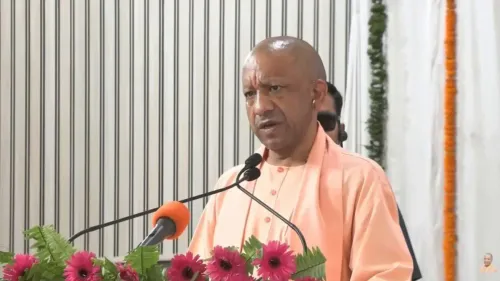
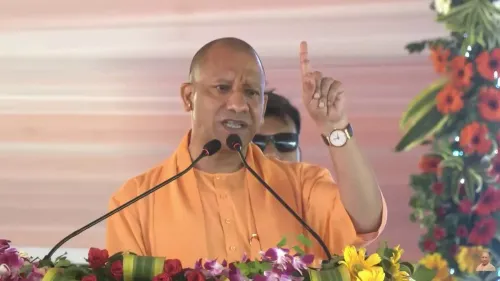
Twelve years of welfare delivery without discrimination — that is the governance record Chief Minister Yogi Adityanath invoked on Wednesday, 30 September 2026, as the Chief Minister's Office of Uttar Pradesh shared a pointed statement underlining the principle that no individual, caste, faith, region or language should stand between a citizen and the benefit of a government scheme.
The mantra at the centre of a 12-year claim
In his statement, CM Yogi Adityanath said that reaching the last person on society's ladder — without discrimination — is the 'first principle of good governance.' He credited Prime Minister Narendra Modi's leadership over the past 12 years for putting that principle into practice across the country. 'The mantra was one,' he said: 'Sabka saath, sabka vikas, sabka vishwas aur sabka prayas' — 'Together with all, development for all, trust of all, and effort of all.'
The fourfold formulation has a clear lineage. 'Sabka Saath, Sabka Vikas' was first articulated by Modi during the 2014 general election campaign as a framework for inclusive development, positioning the incoming government as one that would deliver welfare on need rather than identity. 'Sabka Vishwas' — trust of all — was added to the formulation after the 2019 general elections, and 'Sabka Prayas' — effort of all — has since been incorporated to emphasise collective participation.
Why Uttar Pradesh is the test case
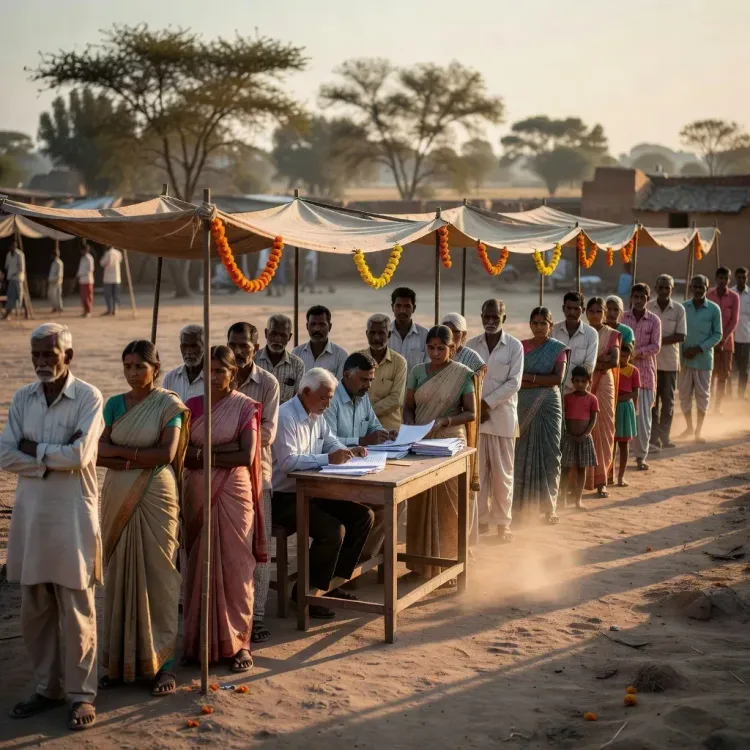
Uttar Pradesh, India's most populous state with roughly 240 million people, is where the claim of last-mile delivery is most consequential — and most contested. CM Yogi Adityanath, who has governed the state since March 2017, has consistently aligned state implementation of central welfare programmes — covering housing, sanitation, direct benefit transfers, and cooking-gas access — with this non-discriminatory framing.
The broader pattern is deliberate. BJP-led governments at both the centre and in Lucknow have repeatedly used this narrative to distinguish their approach from earlier governance models that critics characterised as identity- or patronage-driven. The message today reprises that contrast sharply, naming individual, caste, opinion, religion, region and language as factors that must not obstruct delivery.
Last-mile delivery as political and policy anchor
The statement lands in a political environment where welfare delivery — particularly direct benefit transfers and physical infrastructure like toilets and homes under flagship central schemes — has become a primary electoral and governance benchmark. For Uttar Pradesh, the coming state budget and continued rollout of housing and sanitation targets will be the real ledger on which this claim is tested.
One phrase carries the whole argument: 'antim paydan' — the last rung. Whether governance actually reaches that rung, across caste and community lines, is the question that outlasts every statement.
Point of View
Timed to reinforce the party's governance identity heading into future electoral cycles. By explicitly naming caste, religion and region as barriers that were overcome, Adityanath is drawing a sharp contrast with opposition-era politics of targeted patronage. The invocation of all four pillars of the 'Sabka' formulation signals an attempt to consolidate the broad-coalition messaging that delivered successive mandates. Whether last-mile delivery data in Uttar Pradesh — particularly on housing backlogs and direct transfer reach — can substantiate the claim will determine how durable this framing remains.
NationPress
30 Sept 2026
Frequently Asked Questions
What does 'Sabka Saath, Sabka Vikas, Sabka Vishwas, Sabka Prayas' mean?
It is a governance mantra introduced by PM Narendra Modi meaning 'Together with all, development for all, trust of all, and effort of all,' framing welfare delivery as inclusive and non-discriminatory.
When was the 'Sabka Saath, Sabka Vikas' slogan introduced?
'Sabka Saath, Sabka Vikas' was first articulated by Narendra Modi during the 2014 general election campaign; 'Sabka Vishwas' was added after the 2019 elections and 'Sabka Prayas' followed subsequently.
What did CM Yogi Adityanath say about good governance?
Yogi Adityanath said that delivering the benefits of government schemes to the last person in society, without discrimination on the basis of caste, religion, region or language, is the first principle of good governance.
How long has Yogi Adityanath been Chief Minister of Uttar Pradesh?
Yogi Adityanath has been Chief Minister of Uttar Pradesh since March 2017.
What welfare schemes is Uttar Pradesh implementing for last-mile delivery?
Uttar Pradesh has been rolling out central government flagship programmes covering housing, sanitation, cooking-gas access and direct benefit transfers as part of its last-mile delivery framework.