CM Yogi invokes Vedic verse on India's openness to knowledge
Synopsis
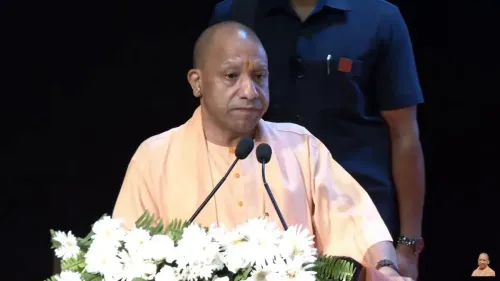
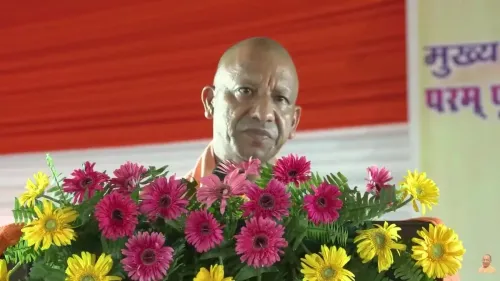
Chief Minister Yogi Adityanath quoted the Rigvedic verse 'Aa no bhadraa kratavo yantu vishwatah' on 26 October 2026, arguing that Indian civilisation has always championed intellectual openness — welcoming knowledge from every direction rather than claiming a monopoly on truth.
Key Takeaways
CM Yogi Adityanath quoted the Rigvedic verse 'Aa no bhadraa kratavo yantu vishwatah' , meaning 'Let noble thoughts come from all directions.' The statement asserts that Indian thought ( Bharatiya manisha ) has never claimed to be the sole repository of truth.
The verse is drawn from the Rigveda , among the oldest texts in recorded human history.
The framing aligns with themes in the National Education Policy 2020 , which called for integrating Indian knowledge systems with diverse learning sources.
Uttar Pradesh governments have consistently used civilisational heritage in public messaging alongside education and cultural initiatives.
A single line from the Rigveda — 'आ नो भद्राः क्रतवो यन्तु विश्वतः' ('Let noble thoughts come to us from all directions') — became the centrepiece of a cultural statement by Chief Minister Yogi Adityanath's office on Monday, 26 October 2026, reaffirming Uttar Pradesh's top office's assertion that India has always stood for intellectual openness, not exclusivity.
Attributed directly to Chief Minister Yogi Adityanath, the post declares that Indian thought — Bharatiya manisha — has never claimed a monopoly on truth. 'Knowledge, wherever it comes from, the paths to it must remain open,' the statement reads. It positions India's civilisational identity not as a closed fortress of tradition, but as a historically inclusive receiver of ideas from every direction.
The Vedic verse and what it actually says
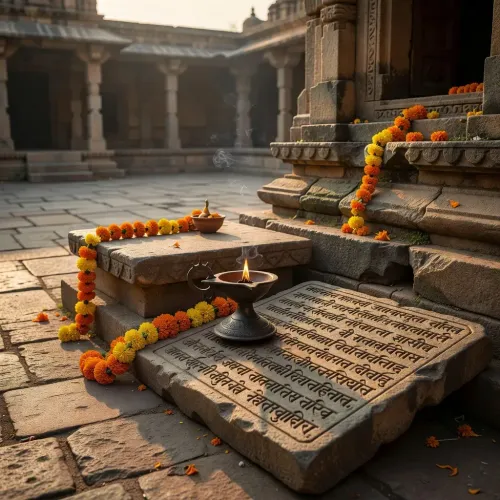
The line 'Aa no bhadraa kratavo yantu vishwatah' is drawn from the Rigveda, one of the oldest texts in any human language. Its literal meaning — an invocation for all noble thoughts to arrive from every quarter of the world — has long been cited by Indian philosophers, educators, and statesmen as evidence of a foundational pluralism in Indian epistemology. CM Yogi uses the verse here not as a religious marker, but as a civilisational claim: that openness to knowledge is India's ancient default, not a modern import.
Yogi's framing in the national discourse on knowledge systems
The statement arrives in a period when Indian knowledge systems have occupied considerable policy space. The National Education Policy 2020 explicitly incorporated references to traditional Indian scholarship and called for integrating diverse sources of learning into modern curricula. State governments, including Uttar Pradesh, have periodically aligned public messaging with this civilisational discourse — referencing heritage, ancient texts, and the philosophical underpinnings of education.
What distinguishes this particular statement is its emphasis on non-exclusivity. Rather than asserting the primacy of Indian thought over Western or other traditions, CM Yogi frames Indian philosophy as the tradition that actively refused to claim it held all the answers — a subtle but pointed argument in an ongoing national conversation about the relationship between tradition and modernity.
What education circles and academics will watch next
Statements of this kind from the Chief Minister's Office of Uttar Pradesh sometimes precede or accompany policy directions from the state's education department — curriculum updates, heritage integration initiatives, or cultural programming tied to ancient texts. Whether this particular post signals a forthcoming institutional move, or stands as a standalone philosophical articulation, will become clearer in the days ahead.
For now, the message is unambiguous: according to its Chief Minister, Uttar Pradesh — and by extension India — does not look inward for all its answers. It never did.
Point of View
Part cultural positioning. What is notable here is the anti-exclusivist framing: by stressing that Indian tradition never claimed a monopoly on truth, the statement attempts to occupy intellectual high ground in the ongoing debate about tradition versus openness. It echoes the epistemic pluralism argument embedded in the National Education Policy 2020, suggesting Uttar Pradesh's political leadership sees civilisational heritage not as a wall but as a credential for global engagement. Whether this remains rhetorical or translates into tangible curriculum or cultural policy is the next question worth tracking.
NationPress
26 Oct 2026
Frequently Asked Questions
What does 'Aa no bhadraa kratavo yantu vishwatah' mean?
It is a verse from the Rigveda meaning 'Let noble thoughts come to us from all directions.' CM Yogi Adityanath cited it to argue that India's ancient tradition embraces knowledge from every source, not just its own.
Why did CM Yogi quote the Rigveda on 26 October 2026?
The Chief Minister's Office of Uttar Pradesh posted the quote to affirm India's civilisational openness to knowledge — asserting that Indian philosophy has never claimed a monopoly on truth and has historically welcomed ideas from all directions.
What is Bharatiya manisha?
'Bharatiya manisha' translates roughly as 'Indian intellect' or 'Indian thought.' CM Yogi used the term to describe a philosophical tradition that is inclusive rather than exclusive in its approach to truth and knowledge.
How does this statement relate to the National Education Policy 2020?
The National Education Policy 2020 explicitly called for integrating Indian knowledge systems with diverse learning sources. CM Yogi's statement echoes that framework by grounding intellectual openness in ancient Vedic thought.
What might follow from CM Yogi's statement on Indian knowledge systems?
Such statements from the Chief Minister's Office sometimes precede education department directives in Uttar Pradesh — including curriculum updates or heritage initiatives. Observers will watch for follow-up circulars or cultural programming tied to ancient texts.