CM Yogi launches cashless health scheme for 12 lakh UP teachers
Synopsis
Chief Minister Yogi Adityanath launched the Mukhyamantri Shikshak Cashless Chikitsa Yojana in Varanasi on 8 July 2026, covering 12 lakh teachers and staff. Over 1.10 crore students' parents received ₹1,200 each via DBT, and an MoU with SBI was signed to extend social security to 10 lakh contractual workers.
Key Takeaways
Mukhyamantri Shikshak Cashless Chikitsa Yojana launched in Varanasi on 8 July 2026 , providing cashless health coverage to 12 lakh teachers and non-teaching staff and their dependents. ₹1,200 per student transferred via DBT directly to parents of 1.10 crore students enrolled in state schools.
An MoU signed with State Bank of India to extend social security coverage to 10 lakh teachers and contractual workers in the education department.
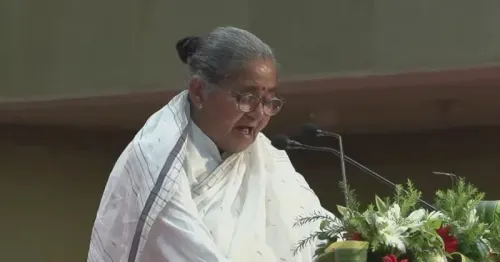
Principals and headteachers of nationally recognised Swachh and Green Schools were felicitated at the Varanasi event.
The announcements align with Uttar Pradesh's broader strategy of using DBT infrastructure and public-sector bank partnerships for welfare delivery.
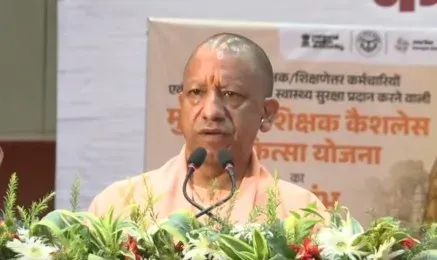
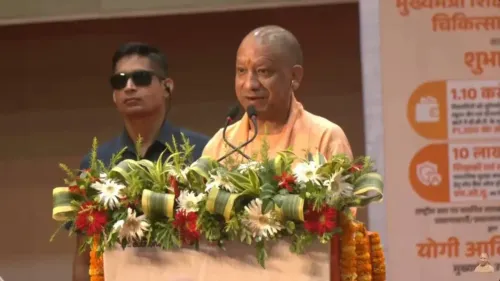
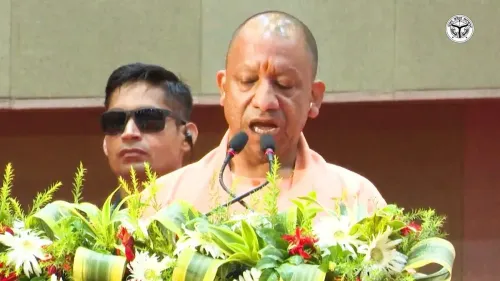
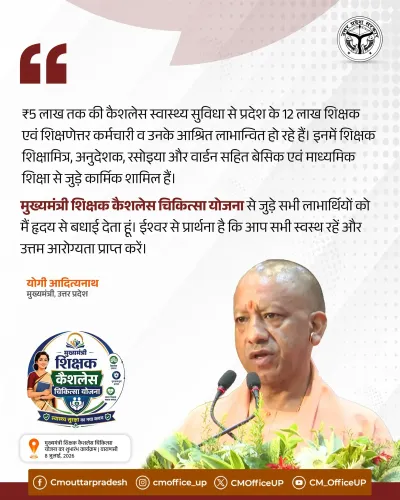
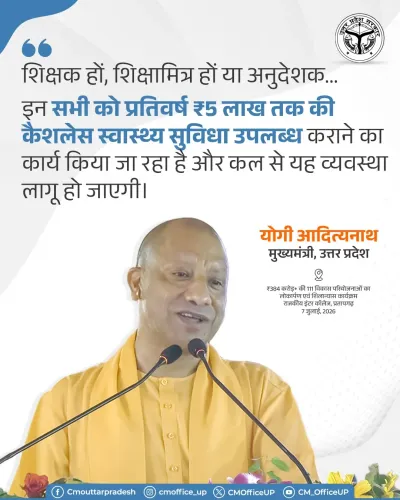
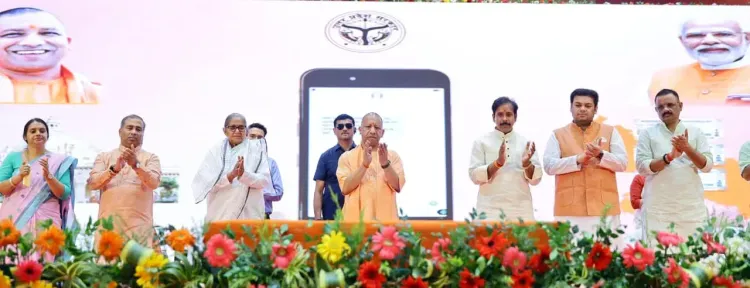
Chief Minister Yogi Adityanath, through the Chief Minister's Office of Uttar Pradesh, launched the Mukhyamantri Shikshak Cashless Chikitsa Yojana (Chief Minister Teacher Cashless Medical Scheme) in Varanasi on Wednesday, 8 July 2026, extending cashless health coverage to 12 lakh teachers and non-teaching staff along with their dependents across the state.
The official post from the Chief Minister's Office stated: 'Shikshak sashakt, vidyarthi samarth — shiksha se samridh Uttar Pradesh' ('Empowered teachers, capable students — Uttar Pradesh enriched through education'), framing the day's announcements as part of a unified push to strengthen the state's education ecosystem.
What was launched
At the Varanasi event, Chief Minister Yogi Adityanath presided over multiple simultaneous announcements. The centrepiece was the formal launch of the cashless medical scheme, which brings 12 lakh teaching and non-teaching employees and their family members under a state-funded health security umbrella. Separately, a Memorandum of Understanding was signed with State Bank of India to extend social security coverage to 10 lakh teachers and contractual workers in the education department.
In addition, ₹1,200 per student was transferred directly to the bank accounts of parents of 1.10 crore students via the Direct Benefit Transfer (DBT) mechanism. The simultaneous transfer to over a crore accounts underscores the scale of the state's digital delivery infrastructure.
Policy backdrop
The Mukhyamantri Shikshak Cashless Chikitsa Yojana is the latest in a series of welfare measures the Uttar Pradesh government has rolled out for its education workforce since 2017. The state has consistently used DBT to route benefits directly to beneficiaries, reducing intermediary leakage and improving transparency. The partnership with State Bank of India — India's largest public sector bank — follows a model the state has used across multiple departments to operationalise social security at scale.
The recognition of school principals and headteachers for cleanliness and green practices aligns with the Swachh Vidyalaya Puraskar, instituted by the Union Ministry of Education in 2016 to incentivise hygiene, sanitation, and environmental responsibility at the school level. Schools selected at the national level were honoured at the Varanasi ceremony.
Stakeholders and impact
The scheme's beneficiaries span a wide cross-section of the state's public education workforce. Teaching staff, non-teaching employees, and contractual workers — a group historically underserved by formal health and social security systems — are the primary recipients. The DBT transfer of ₹1,200 per student targets parents of children enrolled in state schools, providing direct financial support that can be used for educational expenses.
The SBI MoU is particularly significant for 10 lakh contractual workers, who typically fall outside the ambit of permanent government employee benefit schemes. The agreement is intended to bring them under a structured social security framework, though the precise terms and benefit caps of the MoU are subject to subsequent government orders.
What's next
Attention will now turn to the district-level rollout of the Mukhyamantri Shikshak Cashless Chikitsa Yojana and the operationalisation of the SBI social security MoU, including enrolment procedures for contractual staff. The speed and reach of implementation across Uttar Pradesh's 75 districts will determine whether the announced scale — covering over a crore students' families and 12 lakh employees — translates into on-ground impact. The state's use of DBT infrastructure and a public-sector banking partner suggests a framework designed for rapid deployment, but district-wise absorption capacity will be the key variable to watch.
Point of View
A direct cash transfer to over a crore families, and a formal banking partnership for contractual workers, the Uttar Pradesh government is layering multiple benefit streams in a single high-visibility event, maximising political optics while addressing genuine gaps in teacher welfare. The inclusion of contractual workers in the SBI MoU is notable: this group has historically been mobilised in teacher recruitment protests and their formal social security integration could reduce a longstanding source of administrative friction. The broader pattern reflects the state's increasing reliance on institutional partnerships and digital infrastructure to deliver welfare at scale, a model that will face its real test in district-level implementation across UP's 75 districts.
NationPress
8 Jul 2026
Frequently Asked Questions
What is the Mukhyamantri Shikshak Cashless Chikitsa Yojana?
The Mukhyamantri Shikshak Cashless Chikitsa Yojana is a Uttar Pradesh government scheme launched on 8 July 2026 that provides cashless medical treatment to 12 lakh teaching and non-teaching staff in the state's education department, along with their dependents.
How much money was transferred to students' parents in UP on 8 July 2026?
₹1,200 per student was transferred via Direct Benefit Transfer (DBT) to the bank accounts of parents of 1.10 crore students in Uttar Pradesh at the Varanasi event on 8 July 2026 .
What is the SBI MoU signed by the UP government for teachers?
The Uttar Pradesh government signed an MoU with State Bank of India to provide social security coverage to 10 lakh teachers and contractual workers in the education department. The agreement is intended to bring contractual staff under a formal social security framework.
Where did CM Yogi launch the teacher health scheme?
Chief Minister Yogi Adityanath launched the scheme in Varanasi , Uttar Pradesh, on 8 July 2026 .
Which schools were honoured at the Varanasi event?
Principals and headteachers of schools selected at the national level under the Swachh (Clean) and Green Schools programme were felicitated by Chief Minister Yogi Adityanath at the Varanasi event on 8 July 2026 .