CM Dhami Meets NITI Aayog Team, Flags Floating Population Gap
Synopsis
Chief Minister Pushkar Singh Dhami met NITI Aayog member Prof. M. Srinivas on 8 July 2026, pressing for policy frameworks that account for Uttarakhand's massive seasonal floating population, tackle child malnutrition and women's anaemia, and strengthen water conservation and local employment.
Key Takeaways
CM Pushkar Singh Dhami met NITI Aayog member Prof. (Dr.) M.
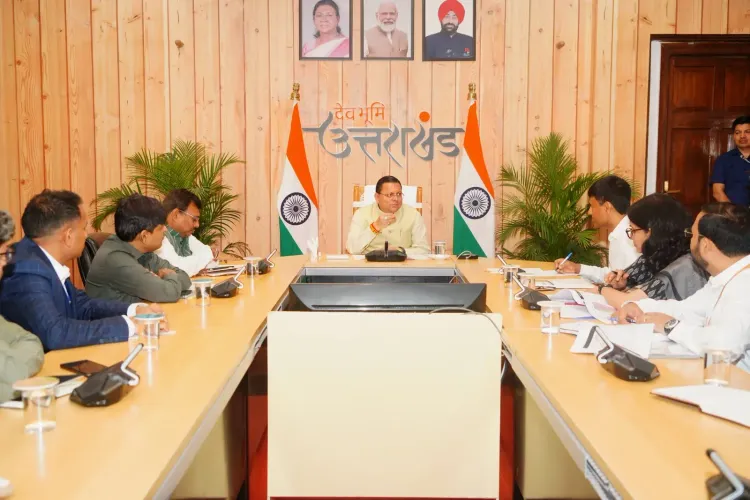
Srinivas at the Chief Minister's Residence in Dehradun on 8 July 2026 for comprehensive development discussions.
Dhami argued that 7–8 times more people visit Uttarakhand annually than its permanent population, creating pressure on health, water, sanitation, and transport — and that this floating population must be built into planning and resource allocation.
The Chief Minister called for coordinated action to eliminate child malnutrition and reduce anaemia among women through result-oriented programmes implemented at the ground level.
Rainwater harvesting was flagged as a long-term priority, with Dhami urging effective and durable plans for water conservation in the hill state.
Regular seminars with subject experts — co-facilitated by NITI Aayog — were proposed across sectors including agriculture, horticulture, tourism, water resources, biodiversity , and skill development .
Senior officials from both the Uttarakhand government and NITI Aayog , including Chief Secretary Anand Bardhan and NITI Aayog Adviser Dr.
Sonia Pant , were present at the meeting.
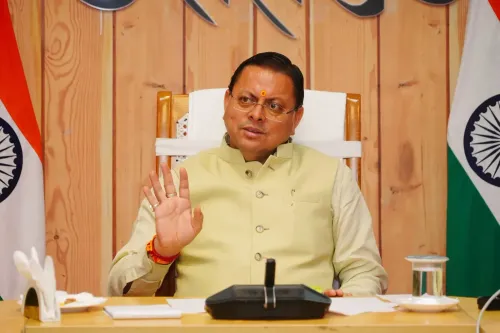
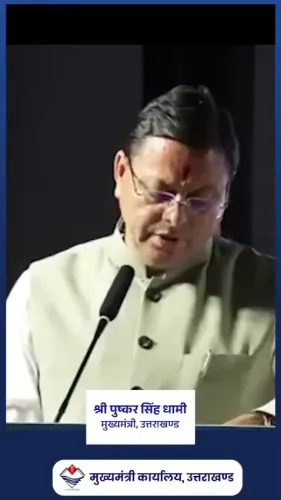
The Chief Minister's Office of Uttarakhand announced on Wednesday, 8 July 2026 that Chief Minister Pushkar Singh Dhami met a delegation from NITI Aayog, led by member Prof. (Dr.) M. Srinivas, at the Chief Minister's Residence in Dehradun for wide-ranging discussions on the state's holistic and sustainable development.
Context
The meeting centred on crafting policy that reflects Uttarakhand's distinct geographic and demographic realities. CM Dhami stressed the need for 'effective and far-sighted policy-making' aligned with the state's mountain terrain, demographic challenges, and development potential. He acknowledged that NITI Aayog has consistently extended positive support to the state's development agenda and expressed confidence that this partnership would continue.
A central argument raised by the Chief Minister was the inadequacy of planning frameworks that account only for the state's permanent population. He noted that फ्लोटिंग पॉपुलेशन (floating population) — pilgrims and tourists — must be factored into resource allocation, given that seven to eight times more people visit Uttarakhand annually than its resident population.
Policy Backdrop
NITI Aayog, constituted in 2015 to replace the Planning Commission, functions as India's apex policy think tank and promotes cooperative federalism by tailoring national frameworks to state-level realities. Its engagement with hill states like Uttarakhand has historically covered sustainable tourism, water management, nutrition, and skill development.
Uttarakhand's seasonal population surge — driven by pilgrimage circuits such as the Char Dham Yatra — places disproportionate pressure on health services, drinking water, sanitation, and transport infrastructure. The Chief Minister's push to incorporate floating-population data into planning is a long-standing demand of mountain states that has gained renewed urgency with record pilgrim footfalls in recent years.
Stakeholders and Impact
CM Dhami identified women's empowerment and child development as foundational pillars of the state's development journey. He called for coordinated action plans to eliminate child malnutrition and effectively address anaemia among women, with emphasis on ground-level implementation rather than policy on paper alone.
On the economic front, the Chief Minister proposed that NITI Aayog facilitate regular seminars and consultations with subject experts across sectors including agriculture, horticulture, tourism, water resources, biodiversity, and skill development. He argued that such structured dialogue would help generate practical, innovation-driven policies suited to the state's needs, while also boosting local employment and sustainable livelihoods.
Water conservation emerged as another priority, with Dhami calling for effective, long-term plans for rainwater harvesting — a critical need given Uttarakhand's dependence on glacial and monsoon water sources and the increasing stress from both climate variability and population pressure.
What's Next
The meeting's outcomes point toward a structured follow-up mechanism: regular expert seminars co-organised with NITI Aayog across key sectors, and a concerted effort to embed floating-population metrics into state planning and resource distribution frameworks. Senior officials present at the meeting included Chief Secretary Anand Bardhan, Principal Secretary R. Meenakshi Sundaram, Additional Secretary Narendra Bhandari, Dr. Sandeep Tiwari, SETU ACEO Manoj Pant, NITI Aayog Adviser and Programme Director Dr. Sonia Pant, Deputy Secretary Deepak Kumar, and NITI Aayog Special Officer Dr. Shobit Kumar.
How quickly the state can translate these discussions into revised planning norms — particularly around floating-population data integration — will determine whether this engagement produces structural change or remains aspirational.
Point of View
Not merely symbolic: Uttarakhand's infrastructure is routinely strained by pilgrimage and tourism surges that dwarf its resident base, yet central resource formulas have historically relied on census headcounts alone. By raising this directly with NITI Aayog leadership, the state is positioning itself to secure a stronger evidence basis for higher fund allocations under national schemes. The emphasis on nutrition, women's empowerment, and water harvesting signals an attempt to align with NITI Aayog's own SDG-linked benchmarks, which could improve the state's ranking on national indices and attract targeted central support. If the proposed expert seminars materialise into concrete policy revisions, this meeting could mark a meaningful step in operationalising cooperative federalism for mountain states.
NationPress
8 Jul 2026
Frequently Asked Questions
Why did CM Dhami meet NITI Aayog on 8 July 2026?
CM Pushkar Singh Dhami met a NITI Aayog delegation led by Prof. M. Srinivas to discuss Uttarakhand's holistic and sustainable development, focusing on floating-population-sensitive planning, nutrition, women's empowerment, water conservation, and sector-specific policy seminars.
What is the floating population issue Dhami raised with NITI Aayog?
CM Dhami pointed out that seven to eight times more people visit Uttarakhand annually than its permanent resident population, placing heavy pressure on health, drinking water, sanitation, and transport services — and argued that state planning and resource allocation must account for this floating population.
What is NITI Aayog's role in state-level policy in India?
NITI Aayog, set up in 2015 to replace the Planning Commission, is India's apex policy think tank that provides evidence-based strategic advice to state governments and promotes cooperative federalism by aligning local plans with national development frameworks.
What development priorities did CM Dhami highlight for Uttarakhand?
CM Dhami highlighted child malnutrition, anaemia among women, rainwater harvesting, agriculture, horticulture, tourism, biodiversity, skill development, local employment generation, and sustainable economic growth as key priorities requiring coordinated policy action with NITI Aayog.
What follow-up actions are expected after the Dhami-NITI Aayog meeting?
The meeting is expected to lead to regular seminars and expert consultations co-organised with NITI Aayog across Uttarakhand's key sectors, as well as efforts to integrate floating-population metrics into state planning and resource distribution norms.