CM Yogi Launches Cashless Health Scheme for 7.5 Lakh UP Teachers
Synopsis
Uttar Pradesh Chief Minister Yogi Adityanath launched the Mukhyamantri Shikshak Cashless Chikitsa Yojana in Agra on 26 July 2026, providing cashless medical coverage to over 7.50 lakh higher education teachers and their dependents, backed by an MoU with Punjab National Bank.
Key Takeaways
CM Yogi Adityanath launched the Mukhyamantri Shikshak Cashless Chikitsa Yojana from Agra on 26 July 2026 .
The scheme covers over 7.50 lakh higher education teachers and their dependent family members in Uttar Pradesh .
Cashless medical treatment cards were distributed to beneficiaries at the launch event.
An MoU was signed between the UP Higher Education Department and Punjab National Bank to operationalise the social security framework.
The launch was timed ahead of the festival of Guru Purnima , honouring the teacher-student tradition.
Non-teaching staff and their families are also included as beneficiaries under the scheme.
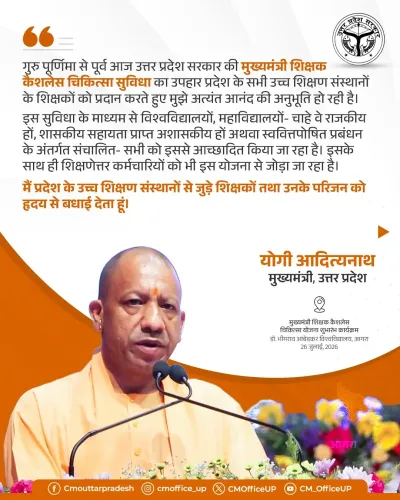
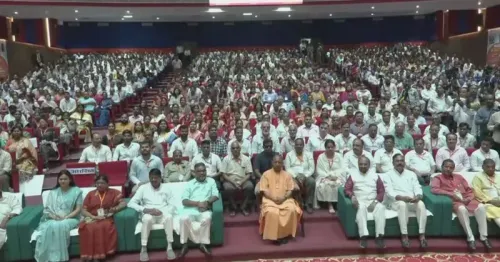
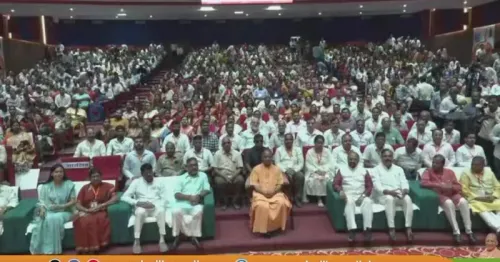
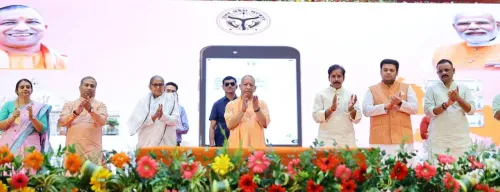
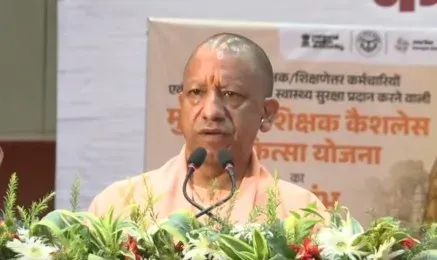
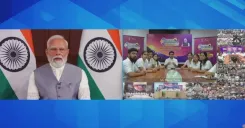
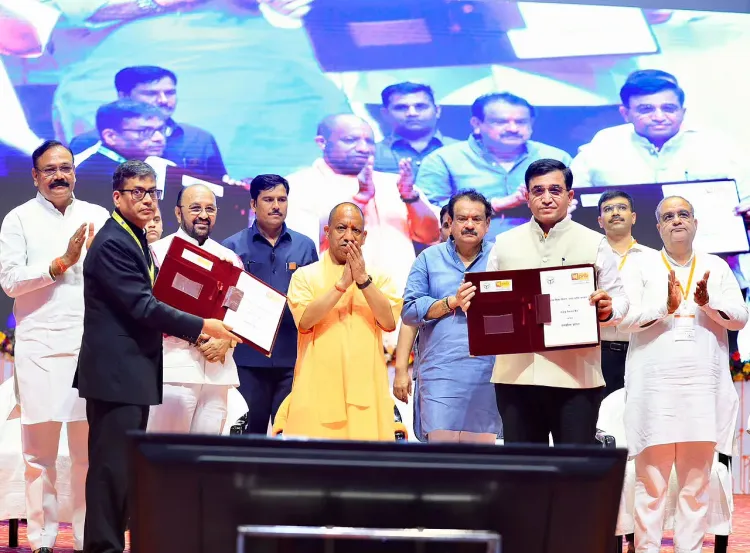
Uttar Pradesh Chief Minister Yogi Adityanath on Sunday, 26 July 2026, launched the Mukhyamantri Shikshak Cashless Chikitsa Yojana from Agra, extending cashless medical coverage to over 7.50 lakh higher education teachers and their dependents in the state. The launch was timed ahead of the auspicious festival of Guru Purnima, with cashless medical cards distributed to beneficiaries at the event.
Context
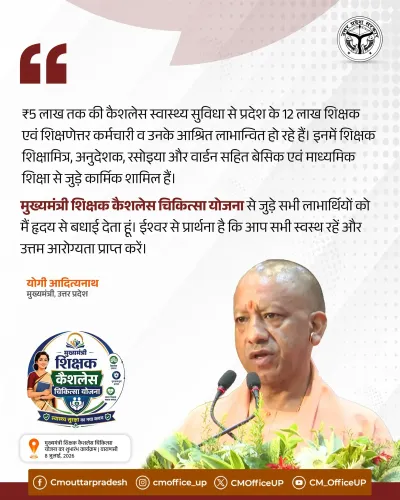
Announcing the scheme on X, CM Yogi Adityanath wrote: 'Durghatna ki chapet mein koi bhi aa sakta hai' ('Anyone can fall victim to an accident'), underscoring the government's commitment to stand by affected individuals and their families 'with complete sensitivity, commitment and trust.' He expressed confidence that teachers would benefit from the scheme and continue contributing to the unity, integrity, and progress of the state and nation.
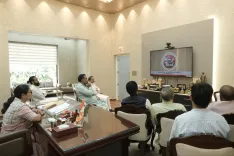
The event also saw the formal transfer of a Memorandum of Understanding (MoU) between the Higher Education Department of Uttar Pradesh and Punjab National Bank (PNB), aimed at providing a social security framework for teachers and non-teaching staff and their families.
Policy Backdrop
The scheme fits into a broader pattern of targeted welfare measures the Uttar Pradesh government has rolled out for public-sector professionals since the BJP came to power in the state in 2017. The central government's Ayushman Bharat initiative, launched in 2018, had already expanded health coverage to vulnerable populations across states, and this new scheme builds on that momentum with a sector-specific focus on higher education employees.
The involvement of Punjab National Bank, a public-sector bank, in the MoU reflects the state government's approach of integrating nationalised financial institutions into the delivery of welfare benefits, particularly for claims processing and social security administration.
Stakeholders and Impact
The primary beneficiaries are the more than 7.50 lakh teachers employed in higher education institutions across Uttar Pradesh, along with their dependent family members. The cashless model means eligible beneficiaries can access medical treatment at empanelled hospitals without upfront payment, reducing the financial burden of medical emergencies.
Non-teaching staff and their families are also included in the scheme's ambit, as acknowledged in CM Yogi's message, which extended congratulations to 'all teachers, non-teaching employees, and their family members.' The launch from Agra, a major city in western Uttar Pradesh, signals an intent to reach beneficiaries across the state's diverse districts.
What's Next
Attention will now turn to the district-wise rollout of the cashless medical cards and the operationalisation of the PNB MoU for processing claims. Authorities will need to ensure empanelled hospitals are accessible across the state's 75 districts for the scheme to deliver on its promise.
The launch ahead of Guru Purnima — a festival that celebrates the teacher-student relationship — carries symbolic weight, and the government is likely to use the occasion to further publicise the scheme's reach. Whether similar cashless health coverage will be extended to other categories of government employees remains a question to watch in the coming months.
Point of View
Timed to coincide with Guru Purnima, reflects the Uttar Pradesh government's strategy of rolling out sector-specific welfare measures for organised professional groups ahead of politically significant occasions. By anchoring delivery through a nationalised bank MoU, the administration signals an intent to institutionalise the benefit rather than limit it to a one-time disbursement. The move also reinforces the 'double engine government' narrative — the idea that BJP governance at both the state and central levels enables faster welfare delivery — which has been a consistent theme in Uttar Pradesh's political communication since 2017. Whether the scheme achieves meaningful penetration across all 75 districts will ultimately determine its policy legacy beyond the optics of the launch.
NationPress
26 Jul 2026
Frequently Asked Questions
What is the Mukhyamantri Shikshak Cashless Chikitsa Yojana?
The Mukhyamantri Shikshak Cashless Chikitsa Yojana is a health scheme launched by the Uttar Pradesh government to provide cashless medical treatment to over 7.50 lakh higher education teachers and their dependent family members, along with non-teaching staff, at empanelled hospitals across the state.
Who launched the UP teacher cashless health scheme and where?
Uttar Pradesh Chief Minister Yogi Adityanath launched the scheme from Agra on 26 July 2026, ahead of the Guru Purnima festival.
What is the role of Punjab National Bank in the UP teacher health scheme?
Punjab National Bank signed an MoU with the UP Higher Education Department at the launch event to support the social security framework of the scheme, including assistance with claims processing and financial administration for beneficiaries.
How many teachers benefit from the Mukhyamantri Shikshak Cashless Chikitsa Yojana?
More than 7.50 lakh higher education teachers and their dependents in Uttar Pradesh are covered under the scheme, in addition to non-teaching staff and their families.
Why was the UP teacher health scheme launched on Guru Purnima?
The scheme was launched just before Guru Purnima, an annual Hindu festival that celebrates the teacher-student relationship, making it a symbolically significant occasion to announce a welfare measure specifically targeted at teachers.