CM Yogi launches India Carpet Expo golden jubilee in Bhadohi
Synopsis
CM Yogi Adityanath inaugurated the golden jubilee edition of the India Carpet Expo in Bhadohi on 4 October 2026, citing UP's exports crossing ₹2 lakh crore — 2.27 times growth in a decade — and announced ₹1,340 crore in 112 development projects for Bhadohi, Aurai, and Gyanpur assembly areas.
Key Takeaways
CM Yogi Adityanath inaugurated the 50th India Carpet Expo in Bhadohi on 4 October 2026 — Asia's largest international handmade carpet trade fair.
Uttar Pradesh's exports have grown approximately 2.27 times over the past decade, crossing ₹2 lakh crore , making it India's fifth-largest exporting state .
Bhadohi's hand-knotted carpets were cited as a significant contributor to UP's export growth.
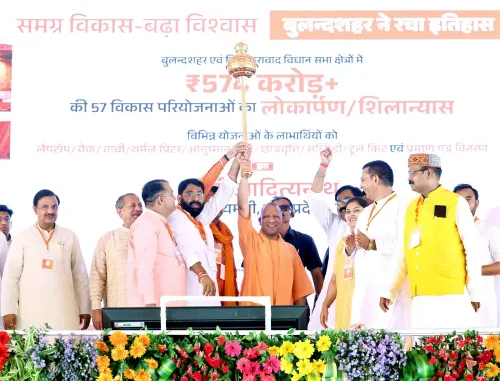
112 development projects worth over ₹1,340 crore were announced for the Bhadohi, Aurai, and Gyanpur assembly constituencies.
CM Yogi contrasted the pre- 2017 situation — artisans waiting for basic facilities — with the current 'double engine government' connecting craft to global markets.
The event combined trade fair inauguration, infrastructure announcements, and direct welfare benefit delivery to scheme beneficiaries.
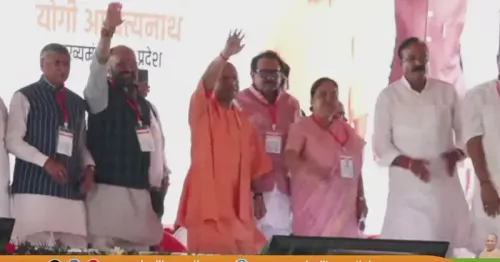
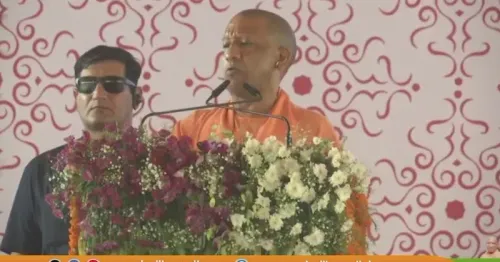
A district whose weavers once searched for their own path now has the government opening doors of development, markets, and opportunity — that is how Uttar Pradesh Chief Minister Yogi Adityanath framed his visit to Bhadohi on Sunday, 4 October 2026, as he inaugurated the golden jubilee edition of Asia's largest international handmade carpet trade fair, the India Carpet Expo.
Asia's biggest carpet fair turns 50 in Bhadohi
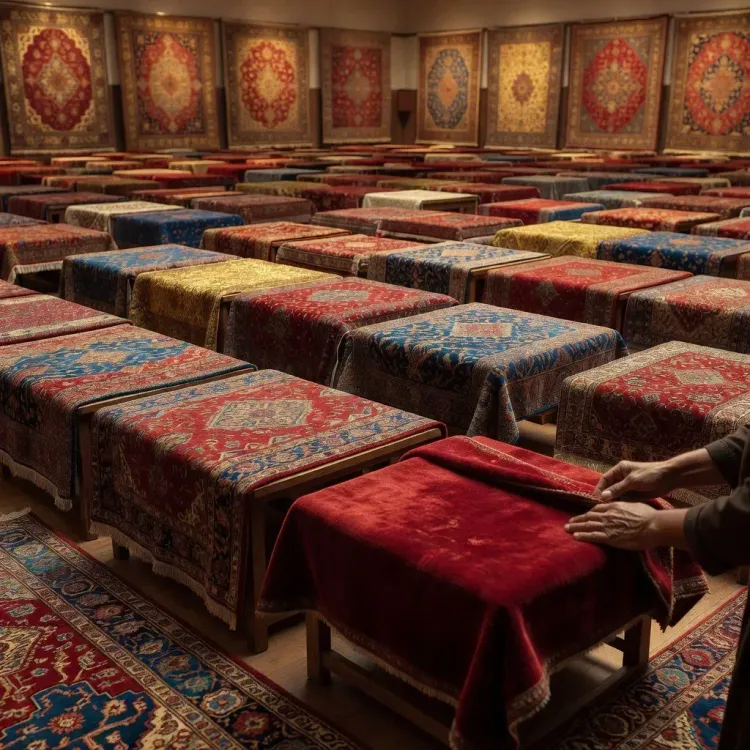
The India Carpet Expo's 50th edition is no ordinary trade show. Held in Bhadohi — long known as the 'carpet city' of India — the fair brings together exporters, sellers, and entrepreneurs from the global handmade carpet industry under one roof. CM Yogi announced he would directly engage with industry stakeholders at the event, signalling state-level political commitment to what has historically been an artisan-driven, informally organised sector.
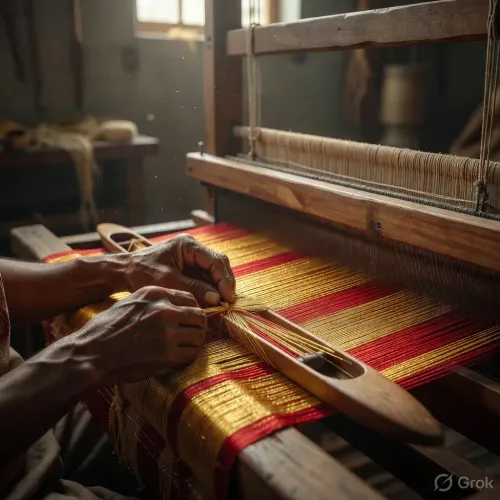
Bhadohi's hand-knotted carpets are today in the highest global demand, CM Yogi wrote on X, describing them as proof of 'Uttar Pradesh ke hunar ka loha manvana' — making the world acknowledge UP's craftsmanship — on the international stage.
UP's exports more than double in a decade; Bhadohi carpets lead the charge
The headline figure CM Yogi anchored his post around is striking: Uttar Pradesh's exports have grown approximately 2.27 times over the past ten years, crossing ₹2 lakh crore. That growth has lifted the state to the rank of India's fifth-largest exporting state. Bhadohi's carpet industry, he noted, is a significant contributor to that number — a rare case of a traditional craft directly powering a state's macro-export scorecard.
The framing is deliberate. By tethering a district-level artisan product to a ₹2 lakh crore export milestone, the CM is making a political and economic argument simultaneously: that heritage industries, when connected to markets and infrastructure, can be engines of growth rather than objects of nostalgia.
₹1,340 crore in 112 projects for Bhadohi, Aurai, and Gyanpur
The Expo inauguration is paired with a significant development announcement. The three assembly constituencies of Bhadohi, Aurai, and Gyanpur will receive 112 development projects worth over ₹1,340 crore. Beneficiaries of various government welfare schemes will also receive direct benefits at the event — a format the UP government has used repeatedly to combine infrastructure announcements with on-ground delivery optics.
CM Yogi drew an explicit before-and-after contrast: before 2017, the same hands that wove Bhadohi's carpets and sent them across the world were waiting for basic facilities and opportunities. Today, he said, under the 'double engine government' — a reference to BJP governments at both the state and Centre — that skill is connected to both development and the global marketplace.
Craft, commerce, and a political pitch rolled into one
The closing lines of his post set the ideological frame explicitly: 'Karigar ke haath ko sammaan, udyam ko vistaar, yuvaon ko rozgaar aur Bhadohi ko samridhi' — 'respect for the artisan's hand, expansion of enterprise, employment for youth, and prosperity for Bhadohi.' It is a four-part slogan that doubles as a governing philosophy: heritage and development as complementary, not competing, forces in a 'new Uttar Pradesh.'
With the golden jubilee of India's premier carpet trade fair as the backdrop, CM Yogi is positioning Bhadohi's centuries-old weaving tradition as a live case study for how traditional industries can scale into global export powerhouses — one hand-knotted carpet at a time.
Point of View
CM Yogi is effectively mainstreaming the 'heritage economy' as a political identity — one that competes with the more conventional infrastructure-and-highways story of UP's development. The ₹1,340 crore project bundle, delivered on the same day, is also consistent with the government's practice of combining policy optics with on-ground delivery in a single high-visibility event. Whether the artisan community at the base of the carpet value chain — rather than exporters and traders — actually captures a proportionate share of this growth remains the sharper, unanswered question.
NationPress
4 Oct 2026
Frequently Asked Questions
What is the India Carpet Expo and where is it held?
The India Carpet Expo is Asia's largest international handmade carpet trade fair, held in Bhadohi, Uttar Pradesh. Its 50th — golden jubilee — edition was inaugurated by CM Yogi Adityanath on 4 October 2026.
How much have Uttar Pradesh's exports grown in the last 10 years?
According to CM Yogi Adityanath's post, UP's exports have grown approximately 2.27 times over the past ten years, crossing ₹2 lakh crore, making UP India's fifth-largest exporting state.
What development projects were announced for Bhadohi at the Carpet Expo inauguration?
CM Yogi announced 112 development projects worth over ₹1,340 crore for the Bhadohi, Aurai, and Gyanpur assembly constituencies at the India Carpet Expo 2026 event.
Why is Bhadohi famous for carpets?
Bhadohi, often called the 'carpet city of India', has a centuries-old tradition of hand-knotted carpet weaving. Its handmade carpets are among the most sought-after in global markets and are a significant contributor to Uttar Pradesh's export figures.
What does 'double engine government' mean in CM Yogi's statement?
'Double engine government' is a phrase used by the BJP to refer to having the same party in power at both the state (Uttar Pradesh) and the Central government, which they argue enables faster development and policy alignment.