CM Yogi Launches Plantation Drive, Maharshi Charak Aushadhi Van in Lucknow
Synopsis
On World Environment Day 2026, Uttar Pradesh Chief Minister Yogi Adityanath launched a mass tree-plantation campaign and established the Maharshi Charak Aushadhi Van in Lucknow — combining the state's afforestation push with a dedicated medicinal-plant forest rooted in Ayurvedic tradition.
Key Takeaways
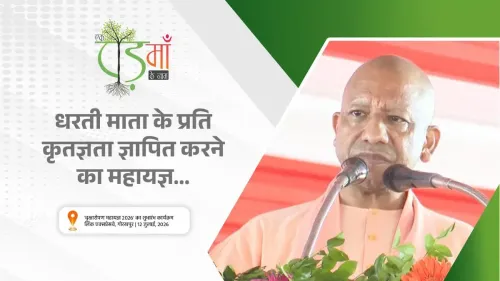
CM Yogi Adityanath launched the Paudharopan Mahabhiyan (mass plantation campaign) in Lucknow on 5 June 2026 .
The Maharshi Charak Aushadhi Van , a dedicated medicinal forest named after the ancient Ayurvedic sage, was established at the same event.
The programme marked World Environment Day 2026 , the annual UN observance held every 5 June .
The initiative continues the Yogi administration's pattern of linking large-scale afforestation with promotion of traditional Indian medicine.
Key metrics to watch include sapling-survival rates and the range of medicinal species planted in the new forest.
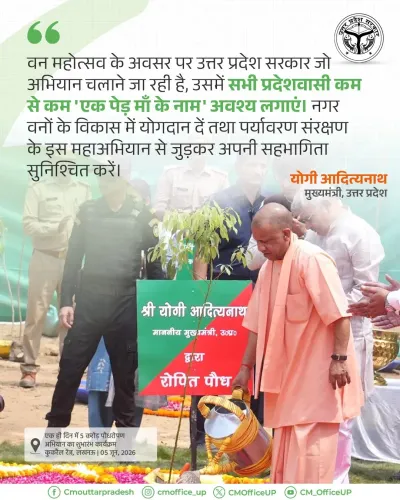
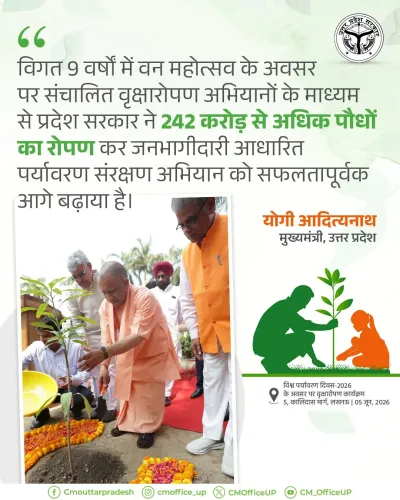
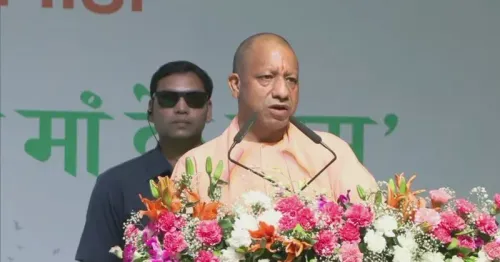
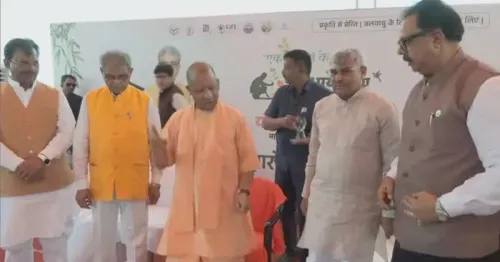
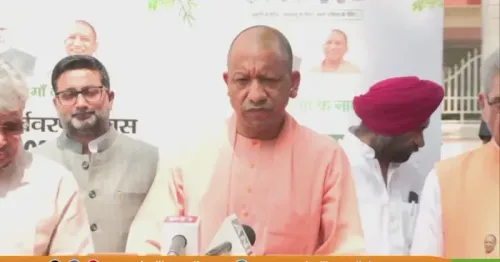
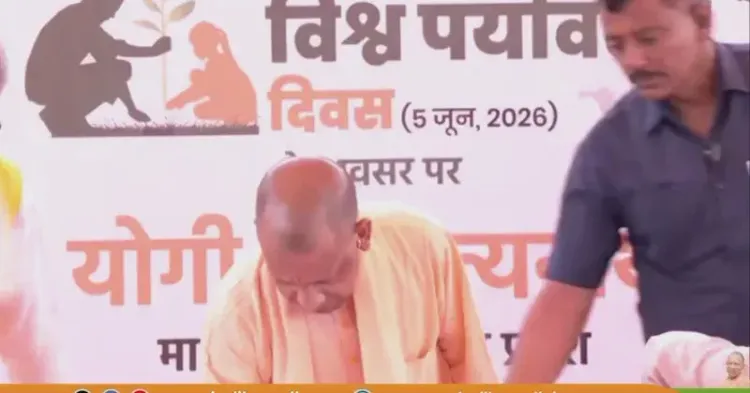
Uttar Pradesh Chief Minister Yogi Adityanath on Friday, 5 June 2026 inaugurated a mass tree-plantation campaign — Paudharopan Mahabhiyan — and laid the foundation of the Maharshi Charak Aushadhi Van (Maharshi Charak Medicinal Forest) in Lucknow, marking World Environment Day 2026 with a dual focus on green-cover expansion and the preservation of Ayurvedic plant heritage.
Context
The Chief Minister's post announced his participation in a programme organised 'vishwa paryavaran divas-2026 ke avsar par' — 'on the occasion of World Environment Day 2026' — centred on the launch of the plantation drive and the establishment of the medicinal forest in the state capital. World Environment Day, observed every year on 5 June, is a United Nations initiative to promote global environmental awareness and action.
The Maharshi Charak Aushadhi Van takes its name from Maharshi Charak, the ancient Indian sage and physician credited with compiling the Charaka Samhita, one of the foundational texts of Ayurvedic medicine. The forest is conceived as a living repository of medicinal plant species linked to that classical tradition.
Policy Backdrop
The Yogi Adityanath administration has consistently used 5 June as a platform for large-scale afforestation drives across Uttar Pradesh, setting and publicising annual sapling-plantation targets as part of the state's broader green-cover goals. These campaigns have regularly been held across districts simultaneously, with Lucknow serving as the flagship venue.
A defining feature of the current government's approach has been the deliberate integration of Ayurvedic and herbal species into plantation programmes — connecting environmental targets with the promotion of traditional medicine. The Maharshi Charak Aushadhi Van represents the most formalised expression of that convergence to date, giving the medicinal-plant component a dedicated, named institutional identity.
Stakeholders and Impact
Residents of Uttar Pradesh — India's most populous state — stand to benefit directly from expanded green cover, improved urban air quality in Lucknow, and increased availability of shade and biodiversity. The state's Ayurveda practitioners and herbal medicine researchers gain a dedicated in-situ conservation site for plant species central to classical Indian therapeutics.
Farmers and rural communities involved in medicinal-plant cultivation could also see downstream benefits if the Aushadhi Van serves as a seed bank or demonstration site, though the specific operational contours of the facility are yet to be detailed publicly.
What's Next
Attention will now turn to the rollout milestones of the Maharshi Charak Aushadhi Van — including the range of species planted, the area covered, and the governance model for its long-term maintenance. Independently verified sapling-survival rates from previous years' drives will also be a key metric for assessing the on-ground impact of the Paudharopan Mahabhiyan.
If the medicinal forest model proves replicable, the administration may extend it to other divisions of Uttar Pradesh, deepening the state's stated commitment to blending ecological conservation with Ayurvedic heritage preservation.
Point of View
The government elevates what might otherwise be a routine afforestation event into a statement about civilisational continuity. This dual framing has become a signature of the BJP's governance aesthetic in Uttar Pradesh: environmental action dressed in the idiom of classical India. The durability of the initiative will ultimately be judged on hard ecological metrics — canopy cover, species diversity, and sapling survival — rather than the symbolism of its launch.
NationPress
21 Oct 2026
Frequently Asked Questions
What is the Maharshi Charak Aushadhi Van in Lucknow?
The Maharshi Charak Aushadhi Van is a dedicated medicinal forest established in Lucknow by the Uttar Pradesh government, named after the ancient Ayurvedic sage Maharshi Charak. It is designed to conserve plant species central to classical Indian Ayurvedic medicine.
Why did CM Yogi launch a plantation drive on 5 June 2026?
5 June is observed globally as World Environment Day, a United Nations initiative to promote environmental awareness. The Yogi Adityanath government has consistently used this date to launch large-scale tree-plantation campaigns across Uttar Pradesh.
What is the Paudharopan Mahabhiyan in Uttar Pradesh?
Paudharopan Mahabhiyan translates to 'mass tree-plantation campaign.' It is a large-scale afforestation drive conducted by the Uttar Pradesh government, typically on or around World Environment Day, aimed at expanding the state's green cover.
Who was Maharshi Charak and why is he significant?
Maharshi Charak was an ancient Indian sage and physician credited with compiling the Charaka Samhita, one of the most important foundational texts of Ayurvedic medicine. The medicinal forest in Lucknow is named in his honour to reflect its focus on Ayurvedic plant species.
What is the UP government's track record on tree plantation drives?
The Yogi Adityanath administration has conducted large-scale plantation drives on World Environment Day in multiple prior years, setting annual sapling targets as part of the state's afforestation goals and frequently integrating Ayurvedic and herbal species into these campaigns.