CM Yogi launches 'Ek Ped Maa Ke Naam' drive, Maharshi Charak Aushadhi Van in Lucknow
Synopsis
Chief Minister Yogi Adityanath launched the 'Ek Ped Maa Ke Naam' mega tree-plantation campaign and inaugurated the Maharshi Charak Aushadhi Van — a medicinal plant forest named after the ancient Ayurvedic scholar — in Lucknow on World Environment Day, 5 June 2026, blending mass afforestation with Ayurveda conservation.
Key Takeaways
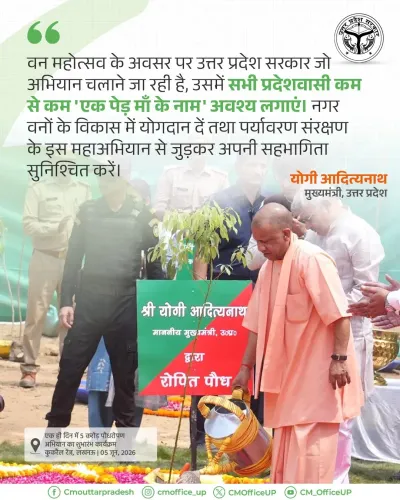
Chief Minister Yogi Adityanath launched the 'Ek Ped Maa Ke Naam' Maha Abhiyan in Lucknow on 5 June 2026 , coinciding with World Environment Day.
The campaign urges citizens to plant and dedicate a sapling to their mothers, combining emotional public participation with state afforestation targets.
The Maharshi Charak Aushadhi Van , a dedicated medicinal plant forest named after the ancient Ayurvedic scholar, was formally established at the same event.
Uttar Pradesh has run annual mass tree-plantation drives since 2017 , planting crores of saplings under its green-cover mission.
The medicinal forest initiative aligns with the National Ayush Mission (active since 2014 ), which supports herbal garden development across India.
District-level rollouts across all 75 districts of the state are expected to follow the Lucknow launch.
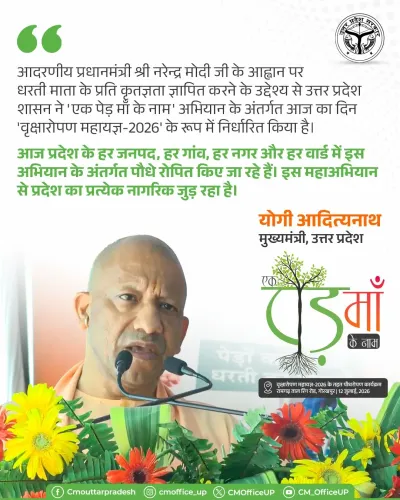
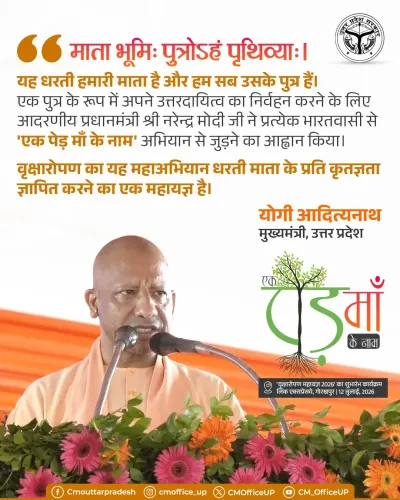
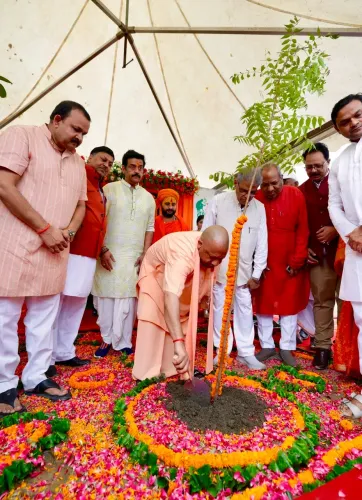
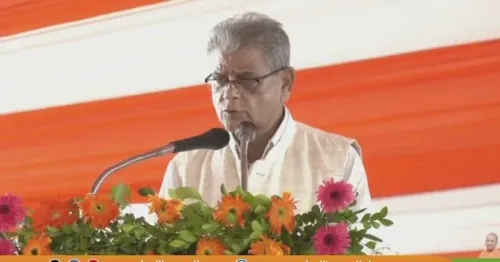
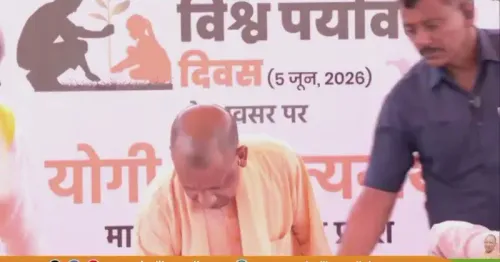
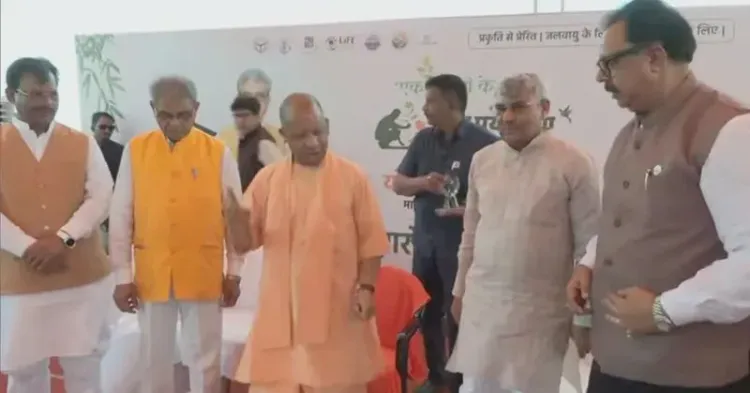
The Chief Minister's Office of Uttar Pradesh announced on Friday, 5 June 2026 that Chief Minister Yogi Adityanath participated in the grand launch of the 'Ek Ped Maa Ke Naam' Maha Abhiyan (One Tree in Mother's Name mega-campaign) and the establishment of the 'Maharshi Charak Aushadhi Van' (Maharshi Charak Medicinal Forest) at an event held in Lucknow, coinciding with World Environment Day.
Context
The official post from the Chief Minister's Office read: 'Lucknow mein aayojit Ek Ped Maa Ke Naam Maha Abhiyan ke shubharambh, Maharshi Charak Aushadhi Van ki sthapna karyakram mein sammilit hote Mukhyamantri Yogi Adityanath ji' — translated as 'Chief Minister Yogi Adityanath participating in the launch of the Ek Ped Maa Ke Naam Maha Abhiyan and the establishment ceremony of the Maharshi Charak Aushadhi Van held in Lucknow.' The dual launch ties together citizen-led afforestation with the conservation of medicinal plant biodiversity under a single flagship event.
The 'Ek Ped Maa Ke Naam' campaign urges citizens across Uttar Pradesh to plant and dedicate a sapling to their mothers, combining an emotional public-participation hook with the state's broader green-cover targets. The choice of World Environment Day as the launch date underscores the government's intent to align state-level action with global environmental observances.
Policy Backdrop
Uttar Pradesh has conducted annual mass tree-plantation drives since 2017, planting crores of saplings each year under its green-cover mission. The state's Vriksharopan Mahakumbh in 2019 set a benchmark for large-scale afforestation across districts, and the current campaign builds on that institutional momentum.
The Maharshi Charak Aushadhi Van is named after Maharshi Charak, the ancient Indian physician and author of the Charaka Samhita, the foundational text of Ayurveda. The initiative aims to conserve and cultivate medicinal herbs in a dedicated forest space within Lucknow, dovetailing with the National Ayush Mission — active since 2014 — which has supported herbal garden development and medicinal plant conservation parks across multiple states.
Stakeholders and Impact
Local communities stand to benefit directly from both strands of the initiative: the plantation campaign builds neighbourhood green cover, while the medicinal forest offers a resource base for Ayurveda practitioners and researchers seeking locally grown herbs. The mother-themed naming convention mirrors public-participation drives used elsewhere in India, designed to generate emotional ownership and sustained citizen involvement beyond a single planting event.
Uttar Pradesh's integration of afforestation with traditional medicine promotion represents a convergence of environmental and healthcare policy, positioning the state as a model for Ayush-linked biodiversity conservation. Schoolchildren, self-help groups, and urban residents are among the target participants for the sapling-dedication drive.
What's Next
Attention will now turn to district-level rollouts of the Ek Ped Maa Ke Naam campaign across Uttar Pradesh's 75 districts, with administrative machinery expected to set plantation targets at the block and gram panchayat level. Any state budget allocations earmarked for expanding the Maharshi Charak Aushadhi Van model to other divisions will be a key indicator of the government's long-term commitment to medicinal plant conservation. If the dual-track model — mass citizen planting plus curated medicinal forests — is scaled systematically, it could meaningfully advance both the state's green-cover goals and its Ayush sector ambitions in the coming fiscal year.
Point of View
Allowing the Yogi Adityanath government to speak to both mainstream environmental concerns and the culturally resonant Ayurveda constituency in a single event. The 'mother' framing of the sapling campaign is a well-tested emotional mobilisation device that shifts environmental responsibility from the state to the citizen while keeping the Chief Minister at the centre of the narrative. Institutionally, the Maharshi Charak Aushadhi Van signals UP's intent to position itself as a leader in Ayush-linked biodiversity policy, a space that carries both soft-power and economic value. Watched over multiple budget cycles, the durability of funding for the medicinal forest will reveal whether this is a durable policy commitment or a high-visibility ceremonial launch.
NationPress
21 Oct 2026
Frequently Asked Questions
What is the 'Ek Ped Maa Ke Naam' campaign in Uttar Pradesh?
'Ek Ped Maa Ke Naam' — meaning 'One Tree in Mother's Name' — is a state-level tree-plantation campaign in Uttar Pradesh that urges citizens to plant and dedicate a sapling to their mothers, combining environmental awareness with public participation. It was launched as a Maha Abhiyan (mega-campaign) in Lucknow by Chief Minister Yogi Adityanath on 5 June 2026.
What is the Maharshi Charak Aushadhi Van in Lucknow?
The Maharshi Charak Aushadhi Van is a dedicated medicinal plant forest established in Lucknow, named after Maharshi Charak, the ancient Indian physician and author of the Charaka Samhita. It aims to conserve and cultivate medicinal herbs used in Ayurveda and was formally inaugurated on World Environment Day 2026.
Who is Maharshi Charak and why is the forest named after him?
Maharshi Charak was an ancient Indian physician regarded as one of the principal contributors to Ayurveda. His foundational text, the Charaka Samhita, documents hundreds of medicinal plants and their therapeutic uses, making him a fitting namesake for a forest dedicated to medicinal herb conservation.
How many trees has Uttar Pradesh planted under its afforestation drives?
Uttar Pradesh has conducted annual mass tree-plantation drives since 2017, planting crores of saplings each year under its green-cover mission. The state's Vriksharopan Mahakumbh in 2019 was a landmark large-scale drive across districts, though exact cumulative figures for the 2026 campaign have not yet been announced.
How does the Maharshi Charak Aushadhi Van connect to the National Ayush Mission?
The National Ayush Mission, active since 2014, supports the establishment of herbal gardens and medicinal plant conservation parks across Indian states including Uttar Pradesh. The Maharshi Charak Aushadhi Van aligns with this national framework by creating a dedicated space for growing and preserving Ayurvedic medicinal plants in the state capital.