CM Yogi launches 'Yogi ki Paati' outreach for UP's last-mile citizens

Synopsis
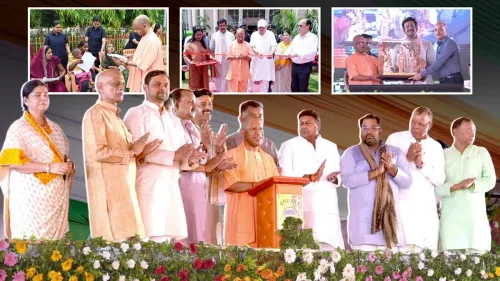
Chief Minister Yogi Adityanath introduced 'Yogi ki Paati,' a direct-communication initiative framed as a letter to UP's last-mile citizens — farmers, labourers, women, students and youth — anchored in his philosophy of blending heritage with development.
Key Takeaways
Yogi ki Paati is a direct-outreach initiative by CM Yogi Adityanath announced on 16 November 2026 via the Chief Minister's Office of Uttar Pradesh.
The initiative is designed as a communication channel for citizens on the 'last rung of society,' including farmers, labourers, women, youth, and students .
CM Yogi described it as 'samvedna ka vishay' — a matter of personal sensitivity and empathy, not merely administrative outreach.
The initiative explicitly advances his governance philosophy of 'virasат aur vikas' — blending cultural heritage with development .
Yogi Adityanath has served as Chief Minister of Uttar Pradesh since 2017 , consistently combining welfare schemes with cultural messaging.
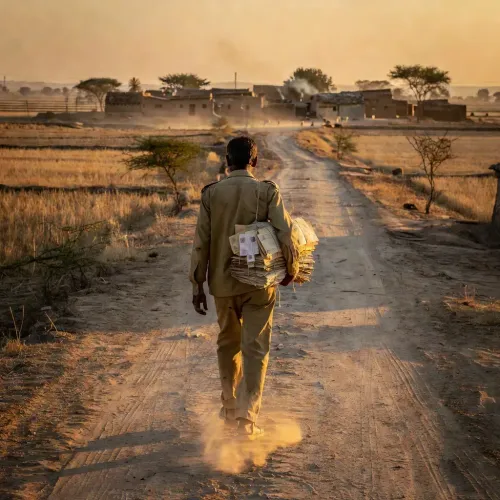
A handwritten-style letter aimed at the farmer, the labourer, the student, and the woman at the edge of the system — that is how Chief Minister Yogi Adityanath of Uttar Pradesh describes 'Yogi ki Paati' (Yogi's Letter), a direct-communication initiative he framed on 16 November 2026 as both a personal gesture of empathy and a structured channel of governance outreach.
'Paati' as governance — reaching the last rung of society
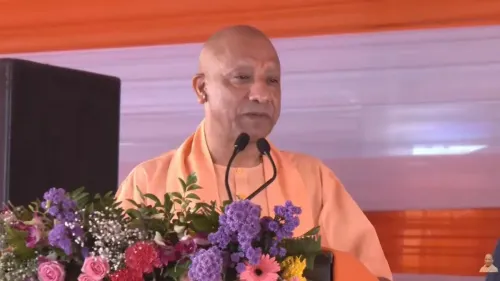
In his own words shared through the Chief Minister's Office of Uttar Pradesh, Yogi Adityanath called 'Yogi ki Paati' 'mere liye samvedna ka vishay' — 'a matter of deep sensitivity for me.' The initiative is explicitly designed, he said, to serve as 'a medium of communication with every person standing on the last rung of society.' The language is deliberate: not a press release, not a policy circular, but a paati — a letter, intimate and direct.
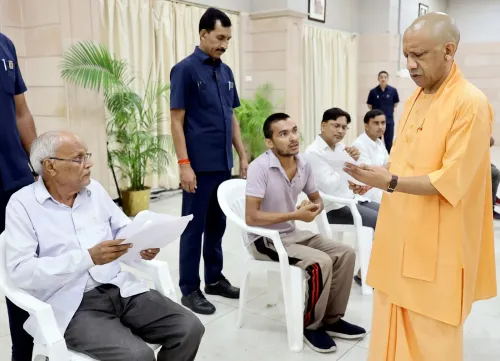
The outreach framework covers youth, students, women's dignity (nari samman), annadata farmers, and labourers — in short, every constituency that the state government argues forms the structural backbone of Uttar Pradesh. By naming these groups specifically, the initiative signals an intent to move beyond omnibus welfare announcements toward targeted communication.
Heritage and development — Yogi's signature synthesis
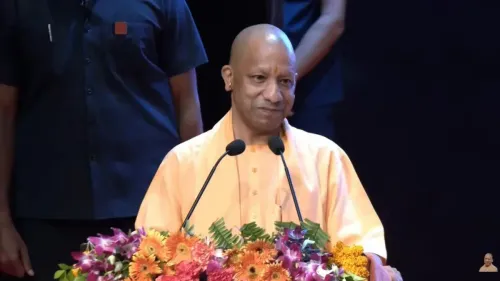
Yogi Adityanath, who has served as Chief Minister since 2017, has consistently paired infrastructure and welfare messaging with cultural heritage — a combination his office describes here as 'virasат aur vikas ka abhinav samanvay', or 'an innovative synthesis of heritage and development.' He called that synthesis 'our real strength,' suggesting Yogi ki Paati is not simply an administrative tool but a vehicle for communicating a broader governing philosophy to ordinary citizens in their own register.
The Uttar Pradesh government has repeatedly leaned on direct-outreach mechanisms — from public grievance portals to mass jan-sampark drives — to bypass institutional distance and signal accessibility. Yogi ki Paati fits that pattern, adding an epistolary, human-scale dimension to the state's communication architecture.
Who this letter is written for
The five groups named — youth, students, women, farmers, and labourers — are not incidental. Together they represent the plurality of UP's approximately 240 million residents, and each group maps onto a distinct stream of state welfare and empowerment schemes. By anchoring the initiative in 'samvedna' (compassion) rather than bureaucratic entitlement, the CM's office frames the letter as a relationship-building exercise as much as a policy communication.
Whether the initiative scales into a verifiable grievance-redressal channel — with measurable reach data and formal feedback loops — will be the next indicator of its institutional weight. For now, the message from Lucknow is clear: governance, Yogi Adityanath insists, must speak the language of the last mile.
Point of View
The Chief Minister's Office converts bureaucratic outreach into an exercise in political intimacy. This fits a broader pattern in UP under Yogi Adityanath, where the state routinely layers cultural and emotional register onto administrative messaging to reinforce direct connect with its diverse electorate. The deliberate enumeration of five social constituencies — youth, students, women, farmers, labourers — also reads as a pre-positioning exercise, ensuring each major voting bloc receives a named, visible acknowledgment. The real test of the initiative's governance seriousness will lie in whether it develops verifiable feedback mechanisms, or remains principally a communication-branding exercise.
NationPress
16 Nov 2026
Frequently Asked Questions
What is 'Yogi ki Paati'?
'Yogi ki Paati' (Yogi's Letter) is a direct-communication initiative by Uttar Pradesh Chief Minister Yogi Adityanath, designed to reach citizens at the last rung of society — including farmers, labourers, women, youth and students — through an empathetic, letter-based outreach format.
Who are the target groups of Yogi ki Paati?
The initiative specifically addresses youth, students, women (under the banner of 'nari samman'), farmers ('annadata'), and labourers — groups the CM's office identifies as integral to Uttar Pradesh's social and economic fabric.
What does CM Yogi mean by 'heritage and development' in the context of Yogi ki Paati?
CM Yogi refers to his governing philosophy of blending cultural heritage ('virasат') with modern development ('vikas'), calling it 'our real strength.' Yogi ki Paati is meant to carry this message directly to ordinary citizens in an accessible register.
Since when has Yogi Adityanath been Chief Minister of Uttar Pradesh?
Yogi Adityanath has been the Chief Minister of Uttar Pradesh since 2017, overseeing governance policies that combine infrastructure and welfare measures with cultural heritage promotion.
How does Yogi ki Paati differ from regular government communications?
Unlike official policy circulars or press releases, Yogi ki Paati is framed as a personal letter — a 'paati' — invoking compassion ('samvedna') and direct human connection, rather than bureaucratic distance, as its defining tone.