CM Yogi Lays Down the Law: No Criminal Shall Escape
Synopsis
Chief Minister Yogi Adityanath's office posted a three-part governance declaration on November 5, 2026: rule of law is supreme, no criminal escapes regardless of identity, and every innocent person and victim must receive protection and justice.
Key Takeaways
Rule of law declared supreme : CM Yogi Adityanath stated that the supremacy of law is non-negotiable in Uttar Pradesh.
No criminal exempt : The statement explicitly says no criminal, regardless of who they are, should escape accountability.
Innocent must be protected : The declaration includes an explicit safeguard for the dignity of every innocent person.
Justice for every victim : The Chief Minister committed to ensuring justice is delivered to each and every victim.
Consistent governance posture : This messaging aligns with Yogi Adityanath's law-and-order focus since assuming office in 2017.
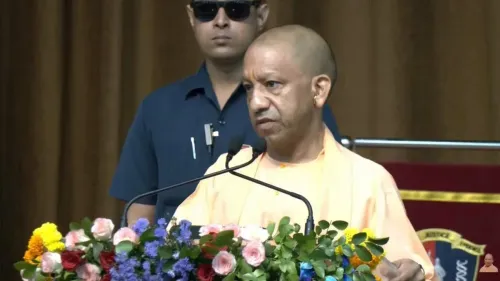
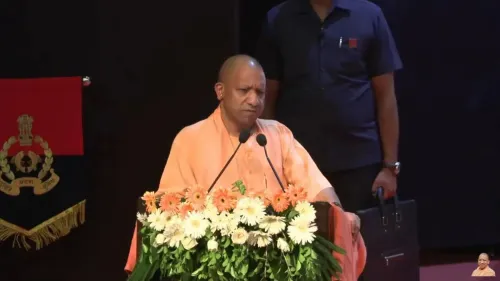
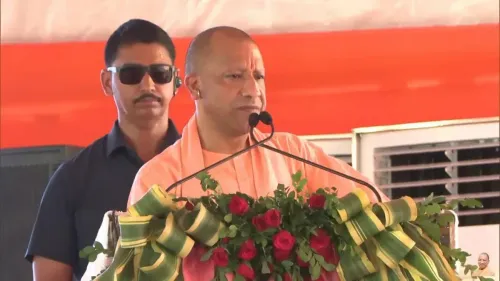
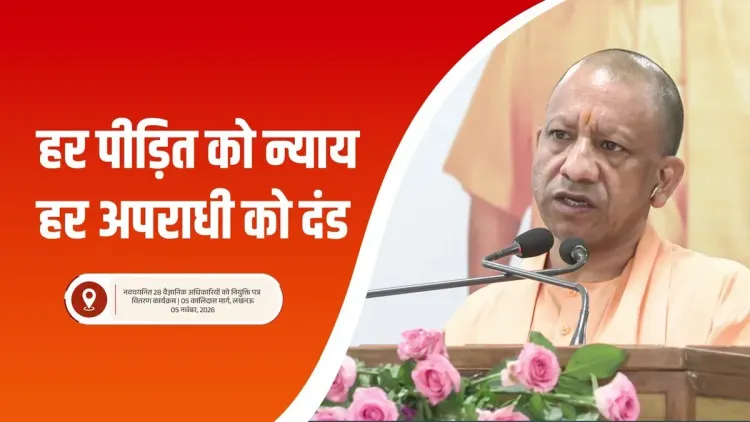
No criminal goes free. No innocent goes unprotected. No victim goes without justice. With three sharp lines, the Chief Minister's Office of Uttar Pradesh on Thursday, November 5, 2026, posted a pointed governance statement attributed to Chief Minister Yogi Adityanath — a declaration that doubles as both a warning to offenders and a promise to the people of the state.
The statement, in Chief Minister Adityanath's own words, reads: 'Kanoon ka shaasan sarvopari hona chahiye. Apradhi chahe koi bhi ho, woh bachna nahin chahiye. Saath hi, pratyek nirdosh ke samman ki raksha ho tatha har peedit ko nyay milna sunishchit ho.' — 'The rule of law must be supreme. No matter who the criminal is, they must not escape. At the same time, the dignity of every innocent person must be protected, and justice must be ensured for every victim.'
A three-part doctrine, not just a slogan
The statement is notable for what it balances. It is not merely a tough-on-crime pitch. It carries an explicit safeguard — that the machinery of law enforcement must be equally vigilant in shielding the innocent. This three-pronged framing — supremacy of law, accountability for criminals regardless of identity, and guaranteed justice for victims — reflects the governance posture Yogi Adityanath has cultivated since taking office in 2017. Since that first term, the Uttar Pradesh government has built its public identity substantially around law-and-order outcomes: encounter actions, anti-mafia drives, and high-profile arrests. Statements like this one have consistently served as rhetorical anchors for that strategy — reminding both the administration's machinery and the broader public what the stated standard is.The 'chahe koi bhi ho' signal
The phrase 'apradhi chahe koi bhi ho' — 'no matter who the criminal is' — carries deliberate weight. It is a direct signal that political or social standing offers no shield. This formulation has appeared repeatedly in the administration's messaging and is intended to underscore that enforcement is not selective. Whether that standard is met in practice is a question the state's own record is judged against, case by case. For victims and ordinary residents of Uttar Pradesh, the closing line — that every victim must receive justice — is the bar the government sets for itself publicly. It is an accountability clause built into the declaration itself. In Indian politics, where law-and-order credibility is a core electoral currency in a state of 240 million people, words like these are never incidental. They are governance as communication — and communication as governance.Point of View
Universal criminal accountability, and victim justice — is textbook political signalling that reinforces the UP government's core brand identity ahead of any law-and-order scrutiny cycle. The 'chahe koi bhi ho' (no matter who) clause is strategically worded to pre-empt accusations of selective enforcement. By pairing deterrence with an explicit innocence-protection clause, the administration attempts to neutralise civil-liberties critiques of its aggressive policing record. In a state of 240 million people where law-and-order is perennially the top electoral issue, such declarations function as both administrative directive and political positioning.
NationPress
5 Nov 2026
Frequently Asked Questions
What did CM Yogi Adityanath say about rule of law?
CM Yogi Adityanath stated that the rule of law must be supreme, no criminal should escape regardless of identity, and justice must be guaranteed for every victim.
What is the UP government's law and order policy under CM Yogi?
Since 2017, the Yogi Adityanath government in Uttar Pradesh has emphasised strict law enforcement, anti-crime drives, and public accountability, as reflected in repeated governance statements about criminal deterrence and victim justice.
What does 'apradhi chahe koi bhi ho' mean in Yogi's statement?
The phrase means 'no matter who the criminal is' — it signals that no person, regardless of social standing or political connections, is exempt from the law in Uttar Pradesh.
Why did the CM Office of UP post this statement?
The Chief Minister's Office posted the statement on November 5, 2026, as part of the Yogi Adityanath government's consistent public messaging on governance and law-and-order priorities; no specific triggering event has been identified.
How does Yogi Adityanath's governance focus on victims?
The statement explicitly commits to ensuring justice for every victim and protecting the dignity of every innocent person, framing victim justice as an equal pillar of law enforcement alongside criminal accountability.