CM Yogi links Pitru Paksha values to UP health drive

Synopsis
Uttar Pradesh CM Yogi Adityanath used the spiritual occasion of Pitru Paksha to urge residents toward practical public-health action — cleanliness, waterlogging prevention, fever vigilance, and participation in the state's door-to-door 'Dastak' health-awareness campaign.
Key Takeaways
CM Yogi posted his Pitru Paksha message on 5 October 2026 , framing the fortnight as a call for both ancestral gratitude and active community health.
He urged UP residents to keep surroundings clean, prevent waterlogging, clear shrubs, and take fever symptoms seriously during the post-monsoon high-risk period.
The Dastak campaign — a door-to-door health-awareness drive — was highlighted as the vehicle for bringing health consciousness to every household.
CM Yogi directly connected family and societal health to the broader goal of a 'developed Uttar Pradesh.' The message blends Sanatan cultural values with a practical public-health agenda, targeting the peak dengue and malaria season in the Gangetic plain.
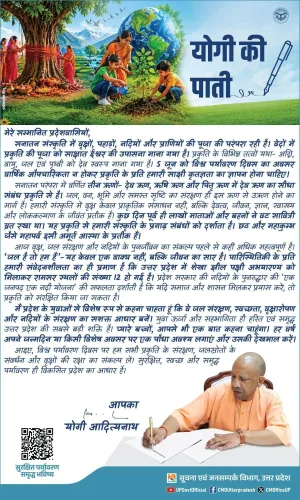
As Pitru Paksha observance fills ghats and homes across Uttar Pradesh with the scent of sesame and sacred water, Uttar Pradesh Chief Minister Yogi Adityanath on Monday, 5 October 2026 turned the spiritual season into a public-health call — urging every family to honour their ancestors not just through ritual, but through the living act of keeping their communities clean and disease-free.
Posting in Hindi on X, CM Yogi framed Sanatan culture as more than a backward glance at the past: 'ateet se vartaman aur vartaman se bhavishya ko jodne wali jeevan-drishti' — 'a life-vision that connects past to present, and present to future.' Pitru Paksha, he wrote, is the annual expression of that vision, a moment when shraddh rituals and tarpan offerings channel gratitude toward ancestors who bequeathed a heritage of healthy, safe living.
From tarpan to 'Dastak': the health-awareness pivot
The Chief Minister's message did not stop at philosophy. He issued a sharp, practical checklist for residents: maintain daily cleanliness, prevent shrubs from growing around homes, ensure no waterlogging accumulates in the neighbourhood, take fever symptoms seriously, and enroll in 'Dastak' — the state government's door-to-door health-awareness campaign — as a household routine rather than a one-off event. The appeal is directly seasonal. The post-monsoon weeks that coincide with Pitru Paksha are also peak season for vector-borne illnesses — dengue, malaria, and viral fever — in the Gangetic plain. Stagnant water in pits, pots, and drainage channels becomes a breeding ground, and the ten-to-fifteen days of the fortnight, when millions perform outdoor rituals near water bodies, amplify exposure risk. By anchoring the health message inside a culturally resonant moment, the CM's office is deploying a soft-mobilisation strategy: connect the public-duty of sanitation to the spiritual-duty of honouring one's lineage.Healthy UP, developed UP — the governing promise
CM Yogi closed with an explicit link between family health and the state's development ambition: 'The dream of a developed Uttar Pradesh will be realised only through healthy families and a healthy society.' The framing positions the Dastak campaign not as a standalone health drive but as infrastructure for a larger economic and social vision — a vocabulary increasingly central to the Yogi administration's public communications. With Uttar Pradesh being India's most populous state, even marginal improvements in household hygiene and early fever-reporting can translate into significant reductions in seasonal disease burden. The Chief Minister's seasonal nudge, delivered on the first working day of Pitru Paksha, is a reminder that governance in India's largest state is as much about timing a message as crafting one.Point of View
Maximising the message's operational utility.
NationPress
5 Oct 2026
Frequently Asked Questions
What is the Dastak campaign in Uttar Pradesh?
The Dastak campaign is a door-to-door health-awareness initiative run by the Uttar Pradesh government to spread public-health education at the household level, covering hygiene, disease prevention, and early symptom reporting.
Why did CM Yogi mention health awareness during Pitru Paksha?
Pitru Paksha falls during the post-monsoon period — peak season for dengue, malaria, and viral fever in UP. CM Yogi used the culturally significant fortnight to urge residents to prevent waterlogging and take fever symptoms seriously while connecting the message to ancestral duty.
What precautions did CM Yogi ask UP residents to follow?
CM Yogi asked residents to maintain daily cleanliness, prevent shrubs from growing near homes, avoid waterlogging, take fever symptoms seriously, and actively participate in the Dastak health-awareness campaign.
What is Pitru Paksha and when does it occur?
Pitru Paksha is a Hindu fortnight dedicated to honouring ancestors through shraddh rituals and tarpan offerings. It typically falls in September or October, in the lunar month of Bhadrapada-Ashwin.
How is CM Yogi connecting public health to UP's development goals?
CM Yogi stated that the 'dream of a developed Uttar Pradesh' can only be realised through healthy families and a healthy society, positioning household hygiene and disease prevention as building blocks of the state's broader economic and social progress.