CM Yogi Invokes Gandhi on Swachhata and Swadeshi
Synopsis
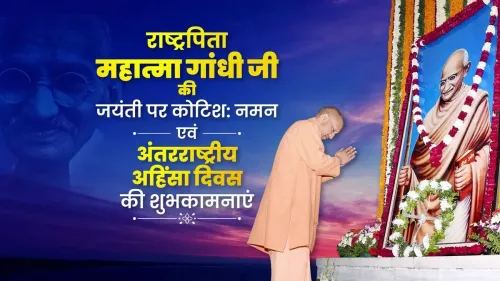
On Gandhi Jayanti 2026, UP Chief Minister Yogi Adityanath urged every Indian to adopt Swachhata and Swadeshi as life mantras, saying Mahatma Gandhi's words remain as powerful as ever.
Key Takeaways
CM Yogi Adityanath posted a Gandhi Jayanti message on 2 October 2026 .
He urged every citizen to make Swachhata (cleanliness) and Swadeshi (self-reliance) their life mantra.
He described Mahatma Gandhi's words as still functioning as a guiding mantra today.
The message aligns with the anniversary of the Swachh Bharat Mission , launched on Gandhi Jayanti 2014 .
CM Yogi, who also heads the Gorakhnath Math , has consistently linked cleanliness to both civic and spiritual duty.
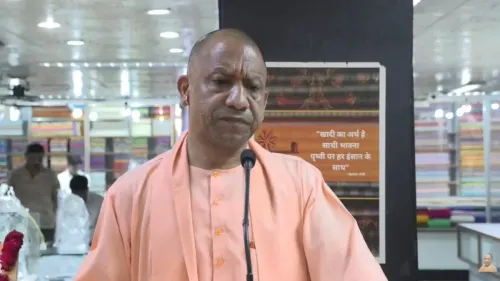
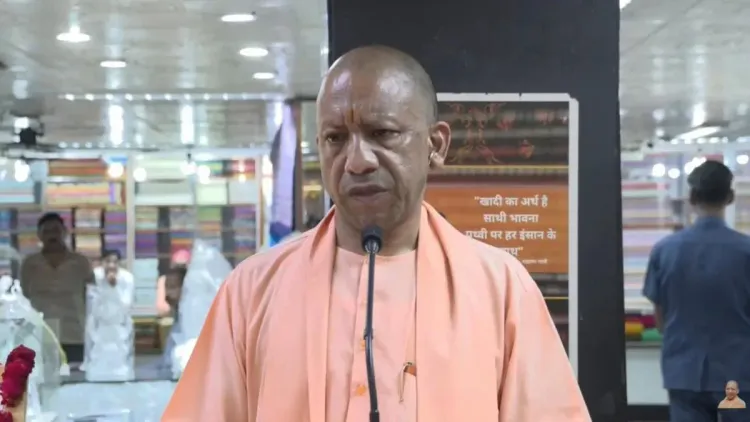
On Gandhi Jayanti, 2 October 2026, Uttar Pradesh Chief Minister Yogi Adityanath turned to the Mahatma's most enduring teachings — cleanliness and self-reliance — and asked every Indian to make them a living creed, not just a calendar remembrance.
Posting on X, CM Yogi wrote: 'हर नागरिक स्वच्छता एवं स्वदेशी को अपने जीवन का मंत्र बनाए.... पूज्य बापू के वचन आज भी मंत्र के रूप में काम कर रहे हैं...' — 'Let every citizen make cleanliness and self-reliance the mantra of their life.... The revered Bapu's words still work as a mantra today.'
Two words Gandhi never stopped repeating
Swachhata — cleanliness — and Swadeshi — the preference for home-grown goods and self-sufficient living — were twin pillars of Mahatma Gandhi's mass mobilisation strategy during India's independence movement. Gandhi saw personal hygiene and sanitation not as civic courtesy but as moral discipline, and Swadeshi as economic emancipation from colonial dependency. The pairing of both in a single breath is deliberate: one speaks to the immediate environment, the other to national identity.
Gandhi Jayanti and the reminder that endures
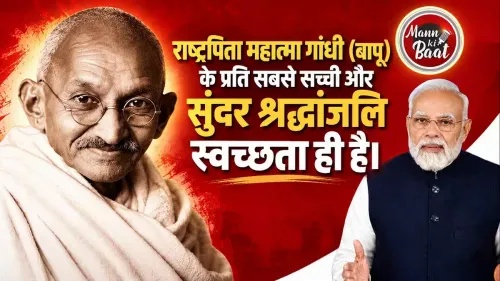
October 2 marks the birth anniversary of Mahatma Gandhi, observed as a national holiday and, since 2014, as the launch anniversary of the Swachh Bharat Mission — India's flagship cleanliness drive. The convergence makes CM Yogi's message more than ceremonial: it anchors a living policy lineage directly to the Mahatma's original vision. For a state the size of Uttar Pradesh, where rural sanitation and local manufacturing both remain ongoing challenges, the call carries immediate weight.
The Chief Minister, who also heads the Gorakhnath Math in Gorakhpur, has consistently framed cleanliness as both a civic and a spiritual obligation — a reading entirely consistent with Gandhi's own intertwining of moral purpose and public hygiene.
Words spoken over a century ago on a spinning wheel and a sweeper's broom. They have not grown quieter.
Point of View
While Swadeshi taps into a longer nationalist economic tradition that predates independence. For a chief minister who governs India's most populous state, framing Gandhi's words as a living 'mantra' rather than a historical artifact is a soft-power move: it positions the administration as the inheritor of Gandhi's reformist impulse without any overt partisan claim. The dual appeal — hygiene for the citizen, economic self-sufficiency for the nation — also speaks to two very different voter concerns simultaneously, a political economy compressed into a single sentence.
NationPress
2 Oct 2026
Frequently Asked Questions
What did CM Yogi Adityanath say on Gandhi Jayanti 2026?
CM Yogi Adityanath urged every citizen to make cleanliness (Swachhata) and self-reliance (Swadeshi) the mantra of their lives, saying Mahatma Gandhi's words still serve as a guiding mantra today.
What is Swadeshi and why is it associated with Gandhi?
Swadeshi is the principle of favouring home-made goods and economic self-sufficiency. Mahatma Gandhi championed it as a means of resisting colonial economic dependency and empowering ordinary Indians.
What is the significance of Gandhi Jayanti on October 2?
October 2 is Mahatma Gandhi's birth anniversary, observed as a national holiday in India. Since 2014 it has also marked the launch anniversary of the Swachh Bharat Mission.
What is the Swachh Bharat Mission?
The Swachh Bharat Mission is India's national cleanliness campaign launched on 2 October 2014, Gandhi's birth anniversary, aimed at achieving open-defecation-free villages and improved urban sanitation.
Who is Yogi Adityanath?
Yogi Adityanath is the Chief Minister of Uttar Pradesh and a senior BJP leader. He also heads the Gorakhnath Math, a prominent religious institution in Gorakhpur, UP.