Mandaviya shares Modi's Gandhi tribute on Swachh Bharat
Synopsis
Union Minister Mansukh Mandaviya shared PM Modi's words — 'Cleanliness is our true tribute to Bapu' — ahead of Gandhi Jayanti 2026, renewing the Swachh Bharat Abhiyan's annual pledge to Mahatma Gandhi's sanitation vision.
Key Takeaways
Mansukh Mandaviya posted PM Modi's quote on cleanliness as a tribute to Mahatma Gandhi on 27 September 2026 , days ahead of Gandhi Jayanti.
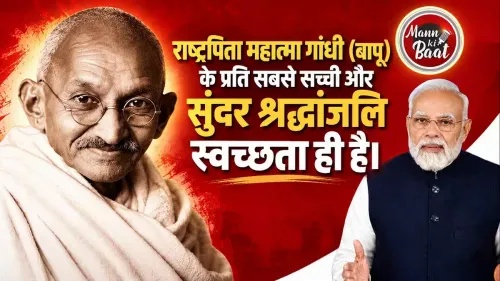
The quoted line — 'Swachhata hi pujya Bapu ko hamari sachchi shraddhanjali hai' — has been the ideological anchor of Swachh Bharat Abhiyan since its launch.
Swachh Bharat Mission was launched on 2 October 2014 , Gandhi's birth anniversary, explicitly as a tribute to his lifelong emphasis on sanitation.
Gandhi personally practised sanitation work at his ashrams and framed cleanliness as inseparable from human dignity — a philosophy the mission draws on directly.
The annual pre-Gandhi Jayanti messaging reflects the government's consistent strategy of grounding a public-health programme in cultural and moral obligation.
As Gandhi Jayanti approaches, Union Labour and Sports Minister Mansukh Mandaviya shared a line on Sunday, 27 September 2026 that has anchored India's cleanliness mission since its very first day — Prime Minister Narendra Modi's declaration that sanitation is the truest homage one can offer to the Father of the Nation.
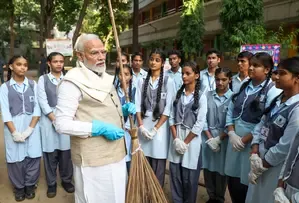
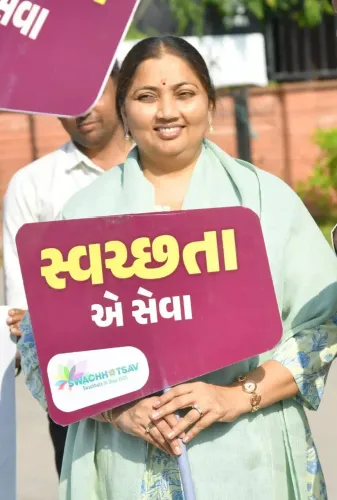
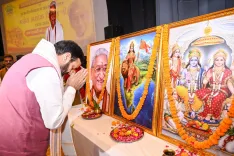
The post quotes PM Narendra Modi: 'स्वच्छता ही पूज्य बापू को हमारी सच्ची श्रद्धांजलि है' — 'Cleanliness alone is our true tribute to the revered Bapu.' The single sentence is a deliberate callback to the founding philosophy of Swachh Bharat Abhiyan, launched on 2 October 2014 — Gandhi's birth anniversary — as a living monument to his lifelong insistence that sanitation was inseparable from dignity and nationhood.
Twelve years of framing Swachh Bharat as a Gandhian promise
Mahatma Gandhi famously placed sanitation above political independence itself in his public writings, and the Modi government has consistently leveraged that moral weight to give the cleanliness mission cultural, not merely administrative, urgency. Launching Swachh Bharat Mission on Gandhi Jayanti in 2014 was an explicit choice: it tied every toilet built and every open ground cleared to a 75-year-old national debt. The framing has been repeated at every Gandhi Jayanti since, with ministers, chief ministers, and party workers across India echoing the same pledge around October 2 each year.
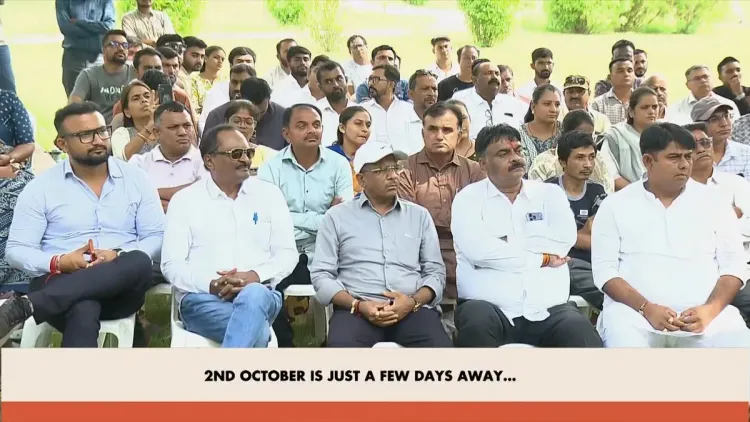
Mandaviya's post — carrying a video — arrives days before the 2026 Gandhi Jayanti observance, slotting into that well-established annual rhythm of renewal and recommitment. It is a reminder that for the government, Swachh Bharat is not merely a sanitation programme but a cultural compact renewed publicly each year before the nation's most iconic face.
Gandhi's sanitation vision and its modern policy echo
Gandhi's writings on cleanliness were not metaphorical — he personally cleaned latrines at his ashrams and urged Congress workers to do the same, arguing that caste-based aversion to sanitation work was as corrosive as colonial rule. The Swachh Bharat Abhiyan drew on exactly this legacy to destigmatise sanitation labour and push for universal toilet access, particularly for women and marginalised communities. Sanitation workers — the people who make the mission real on the ground — sit at the centre of that original Gandhian moral argument.
One quote. One mission. Twelve years of the same, unwavering promise — and every October 2, India asks itself how much closer it has come to keeping it.
Point of View
The BJP has made it politically resilient: criticism of the programme's targets becomes, in this framing, criticism of Gandhi himself. Mandaviya's amplification is a reminder that the mission's most durable asset is not its infrastructure numbers but its symbolic scaffolding. The question heading into 2026's Gandhi Jayanti is whether that scaffolding still lifts public participation or has settled into ceremony.
NationPress
27 Sept 2026
Frequently Asked Questions
What did Mansukh Mandaviya post about Gandhi Jayanti 2026?
Mandaviya shared PM Modi's quote that 'cleanliness alone is our true tribute to revered Bapu,' reaffirming the Swachh Bharat Abhiyan's Gandhian philosophy ahead of Gandhi Jayanti on 2 October 2026.
When was Swachh Bharat Abhiyan launched and why on Gandhi Jayanti?
Swachh Bharat Abhiyan was launched on 2 October 2014, Mahatma Gandhi's birth anniversary, to honour Gandhi's lifelong belief that sanitation was central to individual dignity and national health.
What was Mahatma Gandhi's view on cleanliness and sanitation?
Gandhi personally cleaned latrines at his ashrams and argued in his writings that caste-based aversion to sanitation was as damaging as colonial rule, making cleanliness a moral and political priority.
What is the meaning of 'Swachhata hi pujya Bapu ko sachchi shraddhanjali hai'?
The Hindi phrase translates to 'Cleanliness alone is our true tribute to the revered Bapu (Gandhi),' and has served as the guiding slogan of the Swachh Bharat Mission since 2014.
Who are the key beneficiaries of Swachh Bharat Abhiyan?
The mission primarily targets Indian citizens lacking toilet access, women's safety and sanitation, and sanitation workers whose daily labour is central to Gandhi's original vision of dignified cleanliness.