Bhupender Yadav: Cleanliness Is Our Finest Tribute to Bapu
Synopsis
Union Environment Minister Bhupender Yadav invoked Mahatma Gandhi's sanitation legacy ahead of Gandhi Jayanti, calling cleanliness India's finest tribute to Bapu and linking the message to Mann Ki Baat and the Swachh Bharat Mission.
Key Takeaways
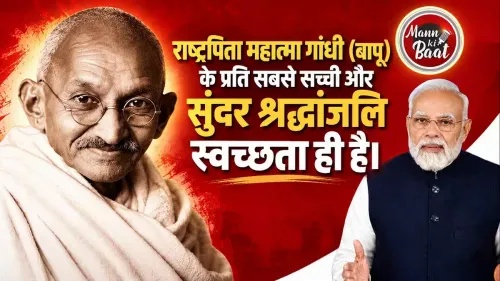
Bhupender Yadav posted on 27 September 2026 that cleanliness is the most beautiful tribute to Mahatma Gandhi .
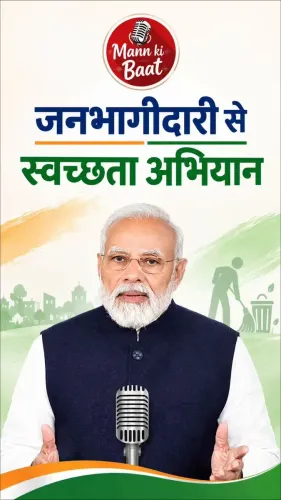
The post was made in the context of Mann Ki Baat , PM Modi's monthly radio programme.
The Swachh Bharat Mission was launched on 2 October 2014 — Gandhi's birth anniversary — to honour his sanitation ideals.
The annual Swachhata Hi Seva campaign mobilises citizens and local bodies in the lead-up to Gandhi Jayanti .
Yadav's framing connects the Ministry of Environment 's mandate to India's broader sanitation and cleanliness policy agenda.
Days before Gandhi Jayanti, Union Environment Minister Bhupender Yadav has distilled a nation's relationship with its founding father into a single, pointed idea: the truest homage to Mahatma Gandhi is not a wreath or a speech — it is a clean India. Weighing in on Mann Ki Baat on Sunday, 27 September 2026, Yadav posted in Hindi, 'Our most beautiful tribute to Bapu is cleanliness itself.'
Gandhi's Sanitation Crusade — The Original Blueprint
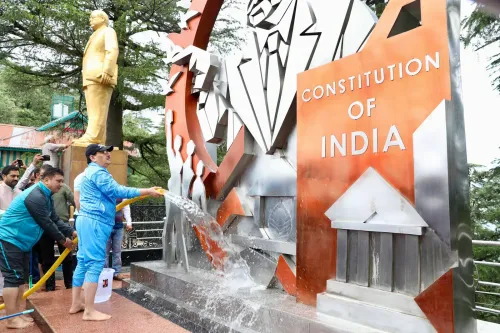
Gandhi's insistence on personal hygiene and community sanitation was not a footnote to his politics — it was central to it. He argued for decades that social dignity and physical cleanliness were inseparable, and that sweeping one's own surroundings was an act of self-respect, not servitude. That philosophy became the moral scaffolding for the Swachh Bharat Mission, launched on 2 October 2014 — Gandhi's birth anniversary — and framed explicitly as the fulfilment of a promise to Bapu.
Mann Ki Baat and the Annual Swachhata Moment
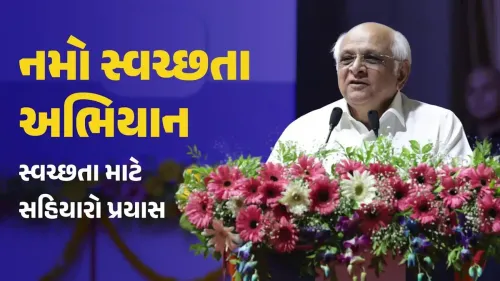
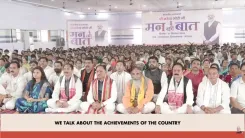
Yadav's post rides the wave of a well-established political and civic tradition: as Gandhi Jayanti approaches, leaders across the spectrum invoke the Mahatma's sanitation legacy to re-energise the Swachh Bharat Abhiyan. Mann Ki Baat, Prime Minister Narendra Modi's monthly radio address, has repeatedly spotlighted cleanliness drives and citizen-led sanitation stories — giving Yadav's hashtag its immediate context. The annual Swachhata Hi Seva (Cleanliness Is Service) campaign that precedes 2 October typically mobilises urban local bodies, schools, and civil society in symbolic and practical clean-up efforts across the country.
Why Environment Ministry Ownership of This Narrative Matters
That the message comes from the Ministry of Environment, Forest and Climate Change — not just a social-media convention — signals a deliberate policy link. Cleanliness, waste management, and environmental sustainability increasingly overlap in government programming: plastic litter, open dumping, and untreated sewage are as much ecological concerns as sanitary ones. Yadav's framing quietly stakes a claim for his ministry in the broader Swachh Bharat conversation, connecting Gandhi's vision of hygienic villages to India's contemporary urban and environmental governance agenda.
Twelve years on from its launch, the Swachh Bharat Mission has become one of the most recognisable symbols of the BJP government's social policy. Tying it to Gandhi's personal crusade on his birthday weekend is a rhetorical move as durable as it is effective. The real test, as always, is whether the tribute lasts beyond the calendar.
Point of View
He insulates the Swachh Bharat Mission from critique and elevates it to the realm of national duty. The Environment Ministry's growing ownership of the sanitation narrative reflects a broader effort to merge ecological and hygiene goals under one policy umbrella. The Gandhi Jayanti window is the most efficient amplifier available for this message — mobilising civic sentiment without requiring a policy announcement. Over time, the consistency of this annual framing has made the Bapu-Swachhata equation almost reflexive, which is precisely its political utility.
NationPress
27 Sept 2026
Frequently Asked Questions
What did Bhupender Yadav say about Mahatma Gandhi and cleanliness?
Bhupender Yadav posted that cleanliness is India's most beautiful tribute to Mahatma Gandhi, sharing the message in the context of Mann Ki Baat ahead of Gandhi Jayanti.
What is the Swachh Bharat Mission and how is it linked to Gandhi?
The Swachh Bharat Mission is a national sanitation and cleanliness campaign launched on 2 October 2014 — Gandhi's birth anniversary — directly inspired by Mahatma Gandhi's lifelong emphasis on hygiene and sanitation.
What is Mann Ki Baat?
Mann Ki Baat is a monthly radio address by Prime Minister Narendra Modi in which he discusses public issues, citizen stories, and government programmes, including cleanliness and sanitation campaigns.
What is the Swachhata Hi Seva campaign?
Swachhata Hi Seva, meaning 'Cleanliness Is Service', is an annual campaign that runs in the weeks before Gandhi Jayanti on 2 October , engaging citizens, schools, and local bodies in clean-up and sanitation drives.
Why does the Environment Ministry focus on cleanliness?
The Ministry of Environment, Forest and Climate Change links cleanliness to ecological outcomes — plastic litter, open dumping, and untreated waste directly affect India's environmental health, making sanitation a natural part of the ministry's mandate.