Jal Shakti Minister Paatil: Cleanliness is truest tribute to Gandhi
Synopsis
Union Jal Shakti Minister C. R. Paatil posted on X that cleanliness is the most sincere tribute to Mahatma Gandhi, tagging #ManKiBaat ahead of Gandhi Jayanti 2026, reinforcing the Swachh Bharat Mission's founding philosophy.
Key Takeaways
Union Jal Shakti Minister C.
Paatil posted on 27 September 2026 that cleanliness is the truest tribute to Mahatma Gandhi .
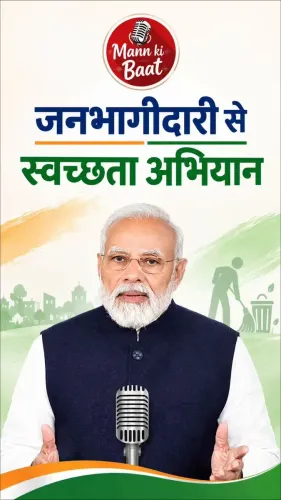
The post was tagged #ManKiBaat , linking it to PM Modi's monthly public-address programme.
The message arrived days before Gandhi Jayanti (2 October) , India's most symbolically loaded date in the sanitation calendar.
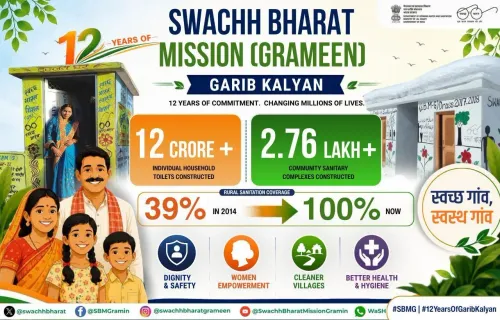
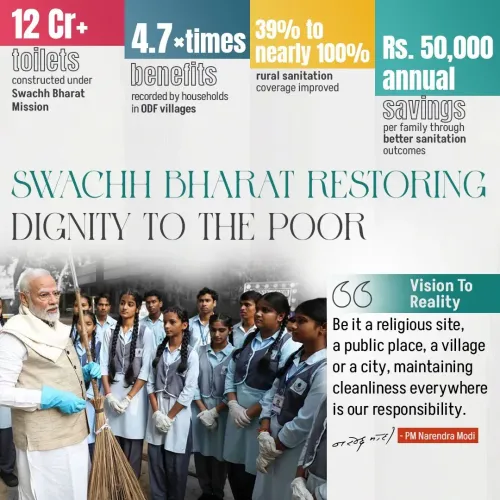
The Swachh Bharat Mission was launched on 2 October 2014 explicitly as a tribute to Gandhi's sanitation ideals.
The Jal Shakti Ministry administers Swachh Bharat Mission (Grameen), making Paatil the institutional steward of Gandhi's cleanliness legacy.
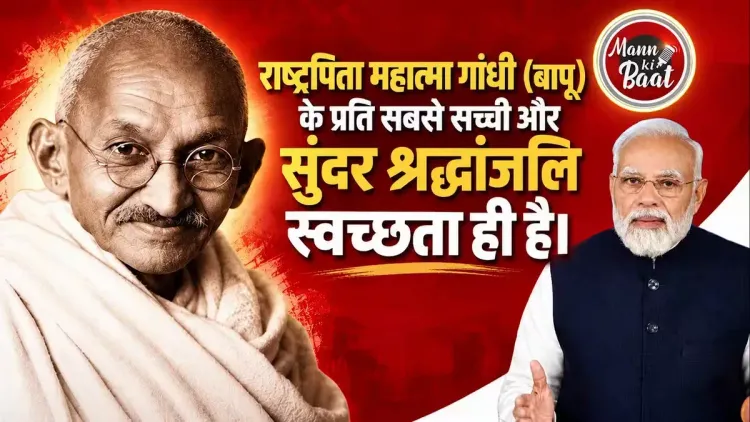
Cleanliness is not a courtesy — it is a conviction. On Sunday, 27 September 2026, Union Jal Shakti Minister C. R. Paatil invoked the Father of the Nation to make exactly that point, posting on X that the most sincere and beautiful homage one can pay to Mahatma Gandhi is the act of keeping India clean.
Posting under the hashtag #ManKiBaat, Paatil wrote in Hindi: 'Rashtrapitta Mahatma Gandhi ke prati sabse sachchi aur sundar shraddhanjali swachhata hi hai' — 'The truest and most beautiful tribute to the Father of the Nation, Mahatma Gandhi, is cleanliness itself.' The message, brief in word count but loaded in symbolism, arrived in the lead-up to Gandhi Jayanti on 2 October, a date that carries outsized weight in India's sanitation story.
Gandhi's sanitation legacy and the 2014 mission that carried it forward
Mahatma Gandhi was, by his own writing and daily practice, fiercely committed to sanitation — he argued that freedom from filth was inseparable from freedom itself. That philosophy became official policy when the Swachh Bharat Mission was launched on 2 October 2014, Gandhi's birth anniversary, framing a nationwide cleanliness drive explicitly as a fulfilment of the Mahatma's unfinished agenda. The mission has since become one of modern India's most visible welfare programmes, touching rural toilet construction, urban solid-waste management, and behavioural-change campaigns across the country.Why the Jal Shakti Ministry sits at the centre of this narrative
Paatil's ministry is not a bystander here. The Jal Shakti Ministry brings together drinking water supply and sanitation under a single roof — making it the institutional home of Swachh Bharat Mission (Grameen), the rural phase of the cleanliness drive. Every time a minister of that portfolio links Gandhi's name to hygiene, it is also, implicitly, a statement about the ministry's own mandate. The post's #ManKiBaat tag connects it to Prime Minister Narendra Modi's monthly radio programme, which has repeatedly used that platform to amplify sanitation messaging and spotlight citizen-led cleanliness stories. As Gandhi Jayanti 2026 approaches, the post is a reminder that the political architecture around cleanliness in India is designed to feel personal, not bureaucratic — a tribute, not a target. Whether that framing translates into renewed momentum on Swachh Bharat Phase 2 goals is the question the next Man Ki Baat episode may help answer.Point of View
Letting the symbolism do the persuasion. The #ManKiBaat tag is a deliberate signal, tethering the minister's voice to the Prime Minister's communication machinery at a moment when the Gandhi Jayanti week commands public attention. For a ministry whose mandate spans drinking water and sanitation, invoking Gandhi is also a way of elevating bureaucratic targets into a civilisational mission. The pattern is consistent across successive Man Ki Baat cycles: Gandhi as sanitation conscience, Swachh Bharat as living tribute.
NationPress
27 Sept 2026
Frequently Asked Questions
What did C. R. Paatil post about Mahatma Gandhi and cleanliness?
On 27 September 2026, Union Jal Shakti Minister C. R. Paatil posted on X that the truest and most beautiful tribute to Mahatma Gandhi, the Father of the Nation, is cleanliness itself, tagging the post #ManKiBaat.
Why is cleanliness linked to Mahatma Gandhi in India?
Mahatma Gandhi was a lifelong advocate of personal and public sanitation, arguing that hygiene was inseparable from self-rule and human dignity. The Swachh Bharat Mission was launched on his birth anniversary in 2014 to honour that legacy.
What is the Swachh Bharat Mission and who runs it?
Swachh Bharat Mission is a national cleanliness programme launched on 2 October 2014. Its rural phase, Swachh Bharat Mission (Grameen), is administered by the Union Jal Shakti Ministry, currently headed by C. R. Paatil.
What is Man Ki Baat and why did Paatil tag it?
Man Ki Baat is Prime Minister Narendra Modi's monthly radio address to the nation. Tagging a post #ManKiBaat signals alignment with the programme's themes, which have regularly featured sanitation and cleanliness stories.
When is Gandhi Jayanti and why does it matter for sanitation policy?
Gandhi Jayanti falls on 2 October each year. It is the date on which the Swachh Bharat Mission was inaugurated in 2014, making it the symbolic anchor of India's government-led cleanliness drive.