CM Yogi Marks 9 Years of Law-and-Order Shift in UP
Synopsis
Uttar Pradesh Chief Minister Yogi Adityanath on 14 July 2026 claimed the state has transformed into a riot-free, curfew-free 'Utsav Pradesh' over nine years of BJP rule, sharply contrasting conditions before 2017 when, he alleged, rioters were honoured and governments submitted to organised crime.
Key Takeaways
CM Yogi Adityanath posted on 14 July 2026 marking nine years of BJP governance in Uttar Pradesh .
He alleged that before 2017 , rioters were invited to and honoured at the Chief Minister's residence, and governments bowed to mafia groups.
He described Uttar Pradesh as now an 'Utsav Pradesh' — riot-free, curfew-free, and disturbance-free.
The 2013 Muzaffarnagar riots remain the most cited pre-2017 communal violence episode in this political narrative.
Official benchmarks such as NCRB annual crime data and state police quarterly reports are the key verification tools for such governance claims.
The statement continues a pattern of BJP-ruled states presenting law-and-order deployments as evidence of improved governance since 2017 .
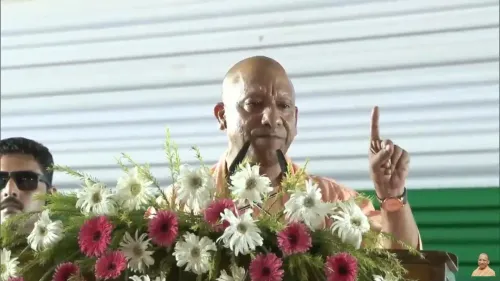
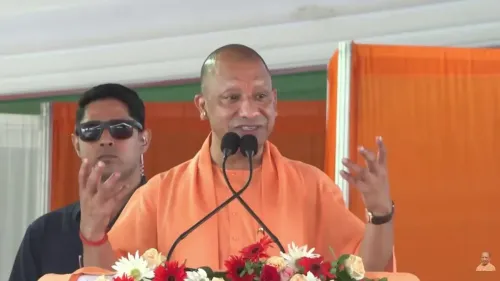
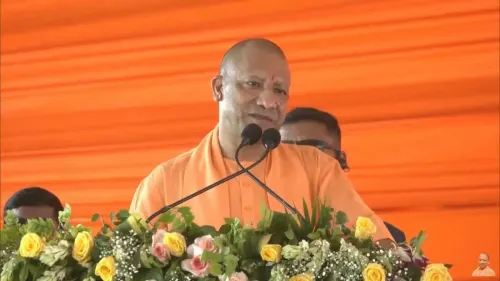
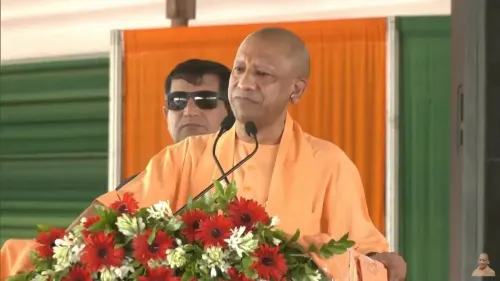
Uttar Pradesh Chief Minister Yogi Adityanath on Tuesday, 14 July 2026, posted on X contrasting the state's governance before and after 2017, asserting that Uttar Pradesh has transformed into a 'riot-free, curfew-free, disturbance-free festival state' over the past nine years under his administration.
Context
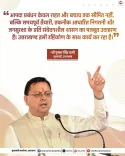
In the post, CM Yogi wrote — 'वर्ष 2017 के पहले दंगाइयों को मुख्यमंत्री आवास में बुलाकर सम्मानित किया जाता था' ['Before 2017, rioters were invited to the Chief Minister's residence and honoured'] — and that governments of the time would 'bow their heads before the mafia and grovel.' He then declared that over the past nine years, the state has established its identity as an 'Utsav Pradesh' — a 'festival state' — free of riots, curfews, and unrest.
The statement is a direct political contrast aimed at the period prior to March 2017, when Yogi Adityanath took oath as Chief Minister on a platform centred on restoring law and order. The post carries an attached video, the contents of which the administration has not separately elaborated upon in the post text.
Policy Backdrop
Uttar Pradesh had been associated in public discourse with episodes of communal violence, including the 2013 Muzaffarnagar riots — a major outbreak of communal clashes that led to curfews and the displacement of thousands — during the tenure of the previous government. The BJP government that came to power in 2017 framed its early priorities around anti-mafia drives, police modernisation, and what officials described as ending 'mafia raj.'
Successive state budgets from 2017 onwards allocated funds for police infrastructure upgrades and anti-encroachment operations. The administration has repeatedly cited these measures — including high-profile encounters and property demolition actions against accused criminals — as evidence of a structural shift in policing.
Stakeholders and Impact
The framing of Uttar Pradesh as an 'Utsav Pradesh' is directed at multiple audiences: residents of the state who experienced disruptions during earlier periods of unrest, the business community that has been courted through successive investors' summits in Lucknow, and the broader national electorate ahead of future electoral cycles.
Opposition parties, particularly those associated with the pre-2017 government, are likely to contest the characterisation. Annual crime statistics published by national agencies and state police quarterly reports on riot and curfew incidents remain the principal verifiable benchmarks against which such claims are assessed.
What's Next
The statement is part of a recurring governance narrative the BJP administration in Uttar Pradesh has maintained since 2017, and similar messaging has appeared in other BJP-governed states where law-and-order deployments are presented as evidence of improved order. Analysts and opposition legislators are expected to scrutinise upcoming National Crime Records Bureau data and state assembly debates on the law-and-order budget to evaluate the claims against official figures.
As CM Yogi Adityanath completes what he frames as a nine-year governance milestone, the political contest over Uttar Pradesh's law-and-order record is set to intensify — particularly as the state approaches its next assembly election cycle.
Point of View
CM Yogi is sharpening a contrast narrative that has been central to the BJP's electoral identity in Uttar Pradesh since 2017. The coinage 'Utsav Pradesh' is a deliberate rebranding effort, positioning the state as a place of celebration rather than conflict — a message calibrated as much for investors and the urban middle class as for the core BJP voter base. The durability of this narrative will ultimately be tested by independent crime data and by whether opposition parties can mount a credible counter-narrative ahead of the next electoral cycle.
NationPress
14 Jul 2026
Frequently Asked Questions
What did CM Yogi Adityanath say about Uttar Pradesh on 14 July 2026?
CM Yogi Adityanath posted on X on 14 July 2026 claiming that Uttar Pradesh has become a riot-free, curfew-free, and disturbance-free 'Utsav Pradesh' over the past nine years of BJP governance, contrasting it sharply with conditions he alleged existed before 2017 .
What is 'Utsav Pradesh' as mentioned by CM Yogi?
'Utsav Pradesh' — meaning 'festival state' — is a term used by CM Yogi Adityanath to describe Uttar Pradesh as a state now free of riots, curfews, and public unrest, in contrast to what he characterised as the law-and-order situation before 2017 .
What was the law-and-order situation in Uttar Pradesh before 2017?
Before 2017 , Uttar Pradesh witnessed significant communal violence, most notably the 2013 Muzaffarnagar riots , which led to curfews and displacement. The state was also frequently cited in public discourse for the influence of organised criminal networks, a situation the BJP government elected in 2017 pledged to end.
How has the BJP government in UP addressed law and order since 2017?
Since March 2017 , the Yogi Adityanath government has pursued anti-mafia drives, police modernisation, anti-encroachment operations, and high-profile policing deployments at public festivals, presenting these as evidence of a structural improvement in Uttar Pradesh's law-and-order situation.
How can Yogi Adityanath's law-and-order claims for UP be verified?
The principal independent benchmarks are annual crime data published by the National Crime Records Bureau (NCRB) and Uttar Pradesh police quarterly reports on riot and curfew incidents, as well as state assembly debates on the law-and-order budget.