CM Yogi Welcomes Saints at Ayodhya Deepotsav's 10th Edition
Synopsis
The Chief Minister's Office of Uttar Pradesh welcomed revered saints at the 10th edition of Deepotsav in Ayodhya on 7 November 2026, marking a decade of the state-sponsored festival that has anchored the city's transformation into a major spiritual tourism destination.
Key Takeaways
Deepotsav 2026 marks the 10th consecutive edition of the Uttar Pradesh government's annual festival of lights in Ayodhya .
CM Yogi Adityanath extended a formal welcome to the revered saints who have guided the festival's spiritual direction since its launch.
The festival was first organised in 2017 , the year Yogi Adityanath took office, as a state-sponsored revival of traditional Diwali celebrations linked to Lord Ram.
Ayodhya's development — including the Ram Temple , new ghats, and airport upgrades — has run in parallel with Deepotsav's growth over nine years.
The hashtag #Deepotsav1Dasak signals deliberate branding of the decade milestone, framing Ayodhya as Ayodhya Puri , a sacred capital.
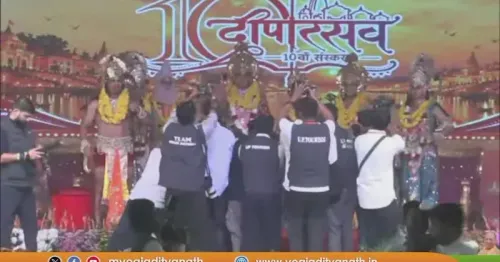
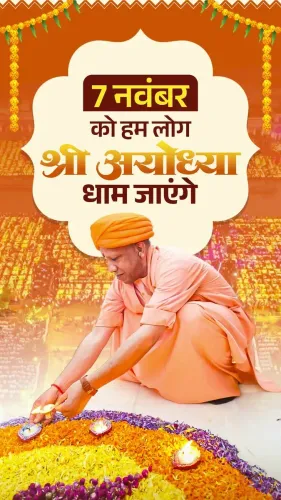
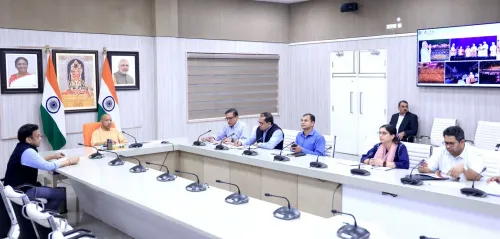
A decade of diyas. On Saturday, 7 November 2026, the Chief Minister's Office of Uttar Pradesh marked the 10th edition of Deepotsav in Ayodhya with a formal welcome to the revered saints whose guidance has shaped the festival since its inception — a milestone that underscores how profoundly the city's identity has been recast over the past nine years.
The post, attributed to Chief Minister Yogi Adityanath, extended a heartfelt welcome to the saints who have provided continuous spiritual counsel in the mission of linking Ayodhya's holistic development to the consciousness of Prabhu Shri Ram (Lord Ram). 'On the occasion of the 10th edition of Deepotsav,' the message reads, 'a heartfelt welcome and salutation to all those revered saints whose constant presence and guidance we have received in this resolve.'
Nine Years of Diyas: How Deepotsav Became a State Signature
Deepotsav was launched in 2017, the same year Yogi Adityanath assumed office, as a state-sponsored revival of the traditional Diwali celebration tied to the mythological return of Lord Ram to Ayodhya. What began as a cultural assertion has grown into one of India's most watched annual spectacles, drawing pilgrims, tourists, and cameras from across the country.
The festival's growth has run in parallel with sweeping infrastructure investment in Ayodhya — new ghats, widened roads, airport upgrades, and the completion of the Ram Temple — transforming the city into a full-scale spiritual tourism destination. The saints who appear alongside the administration each year are not ceremonial props; they represent the religious legitimacy the state has consciously cultivated for this project.
The Saints' Role in Ayodhya's Transformation
Inviting and honouring religious figures at state events is a deliberate thread in the Uttar Pradesh government's Ayodhya playbook. By centering the saints' 'continuous presence and guidance,' the Chief Minister's message frames the city's development not merely as a government programme but as a shared spiritual mission — one where administrative ambition and religious sanction reinforce each other.
For the saints themselves, Deepotsav provides a nationally visible platform. For the state, their endorsement lends cultural depth to what is also a significant economic driver: pilgrimage tourism, hospitality, and local commerce that have expanded measurably since 2017.
What the 10th Edition Signals for Ayodhya
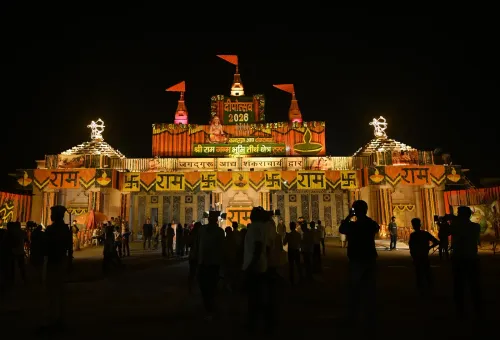
A tenth anniversary is more than a number — it is a statement of institutional permanence. Deepotsav is no longer an experiment; it is a fixture on India's cultural calendar. The hashtags #Deepotsav1Dasak (one decade of Deepotsav) and #Deepotsav2026AyodhyaPuri signal that the state is leaning into the milestone with deliberate branding, framing Ayodhya not just as a city but as a sacred capital — Ayodhya Puri.
Attendance figures, the number of diyas lit, and any new infrastructure announcements tied to this edition will be the metrics that define how the decade's culmination is remembered — and how ambitiously the next decade is framed.
Ten editions in, Deepotsav has become the clearest single lens through which the Yogi government's vision for Ayodhya is projected to the world — and the 2026 edition, with its saints assembled and its hashtags ready, suggests that vision is only getting sharper.
Point of View
The administration frames large-scale urban development as spiritually mandated — blurring the line between state programme and religious mission in ways that consolidate a distinct electoral identity. The 'Ayodhya Puri' branding in the hashtags suggests the government is now institutionalising that identity beyond any single election cycle. Whether the festival's cultural capital translates into sustained tourism revenue and local economic uplift for Ayodhya's residents remains the more consequential long-term question.
NationPress
7 Nov 2026
Frequently Asked Questions
What is Deepotsav in Ayodhya?
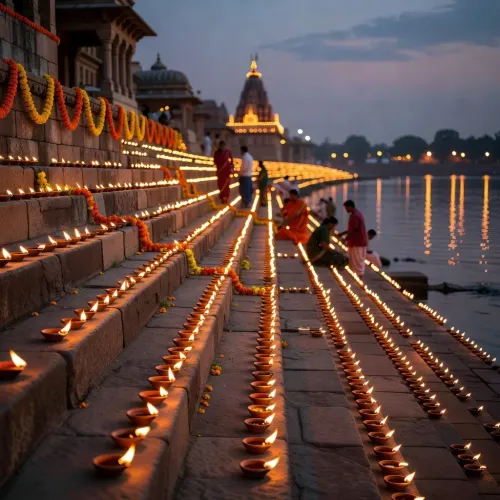
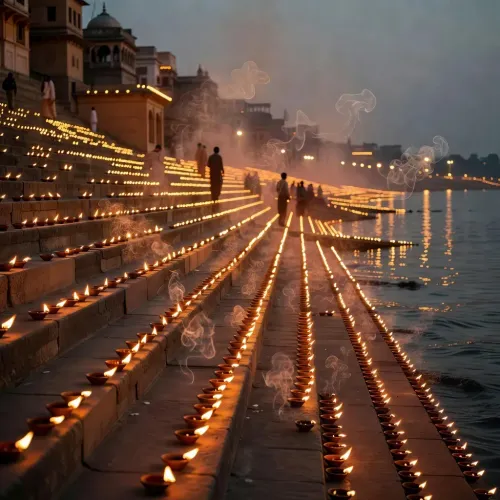
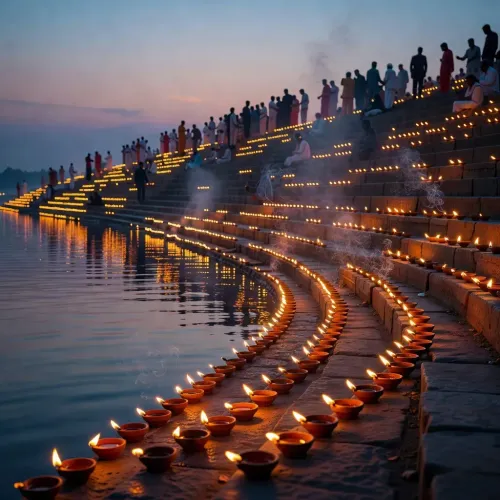
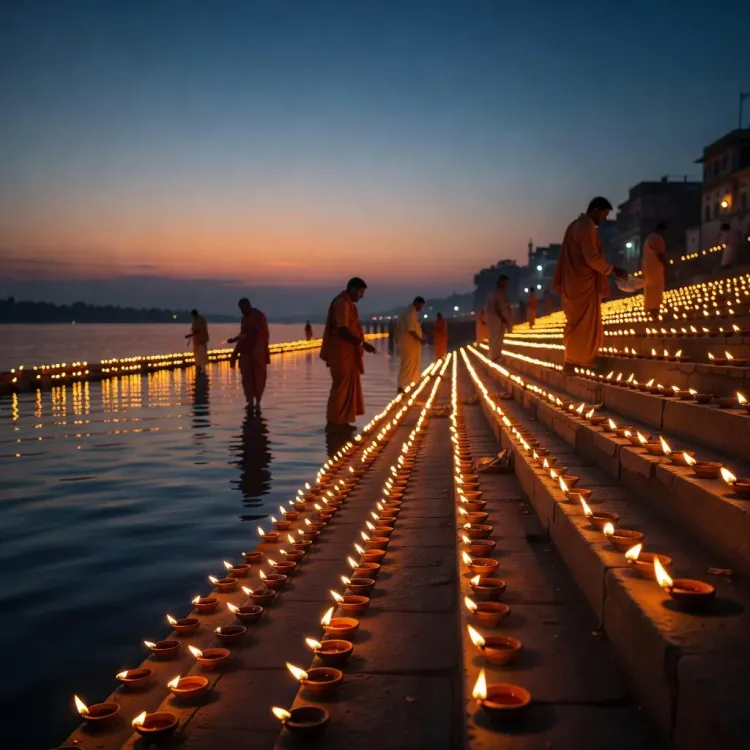
Deepotsav is an annual Diwali festival of lights organised by the Uttar Pradesh government in Ayodhya, featuring the lighting of millions of diyas along the Saryu river ghats. It was launched in 2017 to revive traditional celebrations linked to the return of Lord Ram.
When did Deepotsav start and who started it?
Deepotsav was started in 2017 by the Uttar Pradesh government under Chief Minister Yogi Adityanath, coinciding with his first year in office.
What is the 10th edition of Deepotsav?
The 10th edition, held in 2026 and branded as Deepotsav1Dasak, marks a full decade of the state-sponsored festival in Ayodhya, celebrated with the participation of revered saints and large-scale public events.
Why does the UP government invite saints to Deepotsav?
The Uttar Pradesh government invites revered saints to Deepotsav to lend religious legitimacy and spiritual depth to the festival, aligning state-sponsored development of Ayodhya with the city's sacred identity as the birthplace of Lord Ram.
How has Ayodhya changed since Deepotsav began?
Since 2017, Ayodhya has seen major infrastructure upgrades including new river ghats, road widening, an airport, and the completion of the Ram Temple, transforming it into one of India's prominent spiritual tourism destinations.