CM Yogi Invokes Sanskrit Maxim on True Purpose of Education
Synopsis
Chief Minister Yogi Adityanath invoked the Sanskrit maxim 'Sa vidya ya vimuktaye' on June 1, 2026, defining true knowledge as a liberating force that equips society to face national challenges — a message aligned with NEP 2020's vision of value-based, India-rooted education.
Key Takeaways
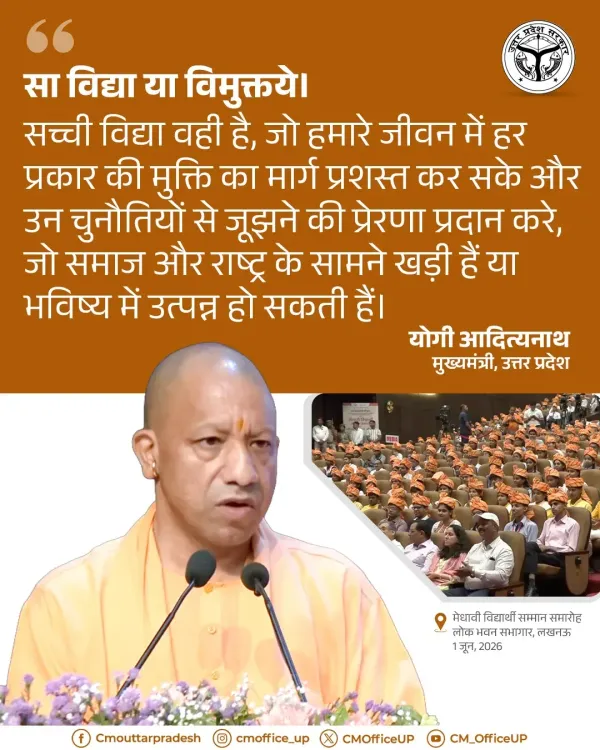
The Chief Minister's Office of Uttar Pradesh shared a message from CM Yogi Adityanath on June 1, 2026 invoking the Sanskrit maxim Sa vidya ya vimuktaye .
The phrase translates as 'That alone is knowledge which liberates,' rooted in classical Indian philosophical tradition.
CM Yogi defined true education as that which paves the path to liberation and inspires citizens to tackle societal and national challenges.
The message aligns with the National Education Policy 2020 , which mandates education rooted in Indian ethos and character-building.
Uttar Pradesh has promoted Sanskrit studies and moral education in government schools since 2017 under the current administration.
Policy watchers will monitor whether the statement is followed by curriculum revisions or new budget allocations for value-education programmes.
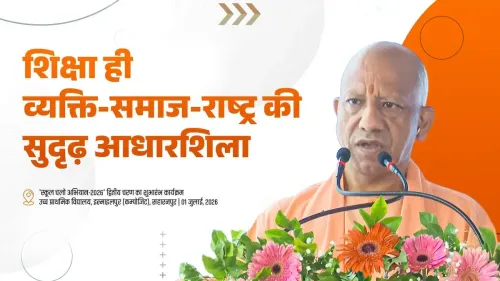
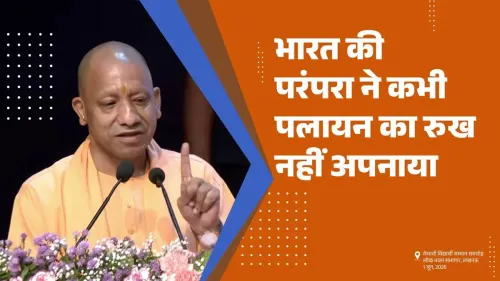
The Chief Minister's Office of Uttar Pradesh shared a philosophical message from Chief Minister Yogi Adityanath on Monday, June 1, 2026, invoking the classical Sanskrit maxim Sa vidya ya vimuktaye — 'That alone is knowledge which liberates' — to articulate his vision of education as a force for societal and national emancipation.
Quoting the ancient Vedic aphorism, CM Yogi stated: 'True knowledge is that which can pave the path of every kind of liberation in our lives and provide the inspiration to grapple with the challenges that stand before society and the nation, or may arise in the future.' The post was attributed directly to the Chief Minister and disseminated through the official CMOfficeUP handle.
Context
The Sanskrit phrase Sa vidya ya vimuktaye originates in classical Indian philosophical tradition and has long been cited in discourse on holistic education. By invoking it publicly, CM Yogi Adityanath positions formal learning not merely as a vocational or economic tool but as an instrument of personal and collective freedom. The statement frames education as a moral and civic responsibility, one that must equip citizens to confront present and future national challenges.Policy Backdrop
The message aligns closely with the spirit of the National Education Policy 2020 (NEP 2020), which calls for an education system rooted in Indian ethos, emphasising character-building alongside academic achievement. Uttar Pradesh, under CM Yogi's administration since 2017, has separately promoted Sanskrit studies and moral education modules in government schools, reflecting a broader ideological commitment to value-based learning. The BJP-led government has consistently woven traditional Indian knowledge frameworks into its education messaging, using Sanskrit shlokas to signal a departure from purely utilitarian approaches to schooling. This pattern is visible across several BJP-governed states, where invocations of classical texts serve both a cultural and a policy-signalling function — reinforcing the NEP 2020 mandate to integrate traditional knowledge into mainstream curricula.Stakeholders and Impact
Students and educators across Uttar Pradesh — India's most populous state with over 25 crore residents — are the primary audience for such messaging. For teachers and curriculum designers, statements from the Chief Minister carry directive weight, often preceding or accompanying policy announcements on school education. Civil society groups focused on public education will watch whether this philosophical framing translates into concrete budget allocations or curriculum revisions in the coming months. The message also resonates with parents and community leaders in rural Uttar Pradesh, where the perceived disconnect between schooling and real-world problem-solving remains a live concern. Framing education as liberation speaks directly to communities where access to quality schooling is still an aspiration.What's Next
Attention will now turn to whether the Uttar Pradesh government follows this statement with tangible policy action — specifically, state-level rollout of NEP-aligned curriculum revisions and any new budget allocations for value-education and Sanskrit promotion programmes. The 2026-27 state budget cycle and upcoming school calendar announcements will be the key indicators of whether this philosophical vision is translated into institutional change. If the government moves to embed such frameworks formally into teacher-training or textbook revision processes, it would mark a significant step in aligning UP's education system with both classical Indian thought and contemporary national policy goals.Point of View
Reinforced nationally by NEP 2020. The timing — outside any obvious calendar event — suggests this is ambient ideology-building rather than a response to a specific trigger. Whether it presages a concrete policy announcement or remains inspirational messaging will determine its actual significance.
NationPress
21 Oct 2026
Frequently Asked Questions
What does 'Sa vidya ya vimuktaye' mean?
'Sa vidya ya vimuktaye' is a Sanskrit maxim meaning 'That alone is knowledge which liberates.' It originates in classical Indian philosophical texts and is widely cited in discussions on the true purpose of education.
What did CM Yogi say about education on June 1 2026?
CM Yogi Adityanath stated that true knowledge is that which paves the path to every kind of liberation in life and inspires people to confront challenges facing society and the nation, both present and future.
How does CM Yogi's education message relate to NEP 2020?
The National Education Policy 2020 calls for education rooted in Indian ethos to build character and address national challenges — a vision closely echoed in CM Yogi's invocation of the Sanskrit maxim on liberation through knowledge.
What has Uttar Pradesh done to promote value-based education?
Since 2017, the Uttar Pradesh government under CM Yogi Adityanath has promoted Sanskrit studies and moral education modules in government schools, in line with the BJP's broader push for traditional knowledge in curricula.
Will Uttar Pradesh change its school curriculum based on this message?
No curriculum change has been announced alongside this post. Policy watchers are monitoring state-level NEP 2020 rollout and upcoming budget allocations for value-education programmes as the next indicators of policy action.