CM Yogi on India-Japan ties: Buddha's compassion binds two civilisations
Synopsis
Chief Minister Yogi Adityanath of Uttar Pradesh says India and Japan share a bond grounded in Buddhist compassion and life's discipline. The statement reinforces UP's strategic role in India's cultural diplomacy with Japan, anchored by sacred sites like Sarnath and Kushinagar.
Key Takeaways
CM Yogi Adityanath described India-Japan ties as rooted in 'cultural and spiritual belief' carrying the compassion of the Buddha and the discipline of life.
The statement was shared by the Chief Minister's Office of Uttar Pradesh on 19 August 2026 .
India and Japan have held annual bilateral summit meetings covering strategic, economic, and cultural cooperation since 2006 .
Uttar Pradesh hosts key Buddhist pilgrimage sites — Sarnath and Kushinagar — that form the backbone of India's Buddhist soft-power outreach to Japan.
CM Yogi has championed cultural diplomacy with East Asian nations since assuming office in 2017 .
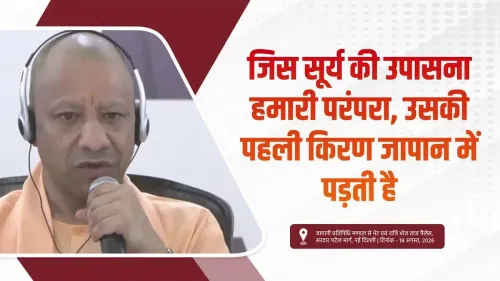
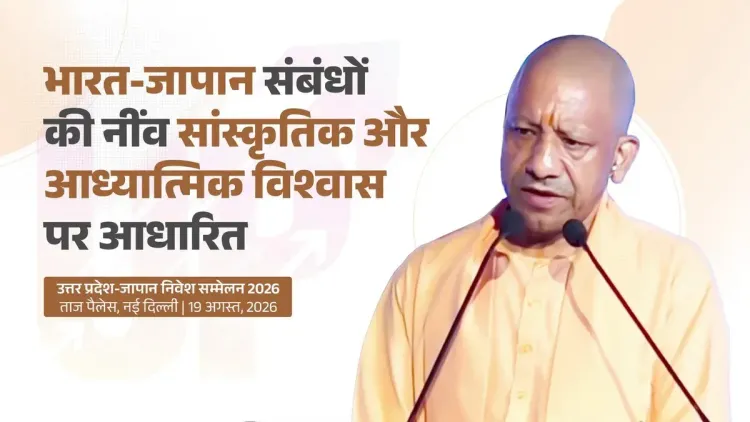
A bond older than any treaty — Chief Minister Yogi Adityanath of Uttar Pradesh framed India's relationship with Japan not in the language of trade corridors or defence pacts, but in the idiom of the spirit. On Wednesday, 19 August 2026, the Chief Minister's Office of Uttar Pradesh shared his words on X, anchoring bilateral ties in something far more durable than diplomacy.
The statement, in Hindi, reads: 'Bharat aur Japan ka sambandh saanskritik aur aadhyatmik vishwas par aadharit hai, jisme Buddha ki karuna hai aur jeevan ka anushasan bhi hai' — 'The relationship between India and Japan is rooted in cultural and spiritual belief, which carries both the compassion of the Buddha and the discipline of life.'
A civilisational bridge, not just a bilateral partnership
Buddhism, born on the Indian subcontinent, travelled east to Japan centuries ago and never truly left. That shared inheritance has given India and Japan a people-to-people warmth that outlasts governments and survives the friction of geopolitics. CM Yogi's framing — compassion and discipline together — is deliberate: it speaks equally to the Buddhist pilgrim and to Japan's famed ethic of structured, purposeful living. The two nations have held annual bilateral summit meetings since 2006, covering strategic, economic, and cultural cooperation. But the cultural layer has always been the quiet foundation beneath the noisier headlines of semiconductor deals and infrastructure finance.Uttar Pradesh at the centre of Buddhist soft power
Uttar Pradesh is not a bystander in this relationship — it is the geography where the story began. Sarnath, where the Buddha delivered his first sermon, and Kushinagar, where he attained Mahaparinirvana, both lie within the state's borders. Successive UP governments have actively promoted these sites to Japanese pilgrims and tourism officials, positioning the Buddhist Circuit as a living cultural bridge rather than a heritage footnote. CM Yogi Adityanath, who has publicly championed cultural diplomacy with East Asian nations since taking office in 2017, has consistently used this spiritual geography as both a tourism lever and a soft-power argument. The message on 19 August fits squarely into that arc. India's broader foreign policy has long used shared Buddhist history as a soft-power channel — and as economic and technology partnerships with Japan have deepened, the cultural scaffolding has only grown more valuable. Compassion and discipline: two words, one very long relationship.Point of View
Not just New Delhi, as a principal in India-Japan relations. By framing the bilateral bond in spiritual terms, it sidesteps the transactional language of summits and trade, appealing instead to a deeper, more durable public sentiment in both countries. This fits a broader pattern in which Indian state governments have increasingly asserted cultural soft-power roles that complement — and sometimes amplify — central government foreign policy. The statement also keeps UP's Buddhist Circuit in the international conversation, with potential downstream benefits for pilgrimage tourism and cultural exchange funding.
NationPress
19 Aug 2026
Frequently Asked Questions
What did CM Yogi Adityanath say about India and Japan relations?
CM Yogi Adityanath said the relationship between India and Japan is rooted in cultural and spiritual belief, encompassing both the compassion of the Buddha and the discipline of life.
Why is Uttar Pradesh important for India-Japan cultural ties?
Uttar Pradesh is home to Sarnath , where the Buddha gave his first sermon, and Kushinagar , the site of his Mahaparinirvana — making it the geographic heart of India's Buddhist soft-power outreach to Japan.
How long have India and Japan held annual bilateral summits?
India and Japan have conducted annual bilateral summit meetings since 2006 , covering strategic, economic, and cultural cooperation.
What is India's Buddhist Circuit and why does it matter to Japan?
The Buddhist Circuit is a network of pilgrimage sites across India, particularly in Uttar Pradesh, that traces the life of the Buddha. It holds deep religious significance for Japanese Buddhists and is a major focus of cultural tourism diplomacy between the two countries.
When did Yogi Adityanath become Chief Minister of Uttar Pradesh?
Yogi Adityanath became Chief Minister of Uttar Pradesh in 2017 and has since publicly championed cultural diplomacy with East Asian nations including Japan.