CM Yogi Orders Integrated Flood Plan for Lucknow's Gomti
Synopsis
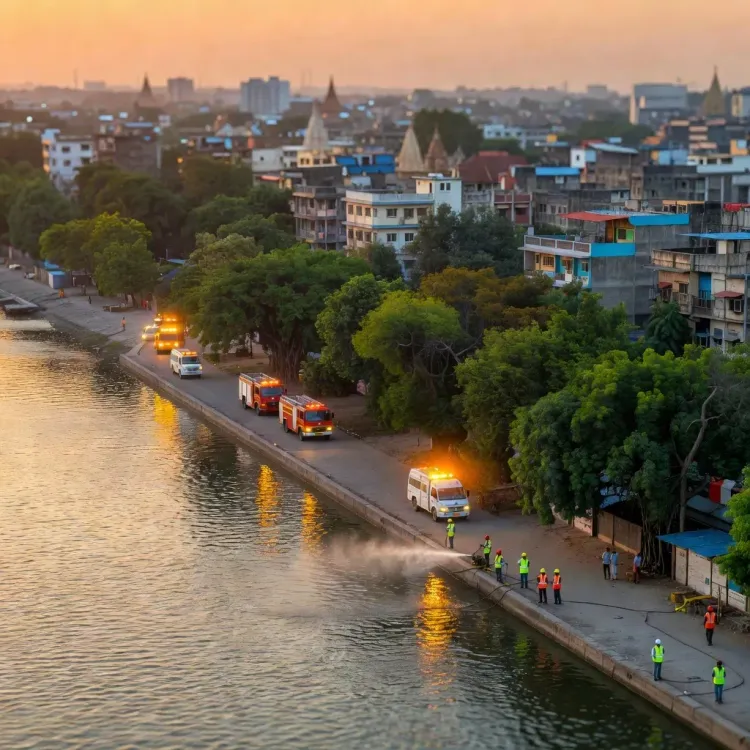
Chief Minister Yogi Adityanath has called the Gomti River 'the soul of Lucknow' and ordered embankments, pumping stations, and drains to be planned as one integrated system. Meanwhile, drones, fogging machines, and mobile relief units are already deployed across flood-hit zones in the capital.
Key Takeaways
CM Yogi Adityanath declared the Gomti River 'the soul of Lucknow' and ordered integrated planning of embankments, pumping stations, and drains.
The directive aims to ensure residential settlements do not flood even during extreme rainfall or high river water levels.
11 drones, 172 backpack machines, five sweeping machines, and eight tractor tankers are conducting anti-larva spraying in flood-affected areas.
Fogging is underway using 11 Tata-S mounted machines and 23 handheld machines to prevent infectious disease outbreaks.
Relief infrastructure includes 75 water tankers, 36 mobile toilets, 179 lighting points, and 135 mobile charging points across affected zones.
A 24-hour control room on toll-free number 1077 and six control points are active for grievance redressal.
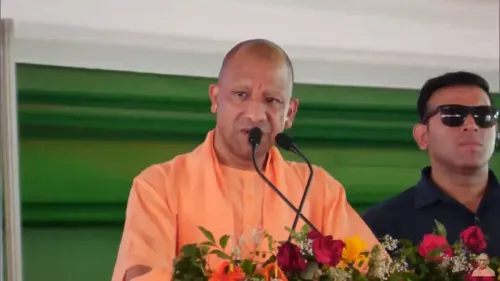
The Gomti River is Lucknow's soul — and right now, that soul is under stress. The Chief Minister's Office of Uttar Pradesh announced on Saturday, 17 October 2026 that Chief Minister Yogi Adityanath has issued direct orders for a comprehensive, integrated flood and waterlogging mitigation plan for the state capital, framing the Gomti's health as non-negotiable.
What CM Yogi Directed — and Why It Matters
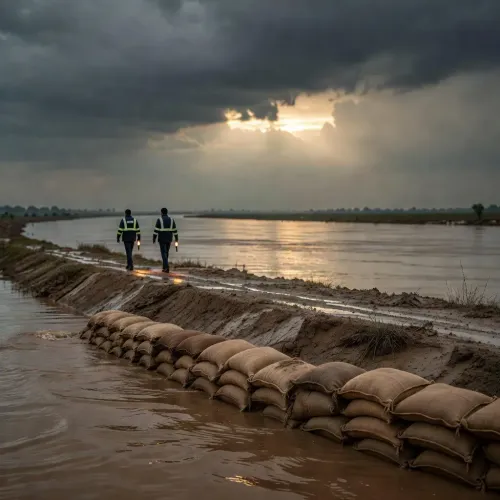
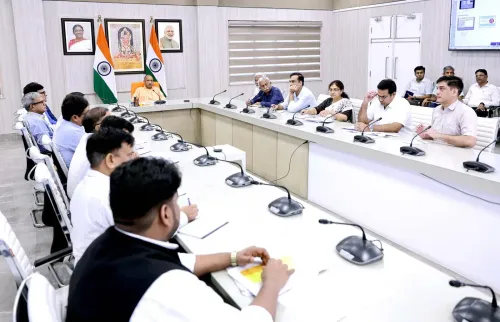
The Chief Minister's instruction was unambiguous: 'Gomti nadi Lucknow ki aatma hai' ('The Gomti River is the soul of Lucknow') — and whatever it takes to ensure its aviral (uninterrupted) and nirmal (clean) flow must be done. Crucially, he directed that embankment construction, pumping stations, and drain networks be planned as complementary systems, not isolated projects. The goal: even during peak monsoon or a sudden rise in the river's water level, residential settlements must not flood.
This integrated design philosophy marks a shift from piecemeal urban drainage fixes. By tying riverfront infrastructure to neighbourhood-level drainage and pumping capacity, the state is attempting to close the gap that has repeatedly left Lucknow — the capital of India's most populous state — knee-deep in water each monsoon season.
The Ground Operation Already Underway in Lucknow
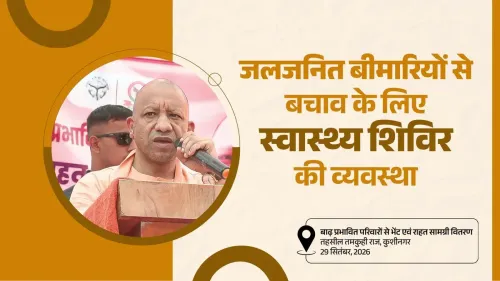
While the long-term plan takes shape, an immediate public-health and relief operation is already running across flood-affected zones. According to the official post, 11 drones, 172 backpack machines, five sweeping machines, and eight tractor tankers are conducting anti-larva spraying to prevent vector-borne disease outbreaks in waterlogged areas. Fogging operations are being carried out using 11 Tata-S mounted machines and 23 handheld machines.
The relief infrastructure on the ground includes 75 water tankers, 36 mobile toilets, 179 lighting points, and 135 mobile charging points — a telling detail about the scale of displacement and disruption in affected neighbourhoods. A 24-hour control room on toll-free number 1077 and six control points are operational for grievance redressal.
Gomti's Long Road to Rejuvenation
The Gomti has been a focal point of both state and central river-cleaning efforts for over a decade. The Namami Gange programme, launched in 2014, included dedicated components for tributaries like the Gomti, recognising that the Ganga's health is inseparable from the rivers that feed it. Despite these efforts, Lucknow's recurring monsoon flooding has exposed the gap between river rejuvenation schemes and on-the-ground urban drainage capacity.
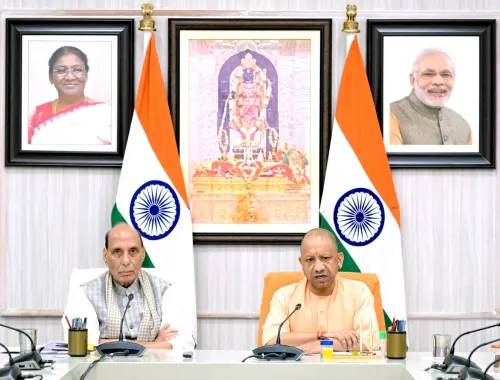
The post is framed as a reply to Rajnath Singh, the Union Defence Minister and a senior BJP leader from Uttar Pradesh who previously served as the state's Chief Minister. His involvement signals that Lucknow's flood crisis has the attention of both state and central leadership — a political alignment that could accelerate funding and approvals for the integrated plan CM Yogi has now ordered.
What Lucknow Residents Are Watching
For the families in flood-prone settlements along the Gomti's banks, the test is not in the directives — it is in the drainage maps, the embankment timelines, and whether the pumping stations actually work when the next monsoon arrives. CM Yogi has set the frame; the engineering and the budget will tell the real story.
Point of View
Not just an environmental one, which carries electoral weight in a city that votes with its flooded streets. The directive to integrate embankments, pumping stations, and drains into a single complementary system reflects a broader UP government push toward outcome-based urban infrastructure rather than siloed departmental projects. The post's framing as a reply to Rajnath Singh — a heavyweight central figure with deep Lucknow roots — also signals that this initiative enjoys bipartisan federal attention, potentially smoothing the path for Namami Gange-linked funding. If timelines and budgets are announced, this could become a template for other flood-prone UP cities ahead of the next election cycle.
NationPress
18 Oct 2026
Frequently Asked Questions
What did CM Yogi say about the Gomti River and Lucknow flooding?
CM Yogi Adityanath declared that the Gomti River is 'the soul of Lucknow' and ordered that embankments, pumping stations, and drain networks be planned as integrated, complementary systems so that residential areas do not flood during heavy rain or high river levels.
What relief measures are deployed in flood-affected areas of Lucknow?
The state has deployed 11 drones, 172 backpack machines, five sweeping machines, and eight tractor tankers for anti-larva spraying, along with 11 Tata-S mounted and 23 handheld fogging machines. Relief includes 75 water tankers, 36 mobile toilets, 179 lighting points, and 135 mobile charging points.
What is the toll-free number for flood grievances in Lucknow?
A 24-hour control room is operational on toll-free number 1077, along with six control points across affected areas, for residents to register flood-related complaints.
What is the Namami Gange programme and how does it relate to the Gomti River?
Namami Gange is a central government programme launched in 2014 to clean and rejuvenate the Ganga and its tributaries. The Gomti River, which flows through Lucknow, is one of the tributaries covered under this programme.
Why is Lucknow prone to flooding and waterlogging every monsoon?
Lucknow's recurring flooding is linked to the Gomti River's rising water levels during monsoon, combined with inadequate drainage infrastructure and poorly coordinated embankment and pumping systems — a gap CM Yogi's new directive specifically aims to close.